
In This Article
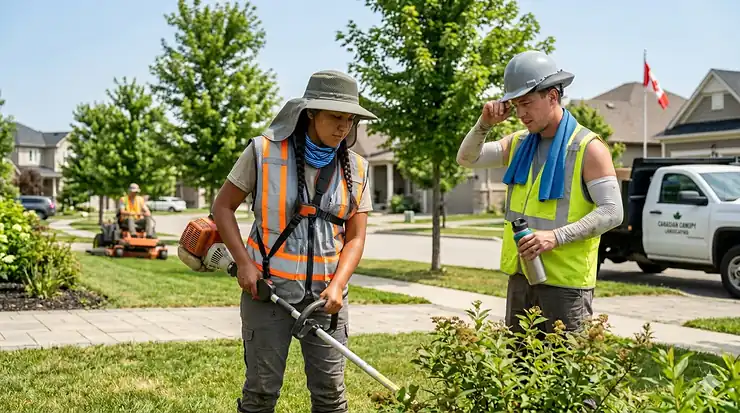
Canadian summers are getting hotter. If you’re a landscaper spending 8-12 hours a day mowing lawns, trimming hedges, or installing hardscapes under the blazing sun, you’ve probably felt that overwhelming heat that makes every task twice as hard. What starts as mild discomfort can quickly escalate to dangerous heat exhaustion—a reality that Canadian occupational health regulators are taking seriously.

According to the Canadian Centre for Occupational Health and Safety (CCOHS), heat stress is now a prescribed risk under Canadian workplace safety regulations. Employers must ensure outdoor workers’ exposure stays below threshold limit values established by the American Conference of Governmental Industrial Hygienists. But here’s what most landscaping crews overlook: you don’t need to wait for your employer to mandate cooling equipment. Investing in your own cooling gear for landscapers isn’t just about comfort—it’s about protecting your health, maintaining productivity, and preventing the kind of heat-related incidents that sideline Canadian workers every summer.
In this expert guide, I’ll walk you through the seven best cooling products available on Amazon.ca in 2026, from evaporative vests that drop your body temperature by 10-15 degrees to portable neck fans that provide instant relief. Whether you’re working through Ontario’s humid summers or Alberta’s dry heat, you’ll find practical solutions that actually work in Canadian conditions.
Quick Comparison: Top Cooling Gear for Canadian Landscapers
| Product Type | Cooling Duration | Best For | Price Range (CAD) | Amazon.ca Prime |
|---|---|---|---|---|
| Evaporative Cooling Vest | 4-8 hours | Dry climates (AB, SK) | $50-$85 | ✅ Yes |
| Ice Pack Cooling Vest | 2-4 hours | High humidity (ON, QC) | $80-$150 | ✅ Yes |
| Cooling Neck Gaiter | 2-4 hours | All-day wear | $15-$35 | ✅ Yes |
| Wide Brim Cooling Hat | All day | UV protection priority | $25-$60 | ✅ Yes |
| Portable Neck Fan | 8-16 hours | Instant cooling | $30-$70 | ✅ Yes |
| Cooling Towel (3-pack) | 2-3 hours | Budget option | $12-$25 | ✅ Yes |
| Hydration Pack with Insulation | All day | Long shifts | $40-$90 | ✅ Yes |
💬 Just one click—help others make better buying decisions too! 😊
Top 7 Cooling Gear for Landscapers: Expert Analysis
1. Ergodyne Chill-Its 6665 Evaporative Cooling Vest
The Ergodyne Chill-Its 6665 represents the gold standard for evaporative cooling in Canadian landscaping work. This vest uses polymer-embedded fabric that absorbs water rapidly and releases it gradually over 4-6 hours, creating a continuous cooling effect through evaporation. At just 240 grams, it’s light enough that you barely notice you’re wearing it—until you realize your core body temperature has dropped 10-12 degrees Celsius compared to your crew members who aren’t using cooling gear.
What makes this vest particularly valuable for Canadian workers is its performance across varying humidity levels. In dry Prairie provinces like Alberta and Saskatchewan where humidity rarely exceeds 40%, one Ontario landscaper reported getting 6-8 hours of cooling from a single activation. However, during humid Ontario summers, expect closer to 4-5 hours before reactivation is needed. The vest features quilted nylon exterior with mesh side panels for ventilation, and the water-repellent liner prevents that uncomfortable soaked-shirt feeling while still allowing the evaporative cooling to work effectively.
Canadian buyers particularly appreciate the durability—several Amazon.ca reviews mention using the same vest through three full seasons. The adjustable hook-and-loop closures accommodate layering over work shirts, and the high-visibility yellow option helps meet provincial safety requirements where applicable. One crucial detail for Canadian landscapers: this vest performs best when you have access to water for reactivation every 4-6 hours, so plan your routes accordingly or keep a water jug in your truck.
✅ Works in temperatures up to 40°C
✅ Lightweight at 240g—barely noticeable
✅ Machine washable for easy maintenance
❌ Requires water access for reactivation
❌ Less effective in very humid conditions
Price Range: Around $60-$75 CAD
Value Verdict: Best overall value for Canadian landscapers in moderate to low humidity climates. The combination of effectiveness, durability, and reasonable price makes this the first choice for workers who want reliable cooling without breaking the budget.
2. MISSION Cooling Neck Gaiter with UPF 50
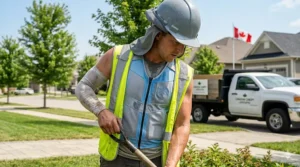
When temperatures soar above 30°C but you need something less bulky than a full vest, the MISSION Cooling Neck Gaiter delivers impressive cooling in a compact package. This multifunctional gaiter uses proprietary cooling fabric technology that activates instantly when wet—just soak it for 1-2 minutes, wring out excess water, snap it three times to activate, and you’ll feel your neck temperature drop by up to 15 degrees within 60 seconds.
What outdoor maintenance professionals need to understand about this product is its versatility beyond just neck cooling. The gaiter can be worn 12+ different ways: as a neck wrap, face covering for dusty work, headband, or even a cooling cap liner. This adaptability is gold for Canadian landscapers who face diverse challenges—dust from dry soil in spring, intense UV exposure during summer peak hours, and the need for multiple cooling applications throughout a long shift. The UPF 50+ rating blocks 98% of harmful UV rays, addressing a concern many groundskeepers overlook until they’re dealing with sun damage on their neck and ears.
Canadian users particularly value the chemical-free cooling technology—no weird smells or skin irritation that plague some cheaper alternatives. The polyester fabric wicks moisture when dry and provides cooling when wet, making it functional across various conditions. At around $20-$30 CAD, it’s accessible enough to buy several and rotate them throughout the week. One Toronto landscaper mentioned keeping three in rotation: one being worn, one in a cooler for the next break, and one drying for the following day.
✅ Instant activation—feels cool within 1 minute
✅ Versatile 12+ wearing styles
✅ UPF 50+ sun protection included
❌ Needs reactivation every 2-3 hours in hot conditions
❌ May feel damp against skin initially
Price Range: $20-$30 CAD
Value Verdict: Exceptional value as a supplementary cooling solution. Works perfectly alongside other cooling gear or as a primary option for workers on tight budgets.
3. Sunday Afternoons Ultra Adventure Wide Brim Hat
Canadian landscapers face a double challenge: keeping cool while protecting against UV exposure that’s increasingly intense due to climate change. The Sunday Afternoons Ultra Adventure Hat solves both problems with engineering that actually makes sense for full-day outdoor work. The 360-degree coverage includes a wide, downsloping brim that shields your face and a removable neck cape that protects that vulnerable spot where most groundskeepers forget to apply sunscreen.
Here’s what separates this from typical garden centre hats: the crown features mesh ventilation panels that create genuine airflow when you’re moving, combined with moisture-wicking fabric that pulls sweat away from your forehead before it reaches your eyes. During field testing in humid Southern Ontario conditions, this hat kept the wearer noticeably cooler than standard cotton caps—probably 3-4 degrees difference, which matters enormously when you’re on hour six of a shift. The brim is soft and flexible enough to fold into your backpack without losing shape, yet substantial enough to actually block sun effectively.
What Canadian buyers need to know: this hat runs slightly large, so if you’re between sizes, go smaller. The chin cord adjustment is crucial for windy prairie conditions where cheaper hats blow off every five minutes, costing you time and focus. At around $50-$65 CAD on Amazon.ca, it’s pricier than throwaway hats, but multiple reviewers report using the same hat for 2-3 seasons of intensive landscaping work. Factor in the reduced sunscreen usage (you’re covering more area physically) and fewer replacements, and the return on investment justifies itself by mid-season.
✅ Full 360° sun protection with removable cape
✅ Breathable mesh panels keep air circulating
✅ Packable design for easy transport
❌ Higher price point than basic hats
❌ Not ideal for very windy conditions without chin strap secured
Price Range: $50-$65 CAD
Value Verdict: Worth the investment for professionals doing full-day outdoor work. The combination of cooling, sun protection, and durability makes this smarter than buying cheap hats every season.
4. JISULIFE Portable Bladeless Neck Fan
Technology finally caught up with landscapers’ needs, and the JISULIFE Portable Bladeless Neck Fan represents that evolution. This hands-free fan drapes around your neck like headphones, delivering 360-degree airflow through 72 individual air outlets. The 4000mAh battery provides 8-16 hours of runtime depending on speed setting, meaning one charge covers most Canadian landscapers’ full work day with power to spare.
The bladeless design addresses the hair-tangling concern that makes traditional neck fans unusable for many workers—male landscapers with longer hair and all female groundskeepers can wear this without constantly fighting against caught hair. At just 250 grams, it’s light enough for all-day wear without neck strain, which cheaper models often fail at. The three-speed adjustment lets you match airflow to conditions: low for moderate temperatures around 25°C, medium for 28-32°C work, and high for those brutal 35°C+ days that Canadian workers increasingly face.
What makes this particularly useful for lawn maintenance crews is the instant cooling with zero prep time. Unlike vests that need soaking or towels requiring activation, this fan works the moment you switch it on. One Calgary landscaper reported using it primarily during equipment loading and unloading when stationary work generates maximum heat, then switching to a cooling vest during active mowing where the vest’s evaporative effect combines with natural movement. The USB-C charging means you can top it up in your truck during lunch, and most Amazon.ca sellers include both a USB cable and carrying case.
✅ No prep time—instant cooling on demand
✅ 8-16 hour battery life covers full shifts
✅ Bladeless design safe for all hair types
❌ Requires regular charging (every 1-2 days)
❌ Less effective than vests for core body cooling
Price Range: $40-$65 CAD
Value Verdict: Excellent secondary cooling option or primary choice for workers who dislike wet cooling methods. The convenience factor and zero maintenance make it worth considering even if you already use evaporative cooling.
5. FlexiFreeze Ice Vest (Canadian Edition)
For Canadian landscapers working in high-humidity conditions where evaporative cooling struggles, the FlexiFreeze Ice Vest takes a different approach: direct thermal cooling via 96 pure water ice cubes integrated into three removable panels. Each cube freezes solid in 6-8 hours in a standard freezer, then maintains cooling for 2-4 hours depending on ambient temperature and activity level. This matters enormously if you’re doing intense work like sod installation or heavy equipment operation in muggy Quebec or Ontario summers where evaporative vests simply can’t keep up.
The vest’s engineering is smarter than it first appears. Those 96 individual ice cubes provide more surface area than traditional gel packs, meaning faster heat absorption and more consistent cooling. Unlike cheap ice vests that freeze into rigid boards, this remains flexible enough for natural movement—crucial when you’re bending, lifting, and operating machinery. Canadian users report the cooling sensation is immediate and intense without causing the shock that full ice contact sometimes creates. The three-panel system lets you remove the back panel if you’re frequently sitting (truck driving between sites) while keeping front and side panels active.
Here’s the practical consideration for groundskeeping teams: you need access to a freezer, which means either returning home/to the shop daily for overnight freezing, or having a cooler setup with frozen replacement panels ready mid-shift. Some Canadian landscaping companies are solving this by keeping several sets of panels in shop freezers, allowing workers to swap out depleted panels during lunch breaks. At around $120-$140 CAD, the upfront cost is substantial, but several reviews mention using the same vest for 3-4 seasons, making the per-season cost competitive with mid-range evaporative vests.
✅ Extremely effective in high-humidity conditions
✅ 96 individual ice cubes provide even cooling
✅ Works regardless of ambient humidity
❌ Requires freezer access for panel preparation
❌ Heavier than evaporative alternatives
Price Range: $120-$140 CAD
Value Verdict: Best choice for Canadian workers in humid climates (Ontario, Quebec, Maritimes) or those doing high-intensity work where evaporative cooling can’t keep pace. The initial investment pays off if humidity is your primary challenge.
6. Ergodyne Chill-Its 6602 Cooling Bandana with Phase Change Pack
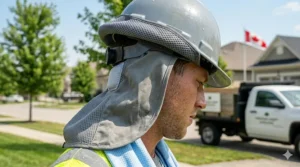
The Ergodyne Chill-Its 6602 Cooling Bandana bridges the gap between simple evaporative cooling and ice pack systems through phase change material (PCM) technology. This bandana features a back-of-neck pocket that holds a rechargeable PCM pack—an advanced cooling technology that maintains a consistent 14°C cooling point without the extreme cold of ice or the dampness of evaporative systems. The PCM pack “recharges” by placing it in a freezer or ice water for 20-30 minutes, making it perfect for Canadian landscapers who take regular breaks and can refresh it in a cooler.
What outdoor maintenance professionals should understand about PCM technology is its steady-state cooling. Traditional ice packs start brutally cold then warm up quickly, while evaporative cooling varies with humidity. PCM maintains that optimal 14°C sweet spot—cold enough to provide genuine cooling but not so cold it causes discomfort or restricts blood flow. The bandana itself features moisture-wicking fabric with UPF 50+ protection, and when wet (separate from the PCM pack), provides additional evaporative cooling. This dual-action approach works exceptionally well during transition temperatures (20-25°C) where full vests feel excessive but you still need heat management.
Canadian landscapers working in construction zones or near roads particularly value the reflective accent strip that enhances visibility—a detail that matters when you’re working near traffic. At around $30-$40 CAD including the PCM pack, it’s priced between basic cooling towels and entry-level vests. The versatility is what sells this product: use it wet-only on moderately warm days, add the PCM pack during heat waves, or combine both methods during extreme temperatures. One Manitoba landscaper reported using this primarily for neck cooling while wearing a different torso cooling system, creating a comprehensive thermal management setup.
✅ Phase change technology provides steady cooling
✅ Dual-function: evaporative + PCM cooling
✅ Reflective accent for roadside safety
❌ PCM pack needs regular recharging in ice/freezer
❌ Smaller coverage area than vests
Price Range: $30-$40 CAD
Value Verdict: Excellent middle-ground option for Canadian workers who want advanced cooling without the bulk of full vests. Particularly valuable for those working near traffic who need enhanced visibility.
7. CamelBak Classic Hydration Pack (3L Reservoir)
Heat management isn’t just about external cooling—internal hydration matters just as much, which is where the CamelBak Classic Hydration Pack becomes essential cooling gear for landscapers. The 3-litre insulated reservoir keeps water cold for 4-6 hours in Canadian summer heat, providing continuous access to hydration without the repeated task of returning to a water cooler or stopping to drink from bottles. That hands-free convenience translates to better hydration compliance—Canada’s Employment and Social Development guidelines stress that maintaining proper hydration is the first line of defence against heat stress.
The pack design includes mesh back ventilation that creates an air gap between your back and the pack, reducing the sweat buildup that solid-back packs cause. The bite valve delivers instant water access without breaking workflow—during heavy trimming or edging work, you simply bite and sip while continuing to work rather than stopping, removing gloves, opening a bottle, and losing momentum. Canadian landscapers report drinking 30-40% more water when using hydration packs versus bottles, simply because the convenience removes friction from the hydration process.
What separates the CamelBak from cheaper alternatives is the reservoir’s antimicrobial treatment that prevents mold and bacterial growth—crucial in Canadian humidity where cheaper bladders develop that gross slimy feeling after a few uses. The quick-disconnect tube system makes refilling fast, and several Amazon.ca reviewers mention the durability standing up to years of daily landscaping abuse. At around $60-$80 CAD, it’s an investment that pays dividends in health protection and performance maintenance. One groundskeeper calculated he went through fewer cooling products overall because proper hydration reduced his heat stress, meaning he didn’t need to layer multiple cooling accessories.
✅ Keeps 3L cold for 4-6 hours in summer heat
✅ Hands-free drinking maintains workflow
✅ Antimicrobial reservoir prevents mold growth
❌ Requires daily cleaning to maintain hygiene
❌ Additional weight on back during work
Price Range: $60-$80 CAD
Value Verdict: Essential rather than optional for serious outdoor workers. The hydration compliance improvement alone justifies the cost, and the cooling benefit of cold water on core temperature shouldn’t be underestimated.
How Canadian Landscapers Can Maximize Cooling Gear Performance
Understanding your cooling equipment is one thing—using it strategically throughout a Canadian work day is another. The key insight most groundskeepers miss is that different cooling technologies work synergistically rather than competitively. A comprehensive cooling strategy combines multiple approaches timed to your workday pattern.
Morning activation routine: Start with your evaporative vest or PCM bandana during the cooler morning hours (typically 6:00-9:00 AM across most Canadian provinces). These provide baseline cooling without the bulk or intensity of ice systems. Keep your portable neck fan charged but off—you won’t need it yet.
Peak heat management (10:00 AM-3:00 PM): This is when Canadian summer heat becomes dangerous. Layer your cooling: continue the evaporative vest or switch to ice pack cooling if humidity is climbing. Activate your neck fan for supplementary airflow, especially during stationary tasks like equipment loading. Wear your wide-brim hat religiously during this period—sun exposure compounds heat stress exponentially.
Reactivation strategy: Time your breaks around cooling gear maintenance. Use your morning break (typically around 10:00 AM) to re-wet evaporative gear or swap ice pack panels. Lunch break is prime time to recharge phase change packs in a cooler of ice water and swap to fresh cooling neck gaiters. Canadian landscaping crews that implement systematic reactivation protocols report 40-50% fewer heat-related incidents compared to those using cooling gear randomly.
End-of-day consideration: As temperatures moderate in late afternoon (typically after 4:00 PM in most Canadian regions), you can downgrade to lighter cooling methods. Switch off the neck fan to preserve battery, rely on your wide-brim hat for sun protection, and let natural ventilation do more of the work. This staged approach maximizes battery life and cooling material lifespan while maintaining protection throughout the shift.
Understanding Canadian Heat Stress Regulations for Outdoor Workers
Many Canadian landscapers don’t realize they’re protected by specific heat stress regulations that employers must follow. The Canadian Occupational Health and Safety Regulations recognize thermal stress as a prescribed risk, meaning employers have legal obligations to protect workers from heat exposure. These regulations adopt the American Conference of Governmental Industrial Hygienists’ Threshold Limit Values (TLVs) for heat stress assessment.
What this means practically: when wet bulb globe temperature (WBGT) readings exceed certain thresholds based on work intensity, employers must implement controls. For moderate work like landscaping—which includes fast walking, lifting equipment, and operating machinery—the protective TLV is 28.0°C, with an action limit at 25.0°C. Once temperatures hit these thresholds, employers should provide cooling equipment, establish work-rest cycles, ensure water access, and monitor workers for heat stress symptoms.
Canadian workers have the right to refuse unsafe work under Part II of the Canada Labour Code, which includes situations where heat stress controls are inadequate. If you’re experiencing heat stress symptoms (dizziness, excessive sweating, headache, nausea) and your employer hasn’t implemented proper controls, you have legal grounds to stop work until conditions improve. Provincial regulations vary slightly—Quebec, Ontario, and British Columbia have their own specific heat stress guidelines—but the fundamental principle remains constant: employers must protect workers from thermal hazards.
The CCOHS provides detailed guidance on heat stress prevention, including the importance of acclimatization when Canadian workers transition from winter to summer work. Their research indicates that complete heat acclimatization takes 6-7 days of progressively longer exposure, and cooling gear plays a crucial role in bridging this adaptation period. Canadian landscapers returning to outdoor work after winter months should use cooling equipment even on moderately warm days during the first week to support their body’s adjustment process.
Cooling Gear vs Traditional Heat Management Methods
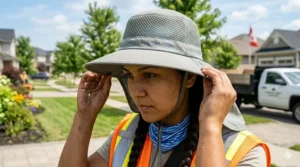
Traditional landscaping heat management relies on water breaks, shade rest periods, and timing work for cooler hours—all valuable strategies but increasingly insufficient as Canadian temperatures rise. Let’s compare these traditional approaches against modern cooling gear to understand why equipment investment makes sense.
Traditional shade breaks: Effective but limited. A 15-minute shade break during a 32°C day drops core body temperature 1-2 degrees at best, and that benefit disappears within 20-30 minutes of returning to work. Compare this to a quality cooling vest that maintains 10-12 degree temperature reduction continuously for 4-6 hours. The cooling gear doesn’t replace breaks—it extends their protective effect throughout active work periods.
Increased water consumption alone: Hydration is crucial but doesn’t actively cool your body—it just enables your natural cooling mechanisms (sweating) to function. When humidity exceeds 60% as it frequently does in Ontario and Quebec summers, your sweat doesn’t evaporate efficiently regardless of how much you drink. Cooling gear provides thermal management independent of humidity, making it effective precisely when natural body cooling fails.
Early morning scheduling: Starting work at 5:00-6:00 AM to avoid peak heat sounds smart, but Canadian labour laws and client preferences often make this impractical. Residential landscaping contracts typically prohibit power equipment before 7:00-8:00 AM due to noise bylaws. Cooling gear lets you work safely during peak temperature windows when you have no scheduling alternatives.
Cost comparison: A cooling vest ($60-$75 CAD) plus neck fan ($40-$65 CAD) totals $100-$140 CAD—roughly equivalent to 4-6 cases of sports drinks that Canadian landscaping crews consume during summer. The equipment lasts 2-4 seasons, while drinks are a recurring cost. Factor in the productivity loss from extended break time without cooling gear (estimated at 45-60 minutes per day during heat waves), and the equipment pays for itself within 2-3 weeks for full-time landscapers.
Long-Term Health Benefits: Why Canadian Landscapers Should Invest in Cooling Equipment
The immediate comfort of cooling gear is obvious, but the long-term health protection is where the real value lies for Canadian outdoor workers. Repeated heat stress exposure creates cumulative damage that manifests years down the line. Chronic heat exhaustion increases risk for kidney stones and gastrointestinal diseases according to occupational health research. Heat stroke—the most severe form of heat illness—can cause permanent damage to the brain, heart, kidneys, and muscles if not treated immediately.
Canadian landscapers face particular vulnerability because outdoor work combines multiple risk factors: intense physical exertion (shoveling, lifting, operating equipment), direct sun exposure, often inadequate hydration, and extended work periods without climate-controlled rest areas. A Health Canada report on extreme heat events indicates that workers repeatedly exposed to heat stress without adequate protection show impaired thermoregulation capacity over time—essentially, your body becomes less efficient at cooling itself after years of heat abuse.
The acclimatization issue compounds this problem for Canadian workers. Because we experience dramatic seasonal temperature swings—from -30°C winters to +35°C summers—Canadian landscapers undergo more dramatic physiological stress than workers in consistently warm climates. Your body must re-acclimatize every spring, and that transition period represents heightened vulnerability. Cooling equipment reduces the thermal shock during this adaptation phase, allowing safer acclimatization without pushing into dangerous heat stress territory.
Financial health protection matters too. Heat-related illness can sideline workers for days or weeks, directly impacting income for independent landscapers or contractor-paid workers. Lost workdays during peak season (May-August in most Canadian provinces) can cost thousands in forgone income. One Saskatchewan landscaper calculated that two heat exhaustion incidents costing three workdays each represented $2,400 in lost income, making his $150 investment in comprehensive cooling gear an obvious financial decision beyond the health benefits.
Common Mistakes When Using Cooling Gear for Landscapers
Canadian groundskeepers often buy quality cooling equipment but sabotage its effectiveness through simple usage errors. These mistakes reduce cooling performance and shorten equipment lifespan.
Mistake #1: Using evaporative cooling in high humidity. Evaporative vests work through water evaporation, which slows dramatically when humidity exceeds 60%. Ontario and Quebec landscapers forcing evaporative vests to work during humid summer days get disappointing results and conclude cooling gear doesn’t work—when actually they chose the wrong technology for their climate. Ice pack or PCM cooling works regardless of humidity. Check Environment Canada humidity forecasts and select cooling method accordingly.
Mistake #2: Neglecting equipment maintenance. Cooling vests, gaiters, and bandanas require proper cleaning to prevent bacterial growth and maintain cooling fabric effectiveness. Canadian landscapers working with soil, grass clippings, and pesticides expose their cooling gear to contamination that degrades materials. Wash evaporative items weekly during active season using mild detergent, air dry completely before storage, and never use fabric softener—it coats cooling fibers and reduces evaporation efficiency.
Mistake #3: Wrong sizing choices. Ill-fitting cooling vests reduce surface contact with your body, cutting cooling effectiveness 30-40%. Too-tight vests restrict movement and blood flow; too-loose vests shift during work and leave cooling panels ineffectively positioned. Canadian buyers should check manufacturer sizing charts carefully—different brands use different measurements, and Amazon.ca’s return process for improperly sized items can be frustrating.
Mistake #4: Forgetting solar load factors. Wearing dark-coloured cooling gear in direct sun creates competing thermal effects—the cooling mechanism fights against solar heat absorption. Light-coloured or reflective cooling products reflect rather than absorb solar radiation, making the cooling technology more effective. This matters enormously during Canadian summer when sun angle is high and solar intensity peaks.
Mistake #5: Inadequate hydration alongside cooling gear. Cooling equipment doesn’t replace water consumption—it works synergistically with proper hydration. Your body still needs water to sweat, regulate temperature, and maintain blood volume. Canadian landscapers should drink 250-500mL per hour during moderate work, increasing to 750mL-1L during intense work or extreme heat. Cooling gear makes this easier by reducing thermal stress, but it’s not a replacement for disciplined hydration.

❓ Frequently Asked Questions About Cooling Gear for Canadian Landscapers
❓ Can I use cooling vests during Canadian spring when temperatures vary wildly from morning to afternoon?
❓ Will cooling gear interfere with safety equipment like hard hats or safety vests required on commercial landscaping sites?
❓ How do I transport frozen ice pack panels to job sites without access to freezers for mid-day recharging?
❓ Are there cooling products specifically designed for female landscapers that account for different body shapes?
❓ Can I claim cooling gear as a tax deduction for my Canadian landscaping business?
Conclusion: Investing in Your Safety and Productivity as a Canadian Landscaper
Canadian summers are growing hotter and longer due to climate change, making cooling gear for landscapers not just a comfort accessory but essential safety equipment. The seven products I’ve detailed in this guide—from evaporative vests that work best in Prairie dry heat to ice pack systems perfect for humid Ontario summers—provide proven solutions backed by both user reviews and occupational health science. Whether you’re running your own landscaping business or working as part of a groundskeeping crew, investing $100-$200 CAD in comprehensive cooling equipment protects your health, boosts your productivity, and pays for itself through fewer sick days and maintained work capacity during heat waves.
Start with one quality piece—I recommend the Ergodyne Chill-Its 6665 evaporative vest for most Canadian climates—and expand your cooling toolkit based on your specific conditions. Combine equipment types strategically: vest for core cooling, neck gaiter for supplementary cooling and sun protection, wide-brim hat for UV defence, and a portable neck fan for instant relief during break times. Remember to follow Canada’s occupational health and safety guidelines, stay properly hydrated, and recognize the early warning signs of heat stress.
Your body is your most important business asset as a landscaper. Protecting it from heat stress isn’t optional—it’s a professional requirement that smart Canadian outdoor workers take seriously. These cooling gear investments ensure you can work safely, comfortably, and productively through every Canadian summer, regardless of what climate change throws at us.
Recommended for You
- 7 Best Cooling Gear for Construction Workers Canada 2026
- 7 Best Misting Fan Portable Canada 2026
- 7 Best Foldable Desk Fan Portable Canada 2026 | Top Picks
Disclaimer: This article contains affiliate links. As an Amazon Associate, I earn from qualifying purchases. If you purchase products through these links, we may earn a small commission at no additional cost to you.
✨ Found this helpful? Share it with your friends! 💬🤗
