
In This Article
Summer heat in Canada has evolved from a mild inconvenience to a genuine workplace safety concern. When you’re pouring concrete in Calgary’s 38°C sunshine or operating heavy machinery in a Windsor warehouse where temperatures climb past 40°C, the question of cooling vest vs ice vest which is better becomes more than academic—it’s about preventing heat exhaustion and maintaining productivity through increasingly intense Canadian summers. The distinction between these cooling technologies matters significantly: thermal stress occurs when core body temperature is no longer maintained at 36 to 37°C, and different vest technologies address this challenge through fundamentally different mechanisms. Ice vests use frozen gel packs inserted into pockets for direct contact cooling, delivering immediate temperature reduction that works regardless of humidity levels. Evaporative cooling vests, conversely, rely on water-soaked polymer fabrics that cool through evaporation—lightweight and effective in Alberta’s dry heat but struggling during Ontario’s humid summers. Then there’s phase change material (PCM) technology, which maintains a precise temperature through molecular phase transition, offering the consistency ice vests provide without the extreme cold or bulk. Understanding these distinctions helps Canadian workers, from construction crews in British Columbia to agricultural labourers in Saskatchewan, select cooling technology matched to their specific climate and workload demands.
Quick Comparison: Cooling Technologies Head-to-Head
| Technology Type | Cooling Duration | Best Climate | Weight | Recharge Time | Price Range (CAD) | Best For |
|---|---|---|---|---|---|---|
| Ice Pack Vests | 1-3 hours | Any (humidity-independent) | Heavy (1-2 kg loaded) | 4-10 hours freezing | $35-$85 | Construction, outdoor work, high humidity areas |
| Evaporative Vests | 2-4 hours | Low humidity (<50%) | Lightweight (300-500g) | 2-5 minutes soaking | $45-$120 | Dry climates, Alberta, Saskatchewan, active work |
| Phase Change (PCM) | 2-4 hours | Any | Medium (600-900g) | 5-60 minutes | $95-$240 | Under protective gear, consistent cooling needs |
💬 Just one click — help others make better buying decisions too!😊
Top 7 Cooling Vests & Ice Vests: Expert Analysis for Canada 2026
1. Callicebus Ice Vest with 30 Ice Packs – Premium Performance
The Callicebus Ice Vest represents the high-capacity end of ice vest technology with 26 gel ice packs distributed across 6 strategically positioned pockets. What separates this model from budget alternatives is the premium polyester-cotton blend fabric—softer against skin than 100% polyester competitors and noticeably more breathable during extended wear, which matters when you’re working 8-hour construction shifts in Toronto’s summer heat. The manufacturer claims this vest maintains 60°F (15.5°C) even when external temperatures hit 110°F (43°C), and whilst that’s marketing speak, Canadian users report consistent 2-3 hour cooling duration in real-world 30-35°C conditions with moderate activity levels. The ice-crystal-infused gel packs genuinely do outlast standard water-based ice packs by 1-2 hours—the crystalline structure slows the phase change from solid to liquid, extending useful cooling time considerably.
The 360° reflective strips aren’t decorative; they meet Canadian high-visibility safety standards crucial for road crews, utility workers, and anyone operating near traffic during early morning or late evening hours. The adjustable buckle system accommodates bodies up to 250 lbs (113 kg), though larger users should note the vest works best when ice packs maintain close body contact—too loose and you lose cooling efficiency. One practical advantage rarely mentioned: you can wear this over or under clothing, allowing construction workers to comply with safety vest requirements whilst staying cool underneath. Canadian customers praise the vest’s durability through repeated freeze-thaw cycles, with several Ontario reviewers reporting 6+ months of regular use without pack leakage.
✅ 26 high-capacity gel packs for extended coverage | Softer polyester-cotton blend vs cheap all-polyester | 360° reflective strips for Canadian safety compliance
❌ Higher initial cost in $70-$85 CAD range | Requires 4-10 hours freezing time before use
Best For: Construction workers, road crews, and outdoor labourers needing maximum cooling duration with built-in visibility
2. Ergodyne Chill-Its 6665 Evaporative Cooling Vest – Industry Standard
The Ergodyne Chill-Its 6665 essentially wrote the playbook for workplace evaporative cooling technology, and it remains the benchmark against which other vests are measured. This lightweight vest uses advanced polymer-embedded fabric that absorbs water and releases it slowly through evaporation, mimicking and enhancing your body’s natural cooling process—think of it as supercharged sweating without the wetness. The quilted nylon exterior with mesh side panels strikes an intelligent balance: the nylon provides durability for rough construction environments, whilst mesh panels ensure airflow necessary for the evaporation process to function. Canadian workers love this vest for its no-fuss activation—soak it in water for 2-3 minutes, wring out excess, and you’re operational for up to 4 hours of cooling relief.
Here’s what the spec sheet won’t tell you: effectiveness drops dramatically in humid conditions. Edmonton construction workers rave about this vest during Alberta’s dry summer heat, but Toronto users report significantly reduced cooling during Ontario’s muggy July humidity when relative humidity exceeds 60%. The water-repellent liner keeps you mostly dry—expect to feel some dampness against your skin, which is actually necessary for heat transfer. At approximately $75-$95 CAD on Amazon.ca, it sits in the mid-range price bracket but offers better longevity than cheaper alternatives; the anti-microbial treatment prevents the musty smell that plagues untreated evaporative vests after repeated use.
For Canadian buyers, this vest performs exceptionally well in Prairie provinces (Alberta, Saskatchewan, Manitoba) during dry heat conditions, whilst coastal British Columbia and Atlantic provinces with higher humidity might find ice pack vests more reliable. The machine-washable design is genuinely practical—construction workers can throw it in with their work clothes Friday evening and it’s ready Monday morning.
✅ 4-hour cooling duration in optimal conditions | Anti-microbial treatment prevents odour buildup | Machine-washable for easy maintenance
❌ Effectiveness drops below 50% in high humidity | Requires soaking activation (2-3 minutes)
Best For: Workers in dry Canadian climates (Alberta, Saskatchewan) seeking lightweight, reusable cooling without freezer access
3. CHILLSWIFT Cooling Vest – Budget-Friendly Ice Pack Option
The CHILLSWIFT Cooling Vest delivers surprising value in the $45-$65 CAD range by including 8 ice packs plus 4 extras and an insulated bag—that’s enough cooling capacity to rotate packs throughout a full workday if you have freezer access at your jobsite. The lightweight design (under 800 grammes when loaded) makes this significantly more comfortable for extended wear than heavier ice vests carrying 20+ packs. What Canadian buyers particularly appreciate is the practical approach to cooling duration: rather than overpromising with massive pack counts, CHILLSWIFT provides enough packs for 2-3 hour cooling sessions with the ability to swap in fresh frozen packs during lunch breaks.
The adjustable sizing (S-XXL) accommodates most body types, though the simpler buckle system isn’t quite as refined as premium models like the Callicebus. One genuine advantage for Canadian workers is the included insulated bag—you can load it with frozen packs in the morning, keep them in your truck or a cooler at the jobsite, and swap them out as needed throughout your shift. This vest particularly suits landscapers, utility workers, and anyone whose job allows brief breaks for pack changes. The vest works equally well over or under clothing, making it adaptable for workplace dress code requirements.
Real-world Canadian feedback indicates solid durability for the price point, with Quebec users reporting 4-5 months of regular use before pack seams showed wear. At this price bracket, you’re getting functional cooling technology without the premium features of high-end models—think reliable Honda Civic rather than luxury BMW.
✅ Excellent value with 12 total ice packs included | Lightweight design under 800g loaded | Insulated bag for pack rotation
❌ Basic buckle system lacks refinement of premium models | Shorter cooling sessions (2-3 hours) require pack rotation
Best For: Budget-conscious workers needing functional ice vest cooling with pack rotation capability throughout workday
4. Ergodyne Chill-Its 6260 Lightweight Phase Change Cooling Vest
The Ergodyne Chill-Its 6260 introduces phase change material (PCM) technology at a more accessible price point than premium PCM vests, typically around $130-$165 CAD on Amazon.ca. What makes PCM technology genuinely different from ice is the controlled temperature maintenance—these packs stay at 18°C (64°F) throughout their cooling cycle rather than starting frozen and gradually warming. That seemingly small distinction has massive practical implications: you won’t experience the initial shock of ice-cold packs against your skin, nor will you suffer the temperature fluctuation as ice melts from 0°C to ambient temperature over time. Canadian workers under hazmat suits, firefighters in training, or anyone wearing heavy protective equipment find this consistent temperature prevents the vasoconstriction (blood vessel narrowing) that extreme cold can trigger.
The grid-style pack design eliminates the stiffness that traditional ice vests develop when frozen solid—you maintain full range of motion throughout the cooling duration, crucial for workers climbing ladders, operating machinery, or performing detailed tasks. At 30-60% lighter than comparable ice vests, the weight reduction genuinely matters during 8-10 hour shifts; you’re looking at roughly 600-700 grammes versus 1.2-1.5 kg for ice pack equivalents. The quick recharge capability (5 minutes in ice water, 8 minutes in freezer) means lunch breaks provide sufficient time to reactivate packs for afternoon shifts.
What Canadian buyers should know: PCM vests cost roughly double what budget ice vests do, but they deliver superior comfort and consistency for workers who need cooling under protective clothing where traditional vests can’t function effectively. Manitoba emergency responders and Alberta oil field workers working in protective suits particularly value this technology.
✅ Maintains consistent 18°C without extreme cold shock | 30-60% lighter than ice pack vests | Quick 5-8 minute recharge time
❌ Higher cost ($130-$165 CAD) vs budget ice vests | 2-hour cooling duration shorter than some ice models
Best For: Workers under protective equipment, firefighters, hazmat personnel needing consistent temperature without extreme cold
5. MR.ICE Cooling Vest with 72-Cell Ice Packs
The MR.ICE Cooling Vest takes the maximalist approach with 72 individual water-absorbent ice cells built directly into the vest fabric—no separate packs to insert or lose. This integrated design means 360° cooling coverage wrapping your torso completely, versus the pocket-based systems that leave gaps between pack locations. The water-absorbent cells require a different activation process: soak the entire vest in water for 10 minutes, wipe surface water, then freeze in a zipper bag for 2-10 hours depending on desired wear duration. This creates a flexible, form-fitting cooling layer that moves with your body rather than shifting around like loose gel packs.
Here’s the practical reality Canadian users encounter: yes, the full-coverage design provides more even cooling distribution, but you’re freezing the entire vest, which means you can’t just swap out packs—you need a second vest if you want continuous all-day cooling. The nylon and rip-stop materials handle repeated freeze-thaw cycles well, with Saskatchewan landscapers reporting 4-6 months of regular use before cell degradation. The typically 1-2 hour cooling duration is shorter than separate ice pack systems, but the comfort level during that time exceeds pocket-style vests because there’s no pressure points from bulky gel packs.
At approximately $50-$70 CAD, this vest suits workers who need intense cooling for specific high-heat periods—think concrete workers during the hottest midday hours, roofers tackling morning installations before temperatures peak, or mascot performers during short outdoor appearances. The adjustable straps accommodate various body sizes, though the one-size approach means taller users might find torso coverage shorter than ideal.
✅ 360° integrated cooling with no gaps | No separate packs to insert or lose | Flexible, form-fitting design moves with body
❌ Entire vest must be frozen (can’t swap packs) | Shorter 1-2 hour cooling duration
Best For: Workers needing maximum coverage for short high-intensity cooling periods (2-3 hours) without pack management
6. PANGTIKU Cooling Vest with 20 Gel Ice Packs
The PANGTIKU Cooling Vest occupies the sweet spot between budget models and premium options, typically priced around $55-$75 CAD with 20 replaceable gel ice packs and 10 bubble bags included. Those bubble bags represent thoughtful design—when temperatures aren’t extreme, you slip ice packs into bubble bags before inserting them into the vest pockets, creating a buffer layer that prevents uncomfortable direct cold contact whilst still transferring cooling effectively. Ontario construction workers report this feature particularly useful during spring and fall when you need cooling without the intensity full-summer heat demands.
The 6 ice-pack pockets (2 front, 4 back) position cooling where your body generates the most heat—the back panels address the torso area that sees limited airflow, whilst front pockets cool your chest without restricting arm movement. The high-visibility reflective strips surrounding the vest meet Canadian workplace safety requirements for road work, utility operations, and any job requiring visibility in low-light conditions. What distinguishes this vest from cheaper alternatives is the smooth heavy-duty zipper and secure side buckles rather than just Velcro—after 3-4 months of daily use, buckles maintain their grip whilst Velcro often loses effectiveness.
Canadian customers appreciate the machine-washable vest separated from reusable ice packs, though the manufacturer’s claim that reusable packs “save $100+/year vs disposable options” is marketing exaggeration—disposable ice packs aren’t really a thing in this market. Real value comes from the 20-pack count allowing you to keep 6 in the vest, 6-8 in the freezer, and 6-8 cooling in your truck’s insulated container for rotation throughout long shifts.
✅ Thoughtful bubble bag system for adjustable cold intensity | Heavy-duty zipper and secure buckles outlast Velcro | 20 packs enable effective rotation system
❌ Mid-range pricing without standout premium features | Requires managing 20 separate ice packs
Best For: Workers wanting reliable ice vest cooling with thoughtful features and pack rotation flexibility for all-day use
7. Ergodyne Chill-Its 6685 Dry Evaporative Cooling Vest – Advanced Technology
The Ergodyne Chill-Its 6685 represents the evolution of evaporative cooling technology with its revolutionary dry evaporation system—unlike traditional evaporative vests that leave you feeling damp, this vest keeps your skin completely dry throughout the cooling process. The secret lies in the internal reservoir membrane that holds up to 500ml of water within sealed channels, allowing evaporation to occur away from your skin whilst still drawing heat from your body. For Canadian workers, this solves a major complaint about traditional evaporative vests: you stay cool without that clammy feeling that becomes uncomfortable as temperatures drop later in the day.
The up-to-3-day cooling duration sounds impressive, and in controlled conditions with minimal physical exertion it’s achievable—but realistic expectations for construction workers, landscapers, and active labourers put cooling effectiveness at 8-12 hours before requiring refill. That’s still exceptional compared to ice vests needing replacement every 2-3 hours. The anti-microbial treatment in the cooling material prevents mold and mildew growth that would otherwise develop in the moist environment, crucial for Canadian workers storing vests in trucks or job boxes between uses.
Priced typically around $95-$135 CAD, this represents premium evaporative technology. The same humidity limitations apply—British Columbia coastal workers and Ontario summer conditions with 70%+ humidity reduce effectiveness significantly, whilst Prairie provinces see outstanding performance. The mesh side panels provide ventilation, though the vest requires airflow to activate the evaporation process, so it cannot be worn under heavy jackets or protective suits. Saskatchewan utility workers and Alberta construction crews consistently rate this as their top choice for dry-climate cooling without the weight and hassle of ice pack management.
✅ Keeps you completely dry vs traditional wet evaporative vests | 8-12 hours realistic cooling duration for active work | Anti-microbial treatment prevents mold in Canadian climates
❌ Premium $95-$135 CAD price point | Humidity-dependent (ineffective above 65% RH)
Best For: Workers in dry Canadian provinces (Alberta, Saskatchewan) needing all-day evaporative cooling without dampness
Real-World Application Guide: Matching Vests to Canadian Work Scenarios
Choosing between cooling vest technologies becomes clearer when mapped to actual Canadian work situations. Consider the Edmonton construction worker building high-rises during Alberta’s summer heat—daytime temperatures around 28-32°C with relative humidity typically 25-35%. This scenario perfectly suits evaporative cooling vests like the Ergodyne Chill-Its 6665 or 6685. The dry air accelerates evaporation for maximum cooling effect, and the lightweight design doesn’t add fatigue during physical labour involving climbing scaffolding and carrying materials. Cost-per-use drops dramatically when a $90 vest provides 4-6 hours of cooling with just a 3-minute water activation versus managing frozen ice packs.
Contrast this with a Toronto road crew working asphalt repair during July humidity exceeding 70%. Here, evaporative cooling fails completely—the saturated air can’t accept more moisture, stopping the evaporation process. Ice pack vests become essential, with models like the Callicebus or PANGTIKU offering 2-3 hours of humidity-independent cooling. Smart crews keep a second set of ice packs in coolers on the truck, rotating them during breaks to maintain cooling throughout 8-hour shifts. The reflective strips double as required safety visibility for road work.
For Manitoba agricultural workers during harvest season—long hours in direct sun with variable activity levels—the hybrid approach works best. Use evaporative vests during morning hours when humidity remains lower and temperatures climb, then switch to ice vests during the hottest afternoon period when you need maximum cooling despite humidity increases. The CHILLSWIFT vest’s budget-friendly pricing makes owning both technologies financially practical, total investment under $130 CAD for complete heat management flexibility.
Canadian wildland firefighters and emergency responders face unique demands: protective gear prevents evaporative vests from working, physical exertion generates massive body heat, and consistent temperature becomes critical to prevent both overheating and cold shock. Phase change material vests like the Ergodyne Chill-Its 6260 maintain steady 18°C cooling under bunker gear and hazmat suits, with quick recharge times allowing activation during brief rest periods between operations.
Common Mistakes When Buying Cooling Vests in Canada
Canadian buyers repeatedly make the same purchasing errors that lead to disappointing cooling vest performance. The most frequent mistake is selecting based solely on ice pack count—seeing “72 ice cells” or “30 ice packs” and assuming more equals better. Reality check: six strategically positioned gel packs with good body contact often outperform 24 poorly designed packs that shift around and lose thermal contact. What matters is total thermal mass and placement, not pack quantity. A 200-gramme gel pack absorbs more heat than three 50-gramme water-based packs before reaching body temperature and becoming ineffective.
Another critical error is ignoring climate compatibility. British Columbia buyers purchasing evaporative vests for Vancouver’s coastal humidity discover they’ve wasted money on technology that simply cannot function above 65% relative humidity—the air is already saturated and cannot accept evaporated water. Always check your region’s typical summer humidity levels before committing to evaporative technology. Conversely, Saskatchewan workers buying heavy ice vests when lightweight evaporative would serve them better in that province’s dry heat are unnecessarily carrying extra weight and managing freezer logistics when simpler solutions exist.
Freezer capacity is the unsexy consideration nobody thinks about until they’re trying to freeze 20 ice packs in a standard home freezer already packed with food. Ice pack vests require 4-10 hours freezing time, meaning if you work 10-hour shifts, you need enough freezer space to keep tomorrow’s packs frozen whilst today’s packs refreeze overnight. Canadian workers living in apartments with mini-fridges or sharing accommodation discover this limitation too late. Calculate your freezer capacity and pack rotation needs before purchasing high-count ice vest systems.
Perhaps the most expensive mistake is assuming all cooling vests work under protective clothing. Most ice and evaporative vests require direct body contact and airflow to function—layer a safety vest, jacket, or protective suit over them and cooling effectiveness plummets. Only phase change material vests are specifically engineered to work under protective layers, making them essential (not optional) for workers in hazmat suits, firefighter gear, or heavy industrial protective clothing despite the higher cost.
Finally, Canadian buyers often ignore the total cost of ownership. That $40 budget ice vest seems attractive until you factor in replacement pack costs when gel packs develop leaks after 3-4 months of heavy use. Meanwhile, a $90 evaporative vest with proper care lasts 12-18 months with zero consumable costs beyond water. Calculate cost-per-use over a full season before making purchase decisions.
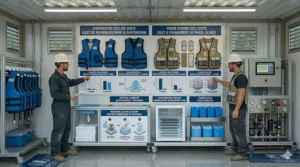
Cooling Technology Comparison: Ice vs Evaporative vs Phase Change
The fundamental science separating these three cooling technologies determines their real-world performance in Canadian conditions. Ice pack vests operate through direct thermal transfer—frozen gel or water at 0°C contacts your skin (or clothing), heat flows from your body (37°C) to the cold pack until thermal equilibrium is reached. This process is humidity-independent, works indoors or outdoors, and delivers immediate cooling sensation. The limitation is phase change: once the pack melts completely and reaches ambient temperature, cooling ceases. In 35°C summer heat with physical work generating additional body heat, this typically occurs within 1-3 hours depending on pack thermal mass.
Evaporative cooling vests exploit water’s phase change from liquid to vapour, which requires significant energy (approximately 2,260 joules per gramme of water evaporated). This energy is extracted from your body as heat, cooling you in the process. The polymer-embedded fabrics in quality vests like Ergodyne models hold water molecules within the material structure whilst allowing airflow to facilitate evaporation. Here’s the catch: evaporation rate depends entirely on ambient humidity. At 30% relative humidity (typical Alberta summer), evaporation proceeds rapidly and cooling is intense. At 75% relative humidity (Ontario summer afternoon), the air cannot accept much additional moisture and evaporation slows dramatically, reducing cooling effectiveness by 60-70%. Temperature also matters—evaporative cooling works better at higher temperatures because the vapour pressure differential increases.
Phase change material vests use engineered substances (typically bio-based paraffins or salt hydrates) that melt at specific temperatures between 15-21°C. During phase transition from solid to liquid, these materials absorb thermal energy without temperature increase—the material stays at its melting point throughout the transition. This provides consistent cooling: a 15°C PCM pack maintains 15°C against your skin until completely melted, then gradually warms to ambient temperature. Compared to ice (0°C shock followed by gradual warming), PCM delivers more comfortable sustained cooling without extreme cold that can trigger vasoconstriction. The engineering challenge is heat capacity: ice has higher latent heat than most PCMs, so gram-for-gram, ice absorbs more thermal energy before phase change completes.
For Canadian workers, understanding these mechanisms informs smart purchasing. Federal workplace guidelines address thermal stress management, and choosing appropriate cooling technology is part of comprehensive heat stress prevention. Ice vests excel in humid environments where evaporative cooling fails, PCM vests optimize comfort under protective gear, and evaporative vests provide lightweight all-day cooling in dry climates—each technology answers different Canadian workplace challenges.
Cost-Benefit Analysis: Total Ownership in Canadian Dollars
Evaluating cooling vest value requires looking beyond purchase price to total cost of ownership over a Canadian summer season (typically May through September, roughly 150 working days). A budget ice vest at $45 CAD seems economical initially, but gel pack replacement after 3-4 months of daily use adds $25-35 CAD for a replacement pack set, bringing first-season cost to $70-80 CAD. More concerning is the time cost: managing ice pack freezing, rotation, and replacement consumes 10-15 minutes daily—over 150 days, that’s 25-37 hours of unpaid labour. For contractors billing at $50-75/hour, that’s $1,250-2,775 in opportunity cost, dramatically shifting the cost-benefit equation.
Premium ice vests like the Callicebus at $80-85 CAD deliver better pack durability (6+ months heavy use) and more efficient pocket design reducing pack management time to 5-8 minutes daily. Over a season, you’re looking at 12-20 hours of management time, cutting opportunity cost by more than half. The quality differential between budget and premium ice vests isn’t just comfort—it’s measurable time savings that compounds across a work season.
Evaporative vests present a different calculation. The Ergodyne Chill-Its 6665 at $85 CAD requires zero consumables—just water—and 3 minutes activation time daily. Over 150 days, that’s 7.5 hours of time investment. Factor in lifespan: quality evaporative vests last 12-18 months with proper care (300+ uses), spreading the $85 investment across potentially two full seasons. Cost per use drops to approximately $0.28 CAD, compared to ice vests averaging $0.45-0.65 per use when accounting for pack replacement.
Phase change material vests command premium pricing ($130-165 CAD for Ergodyne models) but deliver value through versatility and reduced management overhead. Quick recharge times (5-15 minutes) and no consumable replacement create lower total cost of ownership than comparable ice vests over multi-season use. The real value proposition for PCM vests is application-specific: if you work under protective equipment where traditional vests fail, a $150 PCM vest isn’t expensive—it’s the only functional solution, making price comparisons irrelevant.
Canadian buyers should also factor in provincial climate when calculating value. Alberta and Saskatchewan workers can expect 140-160 days of evaporative vest utility per season due to consistently low humidity, maximizing cost-per-use value. Ontario and coastal British Columbia workers get perhaps 80-100 days of effective evaporative cooling, with ice vests necessary during high-humidity periods, potentially requiring investment in both technologies.
Features That Actually Matter (And Those That Don’t)
Marketing specifications don’t always translate to practical performance advantages. Let’s separate genuinely useful features from inflated claims when evaluating cooling vests for Canadian conditions. Ice pack count is the most misleading specification—manufacturers advertise “72 ice cells!” or “30 ice packs!” as if quantity alone determines cooling power. Reality: total thermal mass and thermal contact quality matter infinitely more than pack count. Six 150-gramme gel packs with tight body contact will outperform twenty 50-gramme packs that shift around loosely. Calculate total gel weight (usually 800 grammes to 1.5 kg for functional ice vests) rather than counting individual packs.
Reflective strips have become standard features, but implementation quality varies dramatically. Canadian workplace safety requirements for road crews and utility workers demand specific reflectivity levels—ANSI/ISEA 107 Type R Class 2 compliance isn’t optional, it’s legally mandated in many provinces. Budget vests using low-quality reflective material that fades after 20-30 wash cycles fail inspection and require replacement. Premium vests with industrial-grade reflective strips maintain visibility through 100+ wash cycles, delivering better long-term value despite higher initial cost. If your work requires high-visibility gear, verify reflective strip quality rather than assuming all reflective vests meet Canadian safety standards.
Adjustability genuinely matters, but the mechanism determines durability. Velcro adjustments provide easy fitting but lose grip after 2-3 months of daily use—you’ll find yourself constantly readjusting as Velcro hook material gets clogged with fabric fibres and loses adhesion. Buckle systems with elastic straps maintain adjustment tension through hundreds of uses, making them superior for professional use despite slightly more complex initial fitting. The difference becomes apparent around month four when Velcro vests hang loosely whilst buckle systems maintain snug thermal contact.
“Waterproof pockets” is often cited for ice pack vests, preventing condensation from leaking onto clothing. This feature matters significantly for workers wearing electronics (phones, two-way radios) or anyone whose work doesn’t tolerate dampness. Budget vests using thin plastic pocket liners develop tears quickly; quality vests with heat-sealed waterproof fabric maintain integrity through extended use. Test this before relying on it—fill a pack with water, insert in pocket, and squeeze firmly to verify seal quality.
Anti-microbial treatment in evaporative vests separates quality from cheap alternatives. Untreated polymer fabrics develop musty smells within 3-4 weeks of regular use as bacteria thrive in the perpetually moist environment. Treated fabrics resist microbial growth, keeping vests fresh through months of use. This isn’t cosmetic—it’s the difference between a vest you’ll actually wear versus one that sits unused because it smells like pond water after a month. Canadian users in humid provinces particularly benefit from anti-microbial treatment extending usable life.
Cooling duration claims deserve skepticism. Manufacturers test under optimal conditions: moderate temperature, low activity level, controlled humidity. Real-world performance typically delivers 50-70% of advertised duration for active workers. An “up to 4 hours” evaporative vest realistically provides 2-3 hours for construction workers in Canadian summer heat. Use manufacturer claims as comparative guidelines rather than absolute promises.
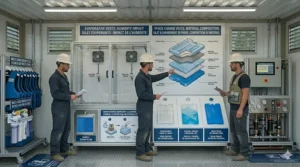
Cooling Vest Maintenance & Maximizing Lifespan in Canadian Climates
Proper maintenance extends cooling vest lifespan from one season to three or more, dramatically improving value per dollar spent. Ice pack vests require careful handling of gel packs to prevent seal failures—the number one reason ice packs fail prematurely. Always freeze packs flat rather than crumpled; folded packs develop stress points in the plastic seams that eventually crack and leak. Store frozen packs in zipper-style freezer bags to prevent freezer burn and protect seams from damage by other frozen items. Ontario users report significantly longer pack life (8-10 months vs 3-4 months) by using dedicated plastic storage containers in the freezer rather than loose pack storage.
Clean vest fabric monthly during active use season, but never machine-wash gel packs—the agitation damages seams. Hand-wash packs with mild soap if needed, pat dry with towels, and air-dry completely before freezing. Moisture trapped in seams during freezing accelerates plastic degradation. The vest itself tolerates machine washing (check manufacturer specs), but wash inside-out in cold water with minimal detergent to preserve reflective strip adhesion and fabric integrity. Line-dry rather than machine-dry to prevent heat damage to elastic and Velcro components.
Evaporative vests demand different care protocols. After each use, rinse thoroughly to remove sweat salts and mineral deposits from water—these accumulate in polymer fabrics and reduce water absorption capacity over time. Saskatchewan users with hard water particularly need this: calcium and magnesium deposits will clog polymer matrix within 4-6 weeks without regular rinsing. Store evaporative vests completely dry between uses to prevent mildew growth; even anti-microbial treatments can’t fully prevent mold if vests sit damp for days. Machine-wash monthly during active season using the manufacturer’s recommended method, typically cold water gentle cycle with minimal detergent.
Critical for evaporative vests: never use fabric softener, bleach, or harsh detergents. These chemicals coat polymer fibres, blocking water absorption and destroying cooling functionality. Canadian hard water users should consider occasionally washing with distilled water to remove mineral buildup—a gallon of distilled water costs $2 CAD and can restore absorption capacity to vests showing reduced performance.
Phase change material vests require gentle handling to prevent pack punctures. PCM materials are safe and non-toxic, but pack leakage ruins the vest. Hand-wash fabric carriers only; PCM packs should be wiped with damp cloth if needed but never submerged or machine-washed. Store PCM packs in refrigerator or freezer (depending on activation temperature) in sealed bags to prevent cross-contamination of food items. While PCM materials are food-safe, nobody wants their strawberries smelling like their cooling vest.
Canadian winter storage requires specific attention. Thoroughly clean and dry all vest components, then store in sealed containers with silica gel packets to control humidity—basement and garage storage in Canadian winters involves temperature fluctuations that can create condensation damage. Ice pack gel can separate during long-term storage; this is normal and doesn’t indicate failure. Knead packs gently before first spring use to redistribute gel uniformly.
❓ FAQ: Your Top Questions About Cooling Vests in Canada Answered
❓ Can cooling vests prevent heat stroke for Canadian construction workers?
❓ Do evaporative cooling vests work during humid Ontario summers?
❓ How long do ice packs stay frozen in 35°C Canadian summer heat?
❓ Are cooling vests worth the investment for occasional use in Canada?
❓ Can you wear cooling vests under safety vests required by Canadian law?
Final Verdict: Choosing the Right Cooling Technology for Your Canadian Needs
After analyzing specifications, real-world performance, and cost factors, the answer to cooling vest vs ice vest which is better crystallizes into distinct recommendations for different Canadian scenarios. Alberta and Saskatchewan workers in construction, landscaping, and outdoor roles should prioritize evaporative cooling vests like the Ergodyne Chill-Its 6665 or 6685—the consistently low humidity in Prairie provinces allows evaporative technology to shine with lightweight design, long cooling duration (4-8 hours), and zero consumable costs beyond water. The $75-135 CAD investment delivers exceptional cost-per-use across 150+ day work seasons.
Ontario, Quebec, and coastal British Columbia workers face higher humidity that sabotages evaporative cooling performance. Ice pack vests become essential here, with models like the Callicebus or PANGTIKU offering 2-3 hours of reliable cooling regardless of humidity levels. The higher maintenance requirement (freezing, pack rotation) is unavoidable when evaporative technology won’t function. Budget $60-85 CAD for quality ice vests with durable gel packs and effective pocket design. Keep backup frozen packs in jobsite coolers for rotation during 8-10 hour shifts.
Workers under protective equipment—firefighters, hazmat crews, industrial workers in chemical suits, emergency responders—have only one viable option: phase change material vests. Neither ice nor evaporative vests function under protective layers that block airflow and thermal contact. The Ergodyne Chill-Its 6260 at $130-165 CAD isn’t expensive in this context; it’s the sole technology engineered for these conditions, making price comparisons with incompatible technologies meaningless. The consistent 18°C cooling prevents both heat stress and cold shock risks associated with 0°C ice packs.
Budget-conscious workers or those with occasional heat exposure (fewer than 40 days annually) should consider the CHILLSWIFT ice vest at $45-65 CAD. While lacking premium features, it delivers functional cooling for intermittent use without major investment. Save the premium pricing for tools you’ll use daily—occasional-use cooling gear doesn’t justify $120+ expenditure.
The optimal approach for many Canadian professionals is technology diversification: own both an evaporative vest for low-humidity days and an ice vest for humid conditions. Total investment under $150 CAD provides complete heat management flexibility across varying Canadian weather patterns. Your body’s ability to work safely and productively in heat is worth far more than the cost of appropriate cooling gear.
Recommended for You
- Best Cooling Gear for Hiking Canada 2026: 7 Must-Have Items
- 7 Best Farmer Cooling Vests Canada 2026: Beat Heat Stress
- Best Cooling Gear for Landscapers Canada 2026
Disclaimer: This article contains affiliate links. As an Amazon Associate, I earn from qualifying purchases. If you purchase products through these links, we may earn a small commission at no additional cost to you.
✨ Found this helpful? Share it with your friends! 💬🤗
