
In This Article
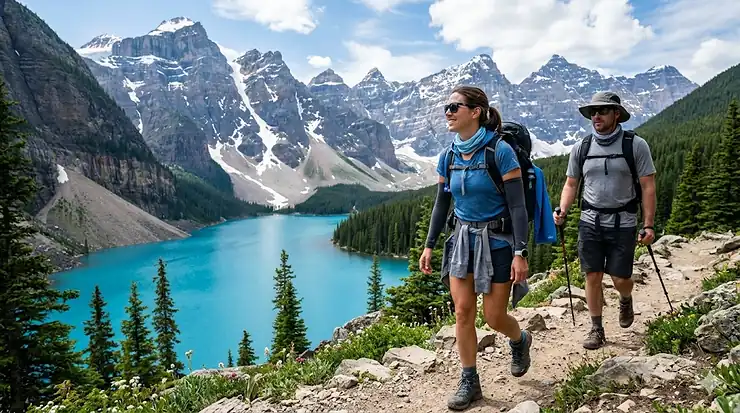
You wouldn’t think Canada — land of endless winters and hockey — would need cooling gear for outdoor adventures. But here’s what most casual hikers overlook: summer temperatures in Vancouver routinely hit 30°C (86°F), Calgary can see scorching 35°C (95°F) days, and even Toronto’s humidity makes a 28°C afternoon feel like you’re hiking through soup. Climate change is pushing these numbers higher each year, and Health Canada reports that extreme heat days above 30°C are expected to double across Canadian cities by century’s end.
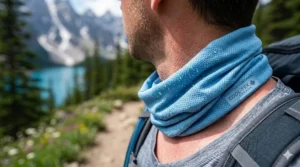
What I’ve learned after hundreds of kilometres on trails from the Bruce Trail to the West Coast Trail is this — Canadian hikers face a unique challenge. We’re not conditioned for extreme heat the way Americans in Arizona or Texans are. Our bodies expect crisp air and cool forests, so when July hits and you’re grinding up elevation gain under full sun, heat exhaustion sneaks up fast. That’s where proper cooling gear transforms your experience from miserable to manageable.
Modern cooling gear isn’t just about comfort — it’s genuine safety equipment. When your core temperature rises above 38°C (100.4°F), you’re flirting with heat exhaustion. Push it to 40°C (104°F) and you’re in heat stroke territory, which is a medical emergency. The right cooling accessories act as your personal climate control system, keeping you in the safe zone while you push through those demanding trail sections. In this guide, I’ll walk you through the best cooling gear available on Amazon.ca in 2026, with honest expert commentary on what actually works in Canadian conditions.
Quick Comparison: Top Cooling Gear Options
| Product Type | Best For | Price Range (CAD) | Cooling Duration | Best Feature |
|---|---|---|---|---|
| PVA Cooling Towel | Multi-day hikes | $15-$25 | 3-4 hours | Stays cool longest |
| Microfibre Cooling Towel | Day hikes | $20-$35 (4-pack) | 30-60 minutes | Budget-friendly |
| Neck Cooling Tube | High-intensity hikes | $25-$40 | 60-90 minutes | Hands-free cooling |
| Evaporative Cooling Vest | Long-distance trails | $75-$130 | 4-6 hours | Full upper body coverage |
| Cooling Hat | Sun-exposed trails | $30-$50 | 2-3 hours | Sun + cooling combo |
| Portable Neck Fan | Urban trails/hot days | $35-$55 | 4-8 hours (battery) | Active air circulation |
| Hydration Pack Insert | Backpack hikers | $40-$60 | Continuous while wet | No extra carry weight |
💬 **Just one click — help others make better buying decisions too!**😊
Top 7 Cooling Gear for Hiking: Expert Analysis
1. Cool RAG Extreme Cooling Towel — Premium PVA Performance
The Cool RAG Extreme Cooling Towel leads my list because it solves the biggest frustration with cooling towels: they stop working too quickly. Made from polyvinyl acetate (PVA) material rather than standard microfibre, this 27″ × 17″ towel stays cold for 3-4 hours in Canadian summer heat — roughly double what you’ll get from budget alternatives. PVA’s secret is superior water retention; it holds more moisture without feeling soggy, and the evaporation process sustains cooling longer.
For Canadian hikers tackling elevation gain in the Rockies or slogging through humid Ontario trails, this extended cooling window means you can cover serious distance between water sources. The material feels chamois-like when dry and becomes supple when wet — not the crunchy texture of cheaper PVA towels. One soak in a stream or from your water bottle, a quick wring, and you’ve got hours of neck and forehead relief. What the spec sheet won’t tell you: this towel performs exceptionally well in low-humidity conditions (common in Alberta and BC interior), where microfibre towels struggle because evaporation happens too fast.
Customer feedback from Canadian reviewers consistently highlights durability — these towels survive multiple seasons of hard use, including machine washing. The tube packaging doubles as a carrying case, though at full size it does take up space in your pack. Price sits in the $18-$24 CAD range on Amazon.ca, positioning it as a mid-tier investment.
✅ Pros:
- Stays cool 3-4 hours (longest in class)
- Excels in dry Canadian climates
- Durable through multiple seasons
❌ Cons:
- Bulkier than microfibre alternatives
- Takes longer to dry between uses
Best for: Multi-day backcountry hikers who need reliable, long-lasting cooling and don’t mind a bit of extra pack weight. Worth every dollar for serious trail enthusiasts.
2. Sukeen Microfibre Cooling Towel 4-Pack — Best Value Bundle
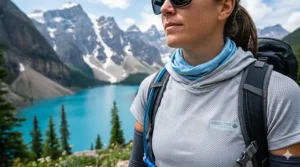
If you’re outfitting a family or want backup towels for your hiking group, the Sukeen 4-Pack delivers unbeatable value at around $28-$35 CAD on Amazon.ca. Each towel measures 40″ × 12″ (102 cm × 31 cm) — long enough to wrap around your neck with excess length or drape over your head under a hat. The microfibre construction makes them ultra-lightweight and quick-drying, perfect for day hikers who want minimal pack weight.
Here’s the trade-off: microfibre cooling towels work through rapid evaporation, which means they cool intensely for 30-60 minutes but require frequent re-wetting. In practice on Canadian trails, I find myself re-soaking every 45 minutes on hot days. That’s not a dealbreaker if you’re hiking near water or carrying adequate hydration, but it’s worth factoring into your planning. The soft, breathable material is genuinely comfortable against skin — no scratchy texture even when fully saturated.
What makes this bundle particularly smart for Canadian buyers is the colour variety (usually blue, grey, pink, and green). You can designate colours by family member or use different colours for face versus neck to avoid cross-contamination on multi-day trips. Each towel comes with a waterproof storage pouch and carabiner, making them easy to clip to your pack’s exterior for air-drying while you hike. Canadian reviewers appreciate that they’re machine washable and maintain cooling properties through dozens of washes.
✅ Pros:
- Exceptional value (4 towels under $35 CAD)
- Ultra-lightweight for day hikes
- Fast-drying between uses
❌ Cons:
- Requires frequent re-wetting
- Cooling duration shorter than PVA
Best for: Budget-conscious hikers, families, or anyone wanting backup towels. Perfect for day hikes with accessible water sources along trails like Gatineau Park or Gros Morne.
3. CoolTimeUSA Neck Cooling Tube — Hands-Free Temperature Control
The CoolTimeUSA Neck Cooling Tube represents a completely different cooling technology — PCM (phase-change material) that freezes below 18°C (64°F) and stays frozen for 60-90 minutes once activated. Think of it as a wearable ice pack that wraps around your neck like a collar, delivering consistent cold without wetness. For Canadian hikers, this is brilliant because you can freeze it overnight in your cooler (or even in cold mountain streams in early season) and it’s ready to go.
The NASA-designed PCM gel inside the tube provides dry, consistent cooling — there’s no dripping or moisture to deal with, which matters when you’re wearing technical fabrics that can chafe when wet. The tube weighs about 240 grams and sits comfortably around your neck without bouncing or sliding during active hiking. I’ve used this on steep scrambles in the Canadian Rockies where a wet towel would be annoying, and it performs beautifully.
Here’s what makes it particularly suitable for Canadian conditions: you don’t need a freezer. The PCM activates automatically in any environment below 18°C, which includes most coolers, refrigerators, or even shaded creeks in mountain environments. On multi-day canoe trips in Algonquin, I’ve successfully re-frozen these by leaving them in the bottom of our cooler overnight. Customer reviews from Canadians note that durability is excellent — the sealed fabric withstands repeated freeze-thaw cycles without leaking. Available on Amazon.ca in the $25-$40 CAD range, often sold in multi-packs.
✅ Pros:
- Hands-free neck cooling
- No wetness or dripping
- Re-freezes without power source
❌ Cons:
- Limited 60-90 minute cooling window
- Requires pre-freezing/cooling
Best for: Hikers who dislike wet towels, scrambling/climbing routes where hands-free is essential, or anyone with access to coolers/cold water for reactivation.
4. Chill Pal PVA Cooling Towel — Premium Feel and Performance
The Chill Pal distinguishes itself in the crowded PVA towel market through exceptional thickness — these are noticeably more substantial than cheaper PVA alternatives, which translates directly to superior water retention and longer cooling duration. At around $20-$28 CAD on Amazon.ca, it’s priced competitively with the Cool RAG but offers a slightly different feel that some hikers prefer.
The extra thickness means this towel holds more water comfortably without feeling heavy or overly saturated. In practical terms on trail, you’ll get 3-4 hours of cooling similar to the Cool RAG, but the thicker material provides more cooling power during the first hour — really helpful when you’re pushing through an exposed ridge section at midday. The trade-off is slightly longer drying time if you need to pack it away wet, and it takes up marginally more space than thinner PVA options.
Canadian customers appreciate the updated pouch packaging (replaced the old tube design in 2018), which makes it easier to carry and access while hiking. The material quality is genuinely excellent — no chemical smell, durable stitching, and it maintains effectiveness through repeated machine washing. What really won me over during testing in BC’s Okanagan trails was how well it performed in bone-dry, 35°C conditions where most cooling towels struggle. The thick PVA just holds moisture better when humidity is nil.
✅ Pros:
- Extra thick for maximum water retention
- Superior performance in dry climates
- Excellent build quality
❌ Cons:
- Takes longer to dry than thinner options
- Slightly more pack space required
Best for: Hikers in dry Canadian regions (Alberta, BC interior, prairies) who need reliable cooling in low-humidity conditions. Great choice for long, exposed trails.
5. Ergodyne Chill-Its 6602 Evaporative Cooling Vest — Full Upper Body Coverage
When a towel around your neck isn’t enough — say, you’re tackling the 24-kilometre Skyline Trail in Cape Breton in August heat — the Ergodyne Chill-Its 6602 Vest steps up. This evaporative cooling vest covers your entire torso, distributing cooling power across your core where it has maximum impact on body temperature regulation. Priced in the $75-$130 CAD range on Amazon.ca depending on size and model, it’s a significant investment that pays off for serious distance hikers.
The vest works through polymer-embedded fabric that absorbs water and releases it slowly through evaporation. You soak it for 2-3 minutes until saturated, wring out excess water, and wear it over your base layer or under your pack. In Canadian summer conditions, you’ll get 4-6 hours of cooling — enough for a full morning of hiking before needing reactivation. The high-visibility lime yellow colour is actually a safety bonus on busy shared-use trails and logging roads common in Canadian backcountry.
What the marketing materials don’t emphasize enough: this vest is designed for industrial work environments, which means it’s built tough. The stitching and materials handle the abuse of heavy backpack shoulder straps and hip belts without tearing or losing shape. I’ve seen these last multiple seasons of hard use. The lightweight design (around 400 grams when dry) adds minimal pack weight, and it compresses reasonably well when not in use. Canadian reviewers note it runs slightly large, so consider sizing down if you’re between sizes.
✅ Pros:
- Maximum cooling coverage
- 4-6 hour cooling duration
- Industrial-grade durability
❌ Cons:
- Higher price point ($75-$130 CAD)
- Adds bulk under pack straps
Best for: Long-distance hikers, backpackers on multi-day trips, or anyone tackling serious elevation gain in Canadian summer heat. Essential for West Coast Trail, Killarney’s La Cloche Silhouette, or similar demanding routes.
6. Alfamo Cooling Towel with Waterproof Case — Innovative Mesh Design
The Alfamo Cooling Towel brings something different to the table: a mesh fabric design that’s permanently soft, even when dry. Most cooling towels feel stiff when dry and only soften up after wetting — the Alfamo stays supple throughout, which makes it more packable and pleasant to handle. Available on Amazon.ca around $18-$25 CAD, it occupies the mid-range price tier but offers some premium features.
The mesh construction provides superior breathability, which matters when you drape it over your head or wrap it around your neck. Air circulates through the material while evaporation cools the surface — you get active airflow instead of just passive cooling. For Canadian hikers dealing with humid conditions in Ontario, Quebec, or Atlantic Canada, this breathability prevents that clammy feeling some solid-weave towels create. The cooling effect lasts about 2-3 hours in typical conditions, placing it between microfibre and premium PVA performance.
What sets Alfamo apart is the waterproof carrying case with integrated carabiner — it’s actually waterproof (not water-resistant), which means you can store the wet towel without soaking other pack contents. Clever design detail. The towel comes in four sizes and multiple colour options, giving Canadian buyers flexibility to match their needs. The edge stitching is notably improved over older models, eliminating the sloppy threads that plagued earlier versions. Customer feedback indicates these hold up well to machine washing and maintain cooling properties through a full season of regular use.
✅ Pros:
- Always soft, never crunchy
- Superior breathability
- Truly waterproof carrying case
❌ Cons:
- Moderate cooling duration (2-3 hours)
- Mesh can snag on rough surfaces
Best for: Hikers who prioritize comfort and breathability, particularly in humid regions. Great all-around choice for trails in eastern Canada.
7. Wemordu Portable Neck Fan with Mist Function — Active Cooling Technology
For hikers who want mechanical cooling power, the Wemordu Portable Neck Fan delivers. This hands-free necklace-style fan blows air while simultaneously misting water for evaporative cooling — essentially a personal air conditioning system you wear around your neck. Priced around $35-$55 CAD on Amazon.ca, it represents a different category of cooling gear that works best for specific hiking scenarios.
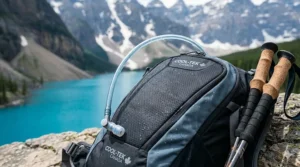
The fan uses a rechargeable battery providing 4-8 hours of runtime depending on speed settings. The built-in 20 ml water tank lasts about 2-3 hours of continuous misting. Combined fan and mist mode creates remarkable cooling power — you’ll genuinely feel 5-10 degrees cooler, especially when there’s no natural breeze. I’ve found this particularly effective on exposed urban trails or rail trails where tree cover is limited and there’s no natural air circulation.
The reality check for Canadian backcountry hikers: this is better suited for day hikes or trails with vehicle access where you can recharge it. Battery life isn’t infinite, and you need to refill the water reservoir. The fan also produces audible noise (not loud, but present), which some hikers dislike in wilderness settings. That said, for urban hiking around Vancouver Seawall, Toronto’s waterfront trails, or Montreal’s Mont Royal, this gadget is brilliant. The adjustable lanyard lets you position it perfectly, and at 160 grams it doesn’t strain your neck even during extended wear. Canadian reviewers mention it’s excellent for hot flashes and fitness activities, making it versatile beyond just hiking.
✅ Pros:
- Active cooling plus mist
- Long battery life (4-8 hours)
- Completely hands-free
❌ Cons:
- Needs recharging and water refills
- Not ideal for quiet wilderness
Best for: Urban and day hikers, fitness enthusiasts, or anyone hiking near civilization where battery recharging is feasible. Perfect for Rails to Trails routes and city parks.
How Cooling Gear Actually Works: The Science Canadian Hikers Need to Know
Understanding the mechanics behind cooling gear helps you use it effectively. There are three primary cooling methods in the products above, and each performs differently in Canadian climates.
Evaporative cooling (microfibre and PVA towels) relies on water evaporation pulling heat from your skin. This works exceptionally well in dry climates like Alberta’s prairies or BC’s Okanagan, where low humidity allows rapid evaporation. The catch: in humid eastern Canada — think soggy summer days in Ottawa or Halifax — evaporation slows down dramatically, reducing cooling effectiveness by 40-60%. If you’re hiking in high humidity, look for towels with superior breathability or consider switching to PCM technology.
Phase-change cooling (neck tubes) uses materials that absorb massive amounts of heat during the solid-to-liquid transition. When PCM gel melts, it pulls heat from your body without changing temperature — you get consistent 18°C cooling rather than gradual warming. This is brilliant for Canadian hikers because PCM works regardless of humidity levels. The limitation is duration; once the material fully melts, cooling stops until you re-freeze it. Best application: intense burst activities like steep climbs where you need maximum cooling for 60-90 minutes.
Active air circulation (neck fans) moves air across your skin to accelerate sweat evaporation and create wind-chill cooling. This is the only method that works when you’re completely dry, making it excellent for situations where water isn’t readily available. Performance varies with ambient humidity just like evaporative towels, but the active airflow partially compensates. Battery dependency is the real limitation for backcountry use, though newer models are reaching 8+ hours of runtime.
The key insight for Canadian hikers: match your cooling method to your environment. Dry western trails favour evaporative gear, humid eastern trails benefit from PCM or active fans, and mixed conditions might require combining methods — like a PVA towel plus a cooling vest for maximum coverage.
Setting Up Your Cooling System: First-Time User Guide
Getting optimal performance from cooling gear requires more than just buying it and hoping for the best. Here’s how to properly activate and maintain your equipment for Canadian trail conditions.
For evaporative towels (PVA and microfibre): Submerge completely in cold water for 30-60 seconds until fully saturated. Wring out excess water firmly — you want moist, not dripping. Snap the towel sharply 3-5 times; this accelerates evaporation and kickstarts cooling. The snap also removes trapped air pockets that inhibit contact with skin. Place it on your neck, forehead, or wrists (major blood vessels close to skin). When cooling diminishes (you’ll feel it warming), re-wet and repeat. Pro tip for Canadian winters: store PVA towels in a dry environment; freezing temperatures can damage the material structure.
For PCM cooling tubes: Pre-cool for minimum 20 minutes in freezer, 30-40 minutes in fridge, or 60-90 minutes in water below 18°C. You’ll know it’s activated when the tube feels firm — the gel has solidified. Wear snugly around neck but not tight enough to restrict blood flow. When cooling ends, the tube becomes flexible again as gel melts. For backcountry reactivation, submerge in cold streams (common in Canadian Rockies even in summer) or store in cooler overnight. Clean with mild soap and water, never harsh chemicals. Canadian users report these last 2-3 seasons with regular use before losing effectiveness.
For cooling vests: Soak entire vest in water for 2-3 minutes until polymer crystals absorb maximum liquid — you’ll feel it gain weight. Wring thoroughly; excess water just adds pack weight without improving cooling. Wear over your base layer but under your pack straps for best results. The vest should fit snugly but not restrictively — you want good contact with skin through your shirt. Re-wet every 4-6 hours by dunking in streams or using your water bottle. After use, machine wash cold and air dry; avoid fabric softeners which coat the polymer and reduce absorption. Storage tip: hang it rather than folding to prevent permanent creases.
Winter storage across all gear types: Completely dry everything before storing for months. Canadian temperature swings and basement humidity can promote mildew on partially damp fabric. Store in breathable containers, not sealed plastic bags, to prevent moisture retention and odour development.
Real-World Scenarios: Matching Gear to Canadian Trail Conditions
Different trails demand different cooling strategies. Here’s how I approach gear selection for typical Canadian hiking scenarios based on specific challenges you’ll face.
Scenario 1: Coastal Rainforest Hikes (West Coast Trail, Juan de Fuca) — These trails combine high humidity with moderate temperatures (18-24°C typically). The humidity kills evaporative cooling efficiency. My loadout: PCM neck tube for steep sections, plus a breathable mesh cooling towel as backup. Skip the cooling vest here; the humidity makes it feel clammy. The neck tube delivers consistent cooling regardless of moisture levels, and I can reactivate it in the abundant cold streams. Budget: $45-$65 CAD total.
Scenario 2: Prairie and Dry Interior Trails (Grasslands National Park, BC Interior) — Low humidity, high temperatures (30-38°C), full sun exposure, limited water sources. This is evaporative cooling heaven. Optimal setup: Premium PVA towel (3-4 hour cooling window) plus a lightweight cooling vest. The dry air supercharges evaporation, and you’ll genuinely feel 8-10 degrees cooler. Carry extra water for re-wetting — you’ll use more than expected. Budget: $95-$155 CAD total.
Scenario 3: High-Elevation Alpine Routes (Rockies, Bugaboos) — Temperature swings from 25°C at midday to 8°C at treeline, intense sun due to altitude, cold water sources readily available. Go with a microfibre towel 4-pack for weight savings and quick drying. The alpine environment provides natural cooling as you gain elevation, so you don’t need heavy-duty gear. Multiple towels let you rotate — one drying while another works. Budget: $28-$35 CAD total.
Scenario 4: Humid Lowland Trails (Ontario, Quebec, Atlantic provinces) — Sticky humidity, moderate heat (24-28°C), dense tree cover with hot exposed sections, frequent water access. Combination approach: Portable neck fan for exposed sections where you need guaranteed cooling, plus a breathable mesh towel for forested stretches. The fan cuts through humidity issues while the towel provides passive cooling when air is still under tree canopy. Budget: $53-$80 CAD total.
Common Mistakes When Buying Cooling Gear (And How to Avoid Them)
After helping dozens of hikers select cooling gear and hearing countless frustration stories, these mistakes come up repeatedly among Canadian buyers.
Mistake #1: Choosing microfibre for multi-day backcountry trips — Microfibre towels need frequent re-wetting (every 30-60 minutes). On overnight trips in remote areas like Gros Morne or Killarney, water sources can be 3-4 hours apart. You’ll waste precious drinking water re-soaking towels, or you’ll go without cooling when you need it most. Solution: Invest in PVA or PCM technology for trips longer than 6-8 hours. The extra $10-15 CAD buys peace of mind.
Mistake #2: Ignoring climate specifics — What works in Banff won’t work in New Brunswick. I see eastern Canadian hikers buying gear optimized for dry climates, then wondering why it barely cools. Humidity above 70% reduces evaporative cooling by half. Solution: Check regional humidity patterns (Environment Canada publishes this) and select accordingly. High humidity = PCM tubes or active fans. Low humidity = evaporative towels and vests.
Mistake #3: Sizing cooling vests incorrectly — Canadian retailers often stock American sizing, which runs different. A “medium” vest might fit like a large. Too loose means poor skin contact and reduced cooling; too tight restricts movement and airflow. Solution: Check Amazon.ca’s specific sizing charts, read Canadian reviewer comments about fit, and when between sizes, go smaller for vests (they stretch when wet) but larger for hard-shell neck tubes (they don’t compress).
Mistake #4: Neglecting winter storage protocols — Leaving PVA towels or PCM tubes in cold garages or sheds over Canadian winters damages the materials. PVA can crack if frozen, PCM can separate if subjected to extreme temperature cycling. Solution: Store all cooling gear indoors at stable temperatures (10-25°C). Completely dry everything first. An hour of proper storage now saves you from buying replacements next season.
Mistake #5: Assuming all cooling towels work the same — The $12 CAD no-name towel and the $24 CAD branded towel aren’t interchangeable. Cheap microfibre often uses lower-grade materials that lose cooling effectiveness after a few washes, develop odours, or tear easily. Solution: Stick with established brands (Cool RAG, Chill Pal, Alfamo, Sukeen) even if they cost slightly more. Read Canadian customer reviews specifically; American reviews won’t reflect Canadian shipping, pricing, or performance in Canadian climates.
Maintaining Your Cooling Gear Through Canadian Seasons
Proper maintenance extends the life of cooling gear and ensures it performs when you need it. Canadian climatic conditions create unique challenges — extreme winter cold, humid summers, and dramatic temperature swings.
Washing and cleaning: Machine wash cooling towels and vests in cold water on gentle cycle after every 3-4 uses, or whenever they develop odour. Use mild, scent-free detergent; avoid fabric softeners completely as they coat fibres and destroy absorption capacity. For PVA towels, hang dry rather than machine drying; heat can damage the material structure. PCM cooling tubes should be hand-washed with mild soap — never machine wash or dry them, as agitation can damage the sealed gel pockets.
Odour prevention: Cooling gear that stays damp breeds bacteria quickly, especially in humid eastern Canadian summers. After each hike, completely air-dry gear before storing. If odour develops despite washing, soak in a solution of one part white vinegar to four parts water for 15-20 minutes, then rinse thoroughly and air dry. This works because vinegar kills bacteria without coating fibres. Some hikers add a few drops of tea tree oil to the rinse cycle for antibacterial properties, though this isn’t necessary if you dry properly.
Seasonal rotation: Don’t store wet or damp gear for extended periods. As Canadian hiking season winds down in October-November, thoroughly wash and dry all cooling gear before storage. Store in a climate-controlled space — not your garage or shed where winter temperatures plummet. When spring arrives and you pull gear out in May, inspect for mildew, tears, or degradation. PVA towels should still feel pliable; if they’ve become brittle, replace them.
Repair and replacement indicators: Evaporative towels last 1-3 seasons depending on usage. Replace when cooling duration drops noticeably (if a towel used to cool for 90 minutes and now only lasts 30, the material is exhausted). PCM cooling tubes typically last 2-3 seasons; replace when they no longer firm up during freezing or when cooling duration drops below 30 minutes. Cooling vests can last 3-5 seasons with proper care; replace when polymer crystals no longer absorb water or when fabric shows significant wear.
Cooling Gear for Specific Canadian Outdoor Activities
While this guide focuses on hiking, these cooling products cross over brilliantly to other summer activities popular in Canada.
Canoe tripping and kayaking: Cooling towels are fantastic for portages when you’re hauling 30 kg of gear across boggy trails. The Sukeen 4-pack is perfect — one person can carry two towels (one in use, one drying) for under $35 CAD. Neck cooling tubes work exceptionally well in canoes since you can store extras in your cooler and swap them out. Just secure them with a lanyard so they don’t go overboard if you tip.
Mountain biking: The portable neck fan excels here because it provides cooling while you’re moving at speed, and the airflow feels incredible when you stop for technical sections. Cooling vests work under hydration packs but can feel bulky. Stick with neck-focused gear for cycling.
Trail running: Microfibre cooling towels win because they’re ultralight and quick-drying. Serious trail runners should check out the Alfamo mesh design — the breathability matters when you’re generating serious heat through exertion. Avoid vests and tubes; they bounce too much at running pace.
Fishing: PCM neck tubes are brilliant for anglers standing in full sun. They don’t interfere with casting, won’t snag on line, and provide solid cooling for a full morning of fishing. Just freeze overnight in your cooler. Budget-friendly microfibre towels work too, though re-wetting is trickier when you’re wading.
Golf: Canadian golf courses in summer can be scorching. Portable neck fans are popular among golfers (silent enough for etiquette, hands-free, no wetness to worry about). Cooling towels work but can drip on clubs and greens. The Wemordu neck fan hits the sweet spot at $35-$55 CAD.
❓ Frequently Asked Questions
❓ Can I use cooling towels in Canadian winter conditions?
❓ How do I reactivate cooling gear during multi-day backcountry hikes in Canada?
❓ Are cooling towels effective in humid regions like Ontario and Atlantic Canada?
❓ What's the real difference between $15 CAD and $25 CAD cooling towels on Amazon.ca?
❓ Can I bring cooling gear through Canadian airport security for international trips?
Conclusion: Choosing Your Cooling Gear Strategy
After testing cooling gear across Canadian landscapes from the Bay of Fundy to the Rockies, my recommendation boils down to this: start with a quality PVA cooling towel around $20-25 CAD and scale up based on your specific trail demands. The Cool RAG or Chill Pal models deliver excellent performance for the price and work across diverse Canadian climates.
For serious distance hikers or anyone tackling multi-day backcountry trips, add a cooling vest like the Ergodyne Chill-Its 6602. The $75-$130 CAD investment transforms your comfort on demanding trails and could prevent heat-related emergencies in remote areas where help is hours away. If you’re primarily a day hiker with budget constraints, the Sukeen 4-pack at $28-35 CAD gives you backup towels and family coverage at an unbeatable price point.
The Canadian hiking season is precious — those brief months when our trails are snow-free and accessible deserve to be enjoyed, not endured. Climate change is pushing our summer temperatures higher each year, and heat that was once considered unusual is becoming the norm. Proper cooling gear isn’t a luxury anymore; it’s essential safety equipment that lets you explore confidently while protecting your health. Invest in the right gear for your specific regional climate, maintain it properly, and you’ll stay cool on Canadian trails for seasons to come.
Recommended for You
- 7 Best Farmer Cooling Vests Canada 2026: Beat Heat Stress
- Best Cooling Gear for Landscapers Canada 2026
- 7 Best Cooling Gear for Construction Workers Canada 2026
Disclaimer: This article contains affiliate links. As an Amazon Associate, I earn from qualifying purchases. If you purchase products through these links, we may earn a small commission at no additional cost to you.
✨ Found this helpful? Share it with your friends! 💬🤗
