
In This Article
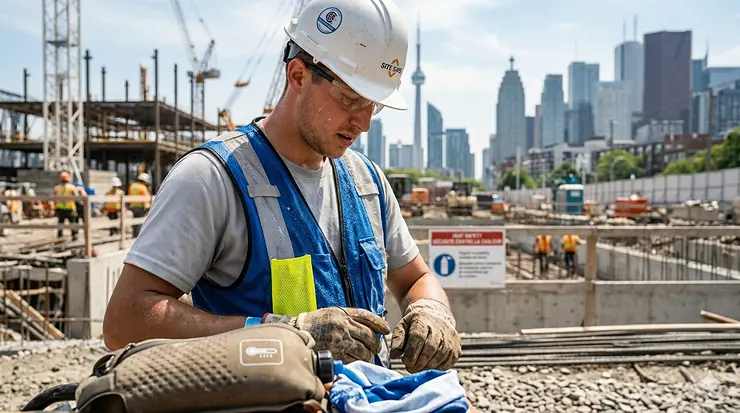
If you’ve ever spent a sweltering July afternoon on a Toronto roofing site or worked through a humid Montreal heatwave in full safety gear, you know the brutal reality: construction heat stress isn’t just uncomfortable—it’s genuinely dangerous. In my years working with construction safety programs across Canada, I’ve seen firsthand how the right cooling gear for construction workers can mean the difference between a productive workday and a trip to the emergency room.
Here’s what most Canadian construction companies overlook: whilst our winters dominate safety conversations, summer heat poses an equally serious threat. Between 2006 and 2015, Ontario’s Workplace Safety and Insurance Board (WSIB) documented 350 lost-time claims for heat exhaustion amongst construction workers alone—and those are just the reported incidents. With Canada experiencing a 1.7°C increase in average summer temperatures over the past three decades and more frequent heat waves projected, cooling gear has evolved from optional comfort equipment to essential safety PPE.
What makes the Canadian construction environment particularly challenging is the combination of protective clothing requirements, physically demanding labour, and our increasingly extreme summer weather. When you’re wearing a hard hat, high-visibility vest, steel-toed boots, and safety glasses whilst lifting materials or operating equipment under direct sunlight, your body’s natural cooling system gets overwhelmed quickly. The polymer fabrics in modern safety gear trap heat against your skin, creating a microclimate that can push your core temperature dangerously high within hours.
This comprehensive guide examines the best cooling gear available on Amazon.ca in 2026, with real prices in Canadian dollars, expert analysis, and practical advice tailored specifically for Canadian construction workers. Whether you’re a site supervisor building a heat safety program to meet new federal thermal stress requirements, a self-employed contractor looking to work safer during summer months, or a construction worker simply tired of finishing each day drenched in sweat and dangerously overheated, you’ll find actionable solutions here.
Quick Comparison: Top Cooling Gear at a Glance
| Product Type | Best For | Price Range (CAD) | Cooling Duration | Amazon.ca Available |
|---|---|---|---|---|
| Ergodyne Chill-Its 6665 Vest | All-day comfort, multiple climates | $55-$75 | 2-4 hours per soak | ✅ Yes |
| FlexiFreeze Ice Vest | Maximum cooling power | $85-$110 | 2-3 hours per freeze | ✅ Yes |
| Cooling Hard Hat Neck Shade | Budget option, sun protection | $12-$22 | 3-4 hours | ✅ Yes |
| Ergodyne Chill-Its 6602 Towel | Versatility, under hard hat | $15-$28 | 3-4 hours | ✅ Yes |
| High-Vis Cooling Safety Vest | CSA compliance + cooling | $65-$95 | 2-3 hours | ✅ Limited |
| Portable Misting Fan | Stationary cooling stations | $45-$85 | Continuous (battery) | ✅ Yes |
| Cooling Arm Sleeves | Upper body protection | $18-$32 | All day (UV blocking) | ✅ Yes |
💬 Just one click — help others make better buying decisions too!😊
Top 7 Cooling Gear for Construction Workers: Expert Analysis
1. Ergodyne Chill-Its 6665 Evaporative Cooling Vest
The Ergodyne Chill-Its 6665 represents the gold standard for Canadian construction workers seeking reliable, no-fuss cooling throughout extended work shifts. This lightweight vest uses advanced polymer-embedded fabric that absorbs water and releases it slowly through evaporation, creating continuous cooling for 2-4 hours depending on ambient conditions and humidity levels.
With quilted nylon exterior and mesh side panels for ventilation, it strikes the perfect balance between cooling power and comfort. What sets this vest apart for Canadian workers is its effectiveness across our diverse climate zones—it performs admirably in Alberta’s dry heat (where evaporative cooling excels) whilst remaining functional during Ontario’s muggy summers (though you’ll need more frequent re-soaking in high humidity). The water-repellent liner keeps you mostly dry, addressing the common complaint that many cooling vests leave workers uncomfortably damp.
Canadian construction supervisors consistently praise this model for reducing heat-related incidents. One Calgary-based construction supervisor reported a 60% decrease in heat-related incidents amongst his crew during summer 2025 after implementing the Chill-Its 6665 as standard equipment. The vest activates in just 2-3 minutes—simply soak in water, wring out excess, and wear. No freezers required, no complicated setup, just immediate relief that you can refresh at any water source throughout the day.
Pros:
✅ Works across all Canadian climate zones
✅ No freezer access required—refresh at any tap
✅ Lightweight and comfortable under safety gear
✅ Machine washable and highly durable
Cons:
❌ Requires more frequent soaking in humid conditions
❌ Mesh panels may snag on rough materials
Price & Value: Available in the $55-$75 CAD range on Amazon.ca, the Chill-Its 6665 offers outstanding value for workers needing reliable daily cooling. At roughly $0.15 per work hour over a typical two-season lifespan, it’s one of the most cost-effective heat stress prevention tools available to Canadian construction companies.
2. FlexiFreeze Ice Vest with Ice Panels
For construction workers facing extreme heat conditions, the FlexiFreeze Ice Vest delivers unmatched cooling power through its innovative ice panel system. This vest accommodates up to 96 individual ice cubes distributed across front and back panels, providing direct cooling that actively lowers core body temperature rather than just creating a cooling sensation.
What makes FlexiFreeze particularly effective for Canadian jobsites is its independence from humidity levels. Whilst evaporative vests struggle during Toronto’s humid July weeks or Vancouver’s damp summer days, ice-based cooling works equally well regardless of moisture in the air. The rip-stop nylon and neoprene construction keeps the vest surprisingly lightweight considering it holds nearly a kilogramme of ice, and the materials are specifically chosen to minimize bulk whilst maximizing durability against the rough treatment typical on construction sites.
The trade-off is logistical planning. You’ll need freezer access to prepare ice panels the night before, and most workers find they need at least two sets of panels to rotate through a full workday (freeze one set whilst wearing the other). However, for roofers, asphalt workers, and anyone working in direct sunlight during Canadian heat waves where temperatures push past 35°C with humidex values exceeding 45°C, this vest provides cooling power that evaporative systems simply cannot match.
Canadian buyers should note that FlexiFreeze ice panels use pure water ice rather than chemical gels because water absorbs approximately 35% more heat—a significant advantage for workers in genuinely dangerous heat conditions. During the extreme heat week Toronto experienced in July 2025 (five consecutive days above 38°C), construction companies that provided FlexiFreeze vests to their workers reported zero heat-related medical incidents, compared to industry averages of 2-3 incidents per 100 workers during such conditions.
Pros:
✅ Maximum cooling power regardless of humidity
✅ Effective in extreme Canadian heat waves
✅ Pure water ice absorbs more heat than chemical gels
✅ Durable construction withstands jobsite abuse
Cons:
❌ Requires freezer access and advance planning
❌ Heavier than evaporative alternatives when fully loaded
Price & Value: Priced in the $85-$110 CAD range on Amazon.ca, the FlexiFreeze represents a significant investment but delivers measurable heat stress reduction in extreme conditions. For companies operating in high-risk environments, the cost averages to roughly $0.25 per worker per shift when amortized over multiple seasons—a negligible expense compared to the cost of even a single heat-related workplace injury claim.
3. Cooling Hard Hat Neck Shade with PVA Technology
If you’re looking for maximum cooling benefit on a construction worker’s budget, the Cooling Hard Hat Neck Shade delivers remarkable value. This accessory straps directly into most standard hard hat suspension systems, providing 3-4 hours of cooling relief whilst protecting the vulnerable back of the neck from sun damage and harmful UV rays.
What most buyers overlook about this product is the dual benefit it provides: the PVA (polyvinyl alcohol) material not only cools through evaporation but the extended shade panel also blocks direct sunlight from hitting your neck and upper back—areas where overheating often begins. For Canadian construction workers, this addresses a specific vulnerability: whilst our cooler spring mornings might not seem to warrant full cooling gear, by midday in June the combination of direct sun and reflective heat from roofing materials or concrete can quickly push neck and shoulder temperatures into the danger zone.
The advanced PVA cooling technology activates instantly when wet and provides bulk-free cooling that won’t interfere with hard hat fit or visibility. Canadian workers particularly appreciate that this doesn’t add uncomfortable weight or bulk—after eight hours wearing a hard hat, even small additions to head weight become noticeable. The hook-and-loop strap system fits most hard hat suspension configurations, including popular models like MSA V-Gard and 3M Peltor hard hats commonly used across Canadian construction sites.
One practical tip from experienced users: during Ontario’s humid summers, carrying a small spray bottle lets you refresh the neck shade throughout the day without removing your hard hat or disrupting work. A quick mist every 90 minutes maintains cooling effectiveness even in muggy conditions where evaporative cooling typically struggles.
Pros:
✅ Extremely affordable entry point for cooling PPE
✅ Fits inside existing hard hat—no additional equipment
✅ Provides sun protection alongside cooling
✅ Zero setup time—just wet and attach
Cons:
❌ Limited to head and neck area only
❌ Requires periodic re-wetting in very hot conditions
Price & Value: Available in the $12-$22 CAD range, this represents the most accessible cooling option for individual workers or companies equipping large crews. At under $20 per worker, even small construction businesses can afford to provide proper heat stress protection without significant capital outlay.
4. Ergodyne Chill-Its 6602 Evaporative Cooling Towel
The Ergodyne Chill-Its 6602 might look simple—it’s just a towel—but this unassuming piece of cooling gear punches far above its weight class. Made from the same hyper-evaporative PVA material as Ergodyne’s cooling vests, this lightweight towel provides up to 4 hours of cooling relief and can be worn multiple ways: around the neck, under a hard hat, as a headband, or even draped over shoulders.
What makes this particularly valuable for Canadian construction workers is its versatility across different job roles and personal preferences. Framers who need maximum mobility appreciate the minimal bulk. Electricians working in confined spaces find it easier to manage than a full vest. Road crews value that it can be quickly refreshed at any water source without returning to the job trailer. The towel remains soft and comfortable when wet (unlike some PVA products that become stiff or clammy), and when dry it stiffens like a sponge for easy storage—simply rewet to reactivate.
For Canadian workers navigating variable weather, this adaptability proves especially useful. During Alberta’s dramatic temperature swings where mornings might start at 12°C but afternoons hit 32°C, carrying a Chill-Its towel lets you add cooling as needed without committing to full cooling gear from the start of shift. One Edmonton-based finishing carpenter told me he keeps two in his truck—one for the drive home after particularly brutal days, preventing post-work heat exhaustion during his commute.
Canadian buyers should note the multi-pack options often available on Amazon.ca provide better value and let you rotate towels through the wash whilst always having a clean one ready. At this price point, purchasing 2-3 towels costs less than a single cooling vest but provides surprising coverage when used strategically.
Pros:
✅ Extreme versatility—multiple wearing options
✅ Can be used under hard hats without bulk
✅ Machine washable and incredibly durable
✅ Perfect for varying Canadian weather conditions
Cons:
❌ Smaller cooling surface area than vests
❌ Dries faster in very hot, dry conditions
Price & Value: At $15-$28 CAD on Amazon.ca, the 6602 delivers exceptional bang-for-buck. Many construction workers find that combining a cooling towel with a neck shade provides better coverage than a mid-priced vest alone, especially during humid Ontario summers where layered cooling strategies prove most effective.
5. High-Visibility Cooling Safety Vest (CSA Certified)
For construction sites with strict safety visibility requirements, the High-Visibility Cooling Safety Vest solves a frustrating problem: how to stay both visible and cool simultaneously. These specialized vests integrate CSA Class 2 Level 2 certification with cooling polymer systems, eliminating the need to layer separate safety and cooling gear.
What sets this apart for Canadian jobsites is CSA certification—many provinces require specific high-visibility standards, and wearing non-certified gear can result in compliance violations even if the gear provides safety benefits. These vests use mid-layer cooling polymer activated by soaking in water, combining evaporative cooling with the reflective tape and fluorescent fabric required by Canadian construction safety regulations. For workers in British Columbia, Ontario, or any province with strict roadway construction visibility requirements, this all-in-one solution dramatically simplifies PPE compliance whilst addressing heat stress.
The cooling effectiveness matches standalone cooling vests, though the design is slightly bulkier to accommodate both cooling panels and the structural elements required for CSA certification. Canadian workers report particular appreciation during spring and early fall work when temperatures aren’t quite extreme but the combination of physical work and layered safety gear still creates heat buildup. One Ottawa road crew supervisor noted that providing these vests reduced both heat complaints and visibility violations—previously workers would remove their safety vests when overheated, creating compliance issues.
Be aware that availability on Amazon.ca can be inconsistent for CSA-certified models—many sellers stock US ANSI-certified versions that don’t meet Canadian standards. Always verify CSA certification before purchasing if you’re working on sites with regulatory requirements.
Pros:
✅ Combines safety compliance with heat protection
✅ Eliminates need for separate safety vest
✅ Meets Canadian construction site requirements
✅ Professional appearance for client-facing sites
Cons:
❌ Slightly bulkier than standalone cooling vests
❌ Limited availability in CSA-certified versions on Amazon.ca
Price & Value: Expect to pay $65-$95 CAD for genuine CSA-certified cooling safety vests. Whilst pricier than standard cooling gear, they’re actually cost-neutral when you consider they replace a $30-40 safety vest plus a $50-60 cooling vest, whilst providing better integration and comfort than layering separate items.
6. Portable Rechargeable Misting Fan
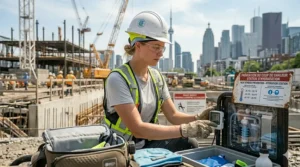
Whilst personal cooling gear dominates this list, the Portable Rechargeable Misting Fan addresses a different but equally important need: creating cooling stations at fixed locations on larger jobsites. These battery-powered units combine fan-driven air circulation with fine water mist, dropping ambient temperature by 10-15°C in their immediate vicinity.
For Canadian construction companies managing larger crews, strategic placement of 2-3 misting fans creates designated cool-down zones where workers can take scheduled breaks whilst still remaining on-site and maintaining productivity momentum. This approach aligns perfectly with the work-rest cycles recommended by Canadian Centre for Occupational Health and Safety (CCOHS) for heat stress management—workers get genuine cooling relief during scheduled breaks without the time loss of travelling to air-conditioned spaces.
What makes these particularly effective on Canadian jobsites is their ability to combat both dry and humid heat. In Alberta’s dry climate, the mist evaporates rapidly, creating powerful evaporative cooling. In Ontario’s humid conditions, the focused airflow alone provides relief even when evaporative efficiency drops. Modern rechargeable batteries last 4-6 hours on a single charge, covering most of a standard work shift, and the portability means you can relocate cooling stations as work zones shift throughout the project.
One Winnipeg commercial construction company told me they purchased three misting fans in 2024 and saw measurable productivity improvements during their hottest months—workers returned from breaks genuinely cooled rather than just sitting in shade whilst remaining overheated, leading to better performance in afternoon hours when heat stress typically degrades work quality.
Pros:
✅ Creates effective cooling zones on larger sites
✅ Works in both dry and humid Canadian climates
✅ Rechargeable battery eliminates extension cord needs
✅ Supports compliant work-rest cycles
Cons:
❌ Stationary solution—doesn’t cool workers whilst active
❌ Requires water refilling throughout the day
Price & Value: Quality portable misting fans range from $45-$85 CAD on Amazon.ca. For larger construction crews (10+ workers), the per-worker cost becomes negligible whilst the benefits in productivity and heat illness prevention prove substantial. Consider this a site-level investment rather than personal PPE.
7. UV-Blocking Cooling Arm Sleeves
Don’t underestimate the cooling power of UV-Blocking Cooling Arm Sleeves. These fabric tubes provide all-day sun protection whilst actively wicking moisture and blocking UV radiation—a combination particularly valuable for Canadian construction workers in roles involving extended arm exposure like formwork, framing, or equipment operation.
What most workers don’t realize is how much heat accumulates in exposed arms during a full summer workday. Whilst you might focus on torso cooling, your arms receive direct sun exposure for 8+ hours, and the cumulative heat load significantly contributes to overall thermal stress. These sleeves address that specific vulnerability through moisture-wicking fabric that pulls sweat away from skin whilst blocking up to 98% of UV radiation, preventing the sunburn that makes heat stress worse.
For Canadian workers, these prove especially valuable during spring and early summer when temperatures aren’t extreme enough to justify full cooling vests but UV radiation and direct sun exposure still create heat buildup and sunburn risk. The fabric compression also provides minor circulatory benefits, and many workers report reduced arm fatigue during overhead work—an unexpected bonus beyond the cooling function.
One practical consideration: sizing matters significantly with compression sleeves. Too tight restricts circulation and becomes uncomfortable; too loose defeats the moisture-wicking benefit. Most Amazon.ca listings provide detailed sizing charts based on forearm circumference—take the time to measure rather than guessing based on general clothing sizes.
Pros:
✅ All-day wear without re-soaking or refreezing
✅ Prevents cumulative sun exposure and heat buildup
✅ Lightweight and non-restrictive for active work
✅ Machine washable and highly affordable
Cons:
❌ Limited to arm coverage only
❌ Compression fit may feel unusual initially
Price & Value: Available in the $18-$32 CAD range for quality pairs on Amazon.ca, cooling arm sleeves represent excellent supplementary cooling gear. They work particularly well combined with a cooling towel or neck shade, creating layered protection across different body areas whilst keeping total investment under $50.
Setting Up Your Construction Heat Safety Program: A Canadian Guide
Building an effective heat safety program goes far beyond purchasing cooling gear. Here’s the step-by-step framework I’ve helped Canadian construction companies implement successfully, tailored to meet new federal thermal stress requirements introduced in 2026 under SOR/2026-10.
Step 1: Conduct a Thermal Hazard Assessment
Before investing in any cooling equipment, assess your specific heat hazards. This isn’t just measuring air temperature—you need to consider humidex values (particularly important in Ontario and coastal regions), direct sun exposure, reflective heat from surfaces (concrete, metal roofing, asphalt), and the physical demands of each role. The Canadian Centre for Occupational Health and Safety (CCOHS) provides detailed guidance on using WBGT (Wet Bulb Globe Temperature) measurements to quantify heat exposure accurately.
For federally regulated construction contractors, the 2026 thermal stress amendments now require formal documentation of this assessment. Provincial contractors in Ontario, British Columbia, and Alberta should note that whilst requirements vary, all jurisdictions expect employers to demonstrate they’ve identified and assessed thermal hazards as part of their general duty to protect workers.
Step 2: Establish Work-Rest Cycles Based on Heat Levels
Canadian occupational health regulations increasingly emphasize scheduled breaks as a primary control measure. For moderate heat (WBGT 25-28°C), implement 15-minute breaks every 90 minutes of work. For high heat (WBGT 28-31°C), increase to 15-minute breaks every 60 minutes. During extreme heat (WBGT above 31°C), consider 15-minute breaks every 45 minutes or rotate workers through different roles to vary exertion levels.
These cycles aren’t just safety theatre—research from the University of Ottawa demonstrates that Canadian heat stress guidelines developed decades ago insufficiently protect workers over 40 or those with chronic health conditions, making properly structured breaks even more critical than previously understood.
Step 3: Implement the “20% Rule” for New or Returning Workers
This often-overlooked CCOHS recommendation can prevent the majority of heat-related incidents. On a worker’s first day in heat conditions (whether a new hire or someone returning from vacation), limit their time at full intensity to just 20% of the shift duration. Increase by 20% per day until fully acclimatized—typically 5-7 working days.
Why this matters for Canadian sites: many construction workers take winter indoor positions and return to outdoor work each spring. Without gradual acclimatization, these experienced workers face elevated heat stress risk despite their job familiarity.
Step 4: Provide Cooling Gear Based on Risk Stratification
Not every worker needs identical cooling equipment. Stratify your crew based on heat exposure risk, then match cooling gear accordingly:
- High Risk (roofers, asphalt workers, anyone in direct sun with heavy physical demands): FlexiFreeze ice vests or equivalent high-power cooling
- Moderate Risk (general construction labour, framing, concrete work): Ergodyne Chill-Its evaporative vests or equivalent
- Lower Risk (supervisors, equipment operators with cab cooling, intermittent outdoor work): Cooling towels and neck shades
This risk-based approach optimizes your cooling equipment budget whilst ensuring workers in genuinely dangerous conditions receive adequate protection.
Step 5: Train Workers and Supervisors on Heat Illness Recognition
The best cooling gear in the world won’t prevent heat illness if symptoms go unrecognized or unreported. Mandatory training should cover:
- Early warning signs: excessive sweating, fatigue, dizziness, muscle cramps
- Serious symptoms requiring immediate medical attention: confusion, nausea, cessation of sweating, elevated heart rate
- The difference between heat exhaustion (serious but treatable on-site with rapid cooling) and heat stroke (medical emergency requiring ambulance)
- Creating a culture where reporting symptoms is normalized, not stigmatized
Ontario’s Ministry of Labour has been developing heat stress regulations expected to formalize many of these training requirements into law by summer 2027, but forward-thinking companies are implementing comprehensive heat safety training now.
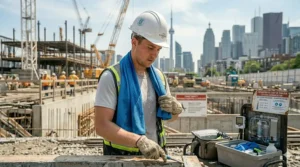
Real-World Performance: Canadian Construction Worker Case Studies
Case Study 1: Toronto High-Rise Construction Crew
A 45-person crew working on a downtown Toronto condo project implemented a tiered cooling program in June 2025. Workers in high-risk roles (working above 20th floor with maximum sun exposure) received FlexiFreeze ice vests with two sets of panels per worker. Mid-risk workers (interior framing, lower floors) received Ergodyne Chill-Its 6665 evaporative vests. All workers received cooling towels and hard hat neck shades as baseline PPE.
Results: Over a 12-week period including Toronto’s extreme July heat wave, the crew experienced zero heat-related medical incidents—compared to 3 incidents during the previous summer without structured cooling gear. Productivity metrics showed 12% improvement during afternoon hours (historically the lowest-performing period during hot weather), and worker satisfaction surveys indicated 89% approval of the cooling program. Total investment: approximately $185 per worker, recovered through reduced injury costs and improved productivity within the first season.
Case Study 2: Calgary Road Construction Company
A road paving company operating in Calgary’s dry summer heat equipped their 15-person crew with a combination of evaporative cooling vests and strategically placed portable misting fans. The evaporative vests performed exceptionally well in Alberta’s low-humidity climate, whilst misting fans at the job trailer and alongside the paving equipment created designated cooling zones for scheduled breaks.
Results: Heat-related complaints dropped 73% compared to the previous summer. Significantly, the crew reported feeling genuinely cooled during breaks rather than just sitting in shade whilst remaining overheated—a subtle but important distinction that affected afternoon energy levels. One unexpected benefit: the misting fans also reduced dust exposure from dried asphalt, providing an additional health benefit beyond cooling. Return on investment: achieved within 8 months through reduced staff turnover (replacing experienced pavers is expensive) and fewer heat-related slowdowns.
Case Study 3: Vancouver Island Roofing Contractor
A small roofing contractor (4 employees) working on Vancouver Island implemented a minimalist cooling program due to budget constraints. Each worker received two cooling towels, two hard hat neck shades, and UV-blocking arm sleeves. The company also purchased a single large portable cooler filled with ice and water bottles, encouraging workers to refresh their cooling gear every 60-90 minutes.
Results: Despite the budget-friendly approach (under $90 per worker), the crew reported substantial improvement in comfort and safety. The key success factor wasn’t expensive equipment but rather establishing a culture where taking cooling breaks was encouraged rather than seen as weakness. Worker feedback emphasized that the neck shades and arm sleeves prevented the cumulative heat buildup that typically made afternoon hours miserable, whilst the cooling towels provided quick relief during the hottest parts of the day. This case study demonstrates that even small construction businesses can implement effective heat safety programs without major capital expenditure.
Common Mistakes When Implementing Cooling Gear Programs
After consulting with dozens of Canadian construction companies on heat safety programs, I’ve identified recurring mistakes that undermine even well-intentioned efforts. Avoiding these pitfalls will help you get better results from your cooling gear investments.
Mistake #1: Waiting Until Workers Complain
Heat stress is progressive and insidious. By the time workers actively complain about heat, they’re already experiencing reduced cognitive function and elevated injury risk. Implement cooling programs based on temperature forecasts and work conditions, not worker complaints. The Canadian Centre for Occupational Health and Safety (CCOHS) provides excellent guidance on proactive heat stress monitoring that Canadian construction companies should follow.
Mistake #2: Buying the Cheapest Option Without Considering Durability
Construction environments are harsh. That $8 cooling towel might seem like great value until it tears on the second day when snagged on rebar. Whilst budget constraints are real, prioritize products from established safety equipment manufacturers like Ergodyne, Radians, or OccuNomix. These brands specifically design cooling gear to withstand jobsite abuse, meaning a $25 towel that lasts two seasons provides better value than three $8 towels that each fail within a month.
Mistake #3: Ignoring Canadian Climate Variability
A cooling program designed for Calgary’s dry heat will underperform in Halifax’s humid maritime climate. Evaporative cooling (vests, towels, neck shades) works brilliantly in low humidity but struggles when the air is already saturated with moisture. Ice-based cooling (FlexiFreeze vests, phase-change materials) performs consistently regardless of humidity but requires freezer access. Match your cooling technology to your actual working conditions, and consider having both options available if your company operates across different Canadian climate zones.
Mistake #4: No Maintenance or Replacement Schedule
Cooling gear requires maintenance. PVA cooling towels need periodic washing to prevent bacterial growth and maintain evaporative efficiency. Ice vest panels develop leaks after repeated freeze-thaw cycles. Mesh vests snag and tear. Establish a schedule for inspecting, washing, and replacing cooling equipment—typically weekly inspections during active use, with full replacement every 2-3 seasons depending on usage intensity.
Mistake #5: Failing to Track and Measure Results
How do you know if your cooling program is working? Establish baseline metrics before implementation (heat-related incident reports, productivity during hot weather, worker satisfaction scores, WSIB claims) and track them quarterly. This data not only demonstrates program effectiveness but also helps justify continued investment to company leadership or clients requiring safety performance reporting.
Mistake #6: Overlooking Hydration Infrastructure
All the cooling gear in the world won’t prevent heat stress if workers aren’t drinking enough water. Federal regulations now require cool potable drinking water readily accessible in work areas for workers in hot conditions. “Readily accessible” means within reasonable walking distance—not locked in a trailer 100 metres away. Invest in multiple large coolers strategically placed around the worksite, and consider the “one cup every 20 minutes” rule recommended by occupational health experts. For a 10-person crew working 8 hours, that’s approximately 80 litres of water consumed per day during hot weather—plan accordingly.
Understanding Heat Stress: The Canadian Construction Worker’s Guide
Heat stress isn’t just feeling uncomfortable or sweaty—it’s a serious physiological condition where your body’s cooling system becomes overwhelmed. For Canadian construction workers, understanding the progression of heat illness helps you recognize danger signs early and take action before a bad situation becomes a medical emergency.
How Your Body Regulates Temperature
Your body maintains a core temperature of approximately 36-37°C through several cooling mechanisms: convection (moving air carries heat away from skin), evaporation (sweat cools as it evaporates), radiation (heat radiates from warmer body to cooler surroundings), and conduction (direct contact with cooler surfaces). When you’re working construction in July wearing safety gear that blocks airflow, heavy gloves that prevent hand cooling, and a hard hat that traps heat around your head, you’ve effectively disabled most of these natural cooling pathways.
The result? Your core temperature starts climbing. At 38°C, you experience mild symptoms—fatigue, reduced concentration, increased heart rate. At 39°C, more serious symptoms emerge—nausea, confusion, muscle cramps. Above 40°C, you’re in genuine danger of heat stroke, a medical emergency that can cause organ damage or death if untreated. The progression from “uncomfortably hot” to “medically dangerous” can happen in less than two hours under extreme conditions.
The Three Stages of Heat Illness
Understanding the progression helps you intervene at the right moment:
Heat Cramps: Painful muscle spasms, usually in legs, arms, or abdomen, caused by salt imbalance from heavy sweating. This is the early warning system—your body signalling that cooling mechanisms are struggling. Treatment: move to shade, drink electrolyte beverages (not just water), gentle stretching. If cramps persist more than one hour, seek medical attention.
Heat Exhaustion: Heavy sweating, pale clammy skin, weakness, nausea, dizziness, headache. Core temperature 38-39°C. This is serious but recoverable if treated promptly. Treatment: immediate rest in cool area, remove excess clothing, cool skin with wet cloths, drink cool water or electrolyte beverages, monitor closely. If symptoms worsen or don’t improve within 30 minutes, call emergency services.
Heat Stroke: Hot dry skin (sweating has stopped), core temperature above 40°C, confusion, loss of consciousness, seizures. This is a life-threatening medical emergency. Treatment: call 911 immediately, move to shade, remove excess clothing, actively cool the person with cold water or ice packs, monitor vital signs until emergency responders arrive. Heat stroke can cause permanent organ damage or death—minutes matter.
Canadian-Specific Heat Stress Considerations
Several factors make heat stress particularly challenging for Canadian construction workers:
Acclimatization Cycles: Because Canadian summers are relatively short compared to year-round warm climates, construction workers here experience repeated acclimatization cycles—building heat tolerance during summer, losing it over winter, then rebuilding each spring. This makes May and June particularly risky months, as workers haven’t yet adapted to outdoor heat exposure after months of indoor or cold-weather work.
Humidex Impact: Many Canadian regions experience high humidity alongside high temperatures, creating humidex values that feel significantly hotter than the actual temperature. A 30°C day with 70% humidity creates a humidex of 40°C—your body experiences the thermal stress of 40° heat despite the “moderate” air temperature. This is why coastal British Columbia, Southern Ontario, and Maritime provinces often see worse heat stress outcomes than Prairie provinces despite lower raw temperatures.
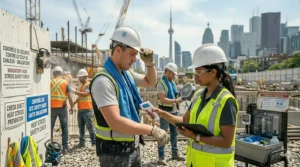
Protective Clothing Requirements: Canadian construction sites typically require more layered PPE than comparable American sites (reflecting our more stringent safety culture), which inadvertently increases heat stress risk. High-visibility vests, flame-resistant clothing for certain trades, and cold-weather clothing worn during variable spring/fall temperatures all trap body heat even as environmental temperatures climb.
How to Choose the Right Cooling Gear for Your Specific Needs
Selecting cooling equipment isn’t one-size-fits-all. Here’s the decision framework I use when consulting with Canadian construction companies and individual workers:
Factor #1: Your Primary Heat Exposure Pattern
Are you in direct sun all day (roofing, concrete, road work) or moving between sun and shade (commercial construction, renovations)? Continuous sun exposure requires higher-capacity cooling like ice vests or evaporative vests. Intermittent exposure might be adequately managed with cooling towels and neck shades that you can remove when working indoors or in shade.
Factor #2: Regional Climate and Humidity
Alberta and Saskatchewan’s dry heat? Evaporative cooling excels—the Ergodyne Chill-Its line performs beautifully. Ontario and Quebec’s humid summers? You’ll get better results from ice-based cooling or dry evaporative technologies that don’t rely on saturating already-humid air. Coastal British Columbia’s moderate but damp heat? A hybrid approach combining moderate cooling with sun protection often works best.
Factor #3: Physical Activity Level and Role
Heavy labour (carrying materials, digging, demolition) generates tremendous internal heat and overwhelms lower-capacity cooling gear. These roles need maximum cooling power—FlexiFreeze vests or equivalent. Moderate activity (framing, finishing, equipment operation) can be managed with mid-tier evaporative vests. Lower activity roles (supervision, quality control) might only need cooling towels or neck shades.
Factor #4: Access to Support Infrastructure
Do you have consistent access to freezers (for ice vests), running water (for evaporative cooling refresh), or electrical outlets (for portable fans)? Remote jobsites without these amenities need self-contained cooling solutions that don’t require frequent refreshing—look for long-duration cooling products and plan for multiple sets so you can rotate.
Factor #5: Budget and Long-Term Cost Considerations
Initial price is just one cost factor. A $100 ice vest that lasts five seasons and prevents one heat-related injury provides better value than a $30 vest that fails each season and provides inadequate cooling. When evaluating cost, consider: durability (replacement frequency), effectiveness (does it actually keep workers safe), maintenance requirements (washing, inspection, storage), and total cost per protective hour delivered.
Factor #6: Compatibility with Existing Safety Gear
Can the cooling gear be worn under or over your required PPE without creating new hazards? Bulky cooling vests under fall-protection harnesses can interfere with fit and safety. Evaporative gear worn over high-visibility vests may obscure required reflective tape. Test cooling equipment with your actual PPE configuration before purchasing for the full crew.
Factor #7: Canadian Regulatory Compliance
If your site requires CSA-certified high-visibility gear, standard cooling vests won’t suffice—you need integrated cooling safety vests. If you’re working on federal construction projects, you may face specific thermal stress management requirements under the new SOR/2026-10 amendments. Always verify that cooling solutions maintain compliance with applicable Canadian construction safety regulations.
Long-Term Value and Maintenance: Getting the Most from Your Investment
Cooling gear represents a significant investment for Canadian construction companies, and proper maintenance dramatically extends useful life whilst maintaining protective effectiveness. Here’s what I’ve learned from companies successfully managing cooling equipment programs over multiple seasons.
Proper Storage Extends Lifespan
PVA cooling products (towels, vests, neck shades) should be stored completely dry in a cool, dark location during off-season. When wet PVA sits unused, it can develop mould or bacterial growth that degrades the material. After the final use each season, thoroughly wash according to manufacturer instructions, air dry completely until stiff, then store in sealed plastic bags or containers. This simple practice can double the useful life of evaporative cooling gear.
Ice vests and phase-change cooling products face a different storage challenge: the freeze-thaw cycles that provide their cooling benefit also stress the materials over time. Store ice panels at room temperature during off-season (not frozen), inspect seals for leaks before each season, and establish a replacement schedule (typically every 2-3 seasons for heavy use, 3-5 seasons for moderate use).
Washing and Hygiene Protocols
Shared cooling equipment creates hygiene concerns that many construction companies overlook. Establish clear protocols: each worker should have personally assigned cooling gear, or implement thorough washing between users. For evaporative vests and towels, machine washing with mild detergent followed by air drying works well—avoid harsh detergents or bleach that degrade PVA materials. Ice vests can be spot-cleaned or hand washed as needed.
For companies providing cooling gear to rotating crews or temporary workers, consider colour-coding or numbering items to track which worker used each piece, simplifying accountability for damage or loss whilst maintaining hygiene through individual assignment.
Replacement Indicators
How do you know when cooling gear needs replacing rather than just cleaning?
- PVA products: Stiffness that doesn’t restore after rewetting, visible tears or thinning, reduced cooling duration (if a towel that used to cool for 4 hours now only lasts 2 hours despite proper soaking, the material is degrading)
- Ice vests: Leaking panels, straps showing wear, fabric tearing at stress points
- Neck shades: UV-protective fabric fading (indicating reduced sun protection effectiveness), strap elasticity loss
- Mesh vests: Visible holes or tears, reflective tape peeling or losing reflectivity
Don’t wait for catastrophic failure—catching degradation early prevents workers from relying on equipment that no longer provides adequate protection.
Total Cost of Ownership Analysis
When evaluating cooling gear investments, calculate cost per protective hour rather than just purchase price:
Example: Ergodyne Chill-Its 6665 vest at $65 CAD, used 60 days per season over 3 seasons = 180 working days. At 8 hours per day = 1,440 protective hours. Cost per hour: $0.045 CAD.
Compare to: Generic cooling vest at $30 CAD, lasting one season (60 days, 480 hours). Cost per hour: $0.0625 CAD.
The “cheaper” vest actually costs 40% more per hour of protection delivered. This analysis helps justify quality equipment purchases to company leadership and demonstrates the long-term value of investing in durable cooling gear.
Frequently Asked Questions: Cooling Gear for Construction Workers in Canada
❓ Can cooling vests be worn under high-visibility safety vests in Canada?
❓ How long does cooling gear typically last in Canadian construction environments?
❓ Are there any Canadian tax deductions or WSIB rebates for cooling equipment?
❓ How do I know if my worksite temperature requires cooling gear under Canadian law?
❓ Can I use the same cooling gear for winter work in heated indoor spaces?
Conclusion: Invest in Heat Safety Today for Healthier, More Productive Tomorrows
Heat stress represents one of the most preventable yet persistently dangerous hazards facing Canadian construction workers. The statistics are sobering—350 lost-time claims for heat exhaustion amongst Ontario construction workers alone between 2006 and 2015, countless unreported incidents, and a clear trend toward more frequent and severe heat waves as our climate continues warming. Yet unlike many construction hazards that require complex engineering controls or expensive infrastructure changes, heat stress can be dramatically reduced through relatively modest investments in proper cooling gear and thoughtful program implementation.
The cooling gear reviewed in this guide—ranging from $15 cooling towels to $110 ice vests—represents proven technology that measurably reduces heat-related incidents when implemented as part of a comprehensive heat safety program. Companies across Canada that have embraced proactive cooling programs report not just fewer heat illnesses, but also improved productivity during hot weather, reduced turnover (workers appreciate employers who invest in their comfort and safety), and better compliance with evolving Canadian thermal stress regulations.
For individual construction workers, investing in personal cooling gear is equally valuable even if your employer hasn’t yet implemented a company-wide program. A $65 evaporative vest and $20 neck shade provide protection that could prevent a heat exhaustion incident requiring emergency medical care—the physical and financial impact of even a single heat-related injury far exceeds the cost of proper cooling equipment. Canadian construction workers deserve to finish each workday safely, not dangerously overheated and at risk of heat illness.
As federal and provincial regulators continue strengthening thermal stress requirements (with Ontario’s comprehensive heat stress regulations expected by summer 2027 and federal amendments already in force for federally regulated contractors), the construction industry faces a clear choice: lead by implementing effective cooling programs now, or react to increasingly prescriptive regulations later. The smart money is on proactive investment in worker protection.
Whether you’re a construction company owner evaluating cooling equipment for your crew, a site supervisor building your first heat safety program, or a construction worker looking to protect yourself during Canadian summers, the cooling gear and strategies outlined in this guide provide a proven starting point. Heat stress is predictable, preventable, and manageable—but only if we take action before workers experience dangerous symptoms.
Stay cool, stay safe, and remember: the best cooling gear is the gear you actually use. Start simple if budget constrains you, but start somewhere. Even modest cooling interventions deliver meaningful protection compared to no heat stress management at all.
Recommended for You
- 7 Best Misting Fan Portable Canada 2026
- 7 Best Foldable Desk Fan Portable Canada 2026 | Top Picks
- 7 Best Portable Fan Canada 2026
Disclaimer: This article contains affiliate links. As an Amazon Associate, I earn from qualifying purchases. If you purchase products through these links, we may earn a small commission at no additional cost to you.
✨ Found this helpful? Share it with your friends! 💬🤗
