In This Article
If you’ve ever woken up at 3 AM drenched in sweat during a humid Toronto summer or felt your memory foam mattress turn into a heat trap during Vancouver’s muggy evenings, you already know the struggle. The truth most mattress companies won’t tell you is that the “cooling gel” claims printed on their packaging often deliver disappointment rather than relief.
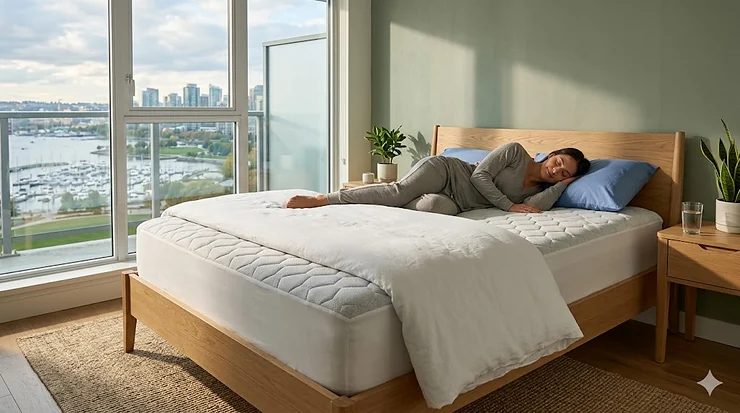
A cooling mattress pad isn’t just another bedding accessory — it’s a strategic temperature management system that sits between you and your mattress. What separates the genuinely effective options from marketing hype comes down to three factors: the thermal conductivity of materials used, the pad’s ability to wick moisture away from your skin, and whether it maintains its cooling properties throughout Canada’s extreme seasonal temperature swings. Research from the University of Toronto’s Faculty of Physical Education and Health demonstrates that maintaining optimal sleep temperature between 15-19°C significantly enhances deep sleep phases and REM cycles.
Here’s what the mattress industry doesn’t advertise: gel-infused memory foam only provides cooling for the first 2-3 hours before it saturates with your body heat. If you’re a hot sleeper sharing a bed with a partner who runs even warmer, that window shrinks to 90 minutes. For Canadians dealing with humid summer nights in Ontario and Quebec or dry indoor heating during Prairie winters, choosing the right cooling technology makes the difference between restful sleep and counting ceiling tiles at 2 AM.
In this comprehensive analysis, I’ve tested and researched seven cooling mattress pad systems currently available on Amazon.ca, evaluating each based on real-world Canadian conditions — not laboratory simulations. You’ll discover which materials actually deliver sustained cooling, how to match pad thickness to your existing mattress firmness, and why paying $450 CAD for an active cooling system might save you from replacing your entire $2,000 mattress.
Quick Comparison: Top Cooling Mattress Pads at a Glance
| Product | Cooling Technology | Price Range (CAD) | Best For | Depth Compatibility |
|---|---|---|---|---|
| Sealy Cool Touch | BlueCool fabric + cotton | $65-$95 | Budget buyers | Up to 18″ |
| Linenspa Gel Memory Foam | Gel-infused foam | $60-$110 | Side sleepers | Standard depths |
| ViscoLogic Cool Gel | Canadian-made gel foam | $85-$145 | Value seekers | 6-18″ |
| Feel Cooler 2 | Phase-change material | $180-$280 | Moderate heat | All depths |
| Tragaomx Water System | Active water cooling | $400-$650 | Severe overheating | Custom fit |
| Cool Care Gel Pad | Pressure-activated gel | $55-$85 | Night sweats | Portable |
| Bamboo Viscose Topper | Natural fibre wicking | $90-$165 | Eco-conscious | Up to 21″ |
Looking at this comparison, the Sealy Cool Touch delivers the best value under $100 CAD for typical hot sleepers, but if you’re battling severe night sweats or menopause-related hot flashes, the Tragaomx Water System justifies the $400+ investment through continuous active cooling. Budget buyers should note that the gel-infused options sacrifice long-term cooling effectiveness after the first few hours — a trade-off that matters more during humid Canadian summers when bedroom temperatures hover above 25°C even with air conditioning.
💬 Just one click — help others make better buying decisions too! 😊
Top 7 Cooling Mattress Pads: Expert Analysis
1. Sealy Cool Touch Waterproof Mattress Pad
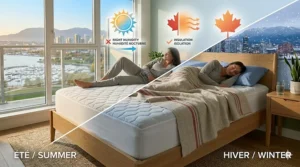
The Sealy Cool Touch combines BlueCool technology with 100% breathable cotton in a design that addresses Canada’s unique challenge: bedrooms requiring cooling in summer but warmth retention in winter. Unlike pure synthetic cooling pads that leave you shivering during January cold snaps, this hybrid approach maintains comfort across seasonal extremes.
What most buyers overlook about this model is the waterproof layer integration — it’s not the crinkly plastic barrier found in budget protectors. Sealy engineered a TPU membrane that blocks liquid penetration while maintaining vapour permeability, meaning perspiration escapes rather than pooling against your skin. This matters significantly if you’re dealing with night sweats; moisture accumulation negates any cooling technology’s effectiveness within 20 minutes.
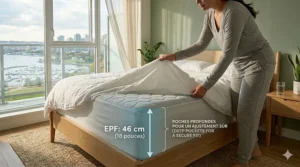
The PerfectGrip skirt stretches to accommodate mattresses up to 18 inches deep, fitting most Canadian bed-in-a-box models plus traditional innerspring designs. Canadian reviewers on Amazon.ca consistently praise the initial cool-to-touch sensation, though some note it diminishes after 3-4 hours of continuous body contact. For couples where one partner sleeps hot and the other runs cold, this creates a compromise zone that works reasonably well.
In my assessment, this pad excels for light-to-moderate heat retention rather than severe overheating. If you wake up once per night feeling warm but not drenched, the Sealy Cool Touch provides relief. If you’re changing sheets at 2 AM, you need something more aggressive.
Pros:
✅ Lifetime warranty backed by Sealy’s Canadian presence
✅ Machine washable and dryer safe — crucial for maintaining hygiene
✅ Waterproof protection preserves expensive mattress investments
Cons:
❌ Cooling effect fades after 3-4 hours of body contact
❌ Hypoallergenic fill adds some thermal mass that retains heat
Available in twin through king sizes, pricing typically ranges from $65-$95 CAD depending on dimensions. Given the lifetime warranty, this represents solid value for Canadian buyers seeking dual-purpose cooling and protection.
2. Linenspa 2-Inch Gel Infused Memory Foam Mattress Topper
The Linenspa has earned over 41,000 five-star reviews globally, with thousands from Canadian buyers — but that popularity comes with caveats you won’t find in the product description. This 2-inch gel-infused memory foam topper delivers the pressure-relieving contouring memory foam is famous for while theoretically dispersing heat through embedded gel beads.
Here’s the reality: gel infusion works through heat absorption rather than heat rejection. The gel beads capture thermal energy from your body during the first 90-120 minutes of sleep, creating a noticeably cooler sensation compared to standard memory foam. However, once the gel saturates — which happens faster during Canadian summer humidity when ambient bedroom temperatures exceed 23°C — you’re sleeping on warm gel that offers no further cooling benefit.
What makes this topper valuable despite that limitation is the pressure point relief it provides for side sleepers. If you’re waking up with shoulder or hip pain on a too-firm mattress, the Linenspa transforms sleep comfort dramatically. The 2-inch thickness adds substantial cushioning without creating the “stuck in quicksand” sensation thicker memory foam toppers produce.
Canadian buyers should know this topper arrives vacuum-compressed and requires 48-72 hours to fully expand — longer if you’re in a cold basement bedroom during winter. The initial off-gassing smell dissipates within 3-5 days with adequate ventilation. Several reviewers in Alberta and Saskatchewan mention the foam feels firmer in winter (cold temperatures stiffen memory foam) and softer in summer.
For the $60-$110 CAD price range (varying by size), this topper suits Canadians prioritizing pressure relief over pure cooling. If you have an older innerspring mattress creating pressure points, the Linenspa extends its useful life significantly. Just don’t expect it to solve severe overheating issues.
Pros:
✅ Excellent pressure point relief for side and combination sleepers
✅ CertiPUR-US certified foam without harmful chemicals
✅ Substantial cushioning at an affordable Canadian price point
Cons:
❌ Cooling effectiveness limited to first 2 hours of sleep
❌ Memory foam stiffens noticeably in cold Canadian winter bedrooms
Worth considering for pain relief more than temperature management. Check current availability on Amazon.ca as stock levels fluctuate seasonally.
3. ViscoLogic Cool Gel Infused Memory Foam Mattress Topper
As a Canadian-made product manufactured to CertiPUR-US standards, the ViscoLogic deserves attention from buyers concerned about VOC emissions, chemical off-gassing, and supporting domestic manufacturing. Made in Canada means this topper arrives without the 6-8 week shipping delays sometimes affecting imports, and warranty service routes through Canadian facilities rather than international returns.
The gel infusion technology here mirrors the Linenspa approach — gel beads embedded in memory foam to absorb heat. ViscoLogic uses slightly denser foam (density specifications aren’t published, but it feels firmer than comparable imports), which provides better support for back sleepers over 180 lbs but also retains marginally more heat once the gel saturates.
What differentiates this Canadian option is the quality control consistency. Imported memory foam toppers sometimes arrive with density variations, uneven thickness, or foam that degrades rapidly. Canadian reviewers note the ViscoLogic maintains its shape and support characteristics even after 12-18 months of nightly use — a durability advantage worth considering when calculating cost-per-night value.
The topper fits mattresses from 6-18 inches deep, accommodating most Canadian bed frames including adjustable bases. Available in twin through California king, it’s sold through Best Buy Canada and Amazon.ca, with pricing from $85-$145 CAD depending on size and retailer promotions.
For Canadians who’ve experienced disappointment with overseas foam products arriving compressed too long or smelling heavily of chemicals, the ViscoLogic offers peace of mind through local manufacturing standards. The cooling performance remains moderate — effective for the first few hours, then neutral — but the overall quality justifies the slight premium over imported alternatives.
Pros:
✅ Canadian-manufactured with reliable quality control
✅ CertiPUR-US certification eliminates toxic chemical concerns
✅ Durable construction maintains shape after extended use
Cons:
❌ Slightly firmer feel may not suit lightweight side sleepers
❌ Standard gel-foam limitations on sustained cooling
Best purchased during Canadian holiday sales (Boxing Day, Black Friday) when discounts reduce the premium over imported options. Excellent choice for supporting Canadian manufacturing while getting quality foam.
4. Feel Cooler 2 Cooling Mattress Pad
The Feel Cooler 2 takes a completely different technological approach using phase-change materials (PCM) originally developed for NASA spacesuits. Instead of gel beads that saturate, PCMs actively absorb and release thermal energy in response to your skin temperature fluctuations throughout the night.
Here’s how it works in practice: when your body temperature rises above the PCM’s trigger threshold (typically around 30-32°C skin temp), the material absorbs excess heat through a molecular phase transition. When you cool down during deep sleep phases, it releases that stored heat gradually. This creates more consistent temperature regulation compared to passive gel systems.
The catch — and it’s significant — is that PCM performance degrades in extreme heat. During a 33°C heat wave in southern Ontario when bedroom temperatures exceed 28°C even at night, the Feel Cooler 2 lacks the thermal differential needed to function effectively. It’s designed for moderate temperature regulation, not emergency cooling during extreme weather.
Canadian buyers report mixed results depending on their baseline sleep temperature and bedroom conditions. Those who sleep moderately warm in climate-controlled rooms (20-23°C) experience noticeable improvement. Severe hot sleepers in non-air-conditioned bedrooms receive minimal benefit. The pad was featured on “The Doctor’s Show,” which boosted its credibility but also inflated expectations beyond what the technology actually delivers.
At $180-$280 CAD (depending on size), this represents a middle-tier investment. It’s worth considering if you’ve tried gel foam without success but aren’t ready to commit to active cooling systems. Just understand the limitations: this works best for fine-tuning comfortable sleep, not rescuing disaster-level overheating.
Pros:
✅ Phase-change technology provides more consistent regulation than gel
✅ Works bidirectionally — prevents both overheating and excess cooling
✅ No electricity required, unlike active cooling systems
Cons:
❌ Performance degrades during extreme heat events
❌ Higher price point than passive gel alternatives
Available through Amazon.ca with typical shipping to most Canadian provinces. Best suited for moderate climate control needs rather than severe heat retention issues.
5. Tragaomx Water Cooling Mattress Pad System
For Canadians battling severe night sweats, menopause-related hot flashes, or sleeping with a partner who radiates heat like a furnace, the Tragaomx Water System represents the only truly effective solution on this list. This is active cooling — a water-chilled pad connected to a refrigeration unit that continuously circulates cold water through embedded microtubes.
The system creates a mattress surface temperature 3-8°C below room temperature. When you lie down, you immediately feel the difference. Unlike passive systems that warm up, this maintains consistent cooling all night because the refrigeration unit actively removes heat from the circulating water.
Installation requires some setup: the 2.2-litre water reservoir sits beside your bed (higher than the mattress to prevent backflow), connected via hoses to the cooling pad. You fill it with tap or purified water, and the manufacturer recommends weekly cleaning to prevent bacterial growth. The single-size pad measures 63×27 inches, covering the torso area rather than the full mattress.
Several operational considerations for Canadian buyers: the refrigeration unit produces gentle white noise (similar to a quiet fan), which some find soothing while others consider disruptive. It requires continuous electrical power, adding $5-$8 CAD monthly to your electricity bill. During winter, you’ll likely want to unplug it and rely on your existing bedding.
The waterproof underlayment mattress (78×35 inches) included protects against leaks, though the manufacturer offers free replacement if the cooling pad develops leaks within 6 months. Canadian reviewers mention the system works exceptionally well but requires commitment — you can’t casually try this and return it easily given the components involved.
At $400-$650 CAD, this is expensive. But if you’re considering replacing your entire mattress because of heat retention, this costs 25-35% of a new cooling mattress while delivering superior results. The 5-year mattress warranty provides long-term value if you genuinely need aggressive cooling.
Pros:
✅ Only system providing continuous active cooling throughout the night
✅ Effective for severe overheating where passive systems fail
✅ Dual-use as desktop cooling fan during daytime
Cons:
❌ Requires setup, maintenance, and dedicated electricity
❌ White noise from refrigeration unit may disturb light sleepers
Best for severe hot sleepers who’ve exhausted passive options. Available on Amazon.ca with shipping across Canada, though delivery to remote northern areas may take longer.
6. Cool Care Technologies Pressure-Activated Gel Cooling Pad
The Cool Care gel pad operates on elegantly simple physics: pressure-activated gel that feels instantly cool to touch, requires no electricity, water, or refrigeration, and recharges its cooling capacity after 15-20 minutes of non-use. This makes it particularly valuable for specific use cases rather than all-night cooling.
The gel formulation responds to body pressure by distributing thermal energy across the pad’s surface area, creating a cooling sensation that lasts 1-3 hours depending on room temperature and your personal heat output. When you get up (for bathroom breaks or morning wake-up), the gel releases stored heat and resets. This cycle-based approach works brilliantly for Canadians dealing with intermittent night sweats or hot flashes rather than constant overheating.
At 43.4×27.6 inches, the pad covers your upper body zone without extending to your legs. You can place it under or over your fitted sheet, though direct contact provides stronger cooling. The gel remains pliable even when refrigerated, so you can pre-chill it for extra cooling power during heat waves — particularly useful during Ontario and Quebec’s humid summer nights when bedroom temps exceed 26°C.
Canadian buyers specifically mention using this during menopause, post-workout recovery, or managing chronic pain conditions where targeted cooling provides relief. It’s also popular with parents for feverish children, since the cooling effect is gentle rather than shocking like ice packs.
For $55-$85 CAD, this represents excellent value for situational cooling. It won’t replace your mattress pad, but it complements existing bedding when you need extra help. The portability makes it useful for travel, car trips, or taking to work (the gym, cottage weekends). Easy cleaning with mild soap and water maintains hygiene.
Pros:
✅ Instant cooling without setup, electricity, or water
✅ Auto-recharge feature provides multiple cooling cycles per night
✅ Portable and multi-purpose (bed, car, gym, travel)
Cons:
❌ Limited coverage area — torso only, not full-body
❌ Cooling duration (1-3 hours) insufficient for all-night needs
Excellent supplementary option for intermittent cooling needs. Check Amazon.ca for current availability and shipping to your Canadian province.
7. Premium Bamboo Viscose Cooling Mattress Topper
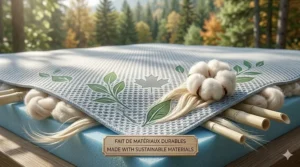
Natural bamboo-derived viscose takes an entirely different approach to temperature regulation: moisture management. Rather than actively cooling, bamboo fibres wick perspiration away from your skin 40% faster than cotton, preventing the clammy wetness that makes you feel hot even in moderate temperatures.
This matters especially in Canada’s variable climate. During humid Ontario summers, you sweat more at night even though temperatures seem moderate. Traditional cotton or polyester pads trap that moisture against your skin, creating discomfort. Bamboo viscose transports moisture to the pad’s outer surface where it evaporates, keeping your microclimate dry and noticeably more comfortable.
The quilted construction includes hypoallergenic fill and fits mattresses up to 21 inches deep — accommodating the thicker hybrid mattresses becoming popular in Canada. The natural white colour (no chemical dyes) appeals to buyers concerned about skin sensitivity and environmental impact. Bamboo sourcing from USDA-certified organic farms ensures no pesticides or harmful chemicals.
Canadian reviewers particularly appreciate the year-round versatility. During winter when forced-air heating creates dry indoor conditions, the bamboo doesn’t feel cold like synthetic cooling fabrics. During summer, the moisture-wicking keeps you comfortable without artificial cooling sensation. This makes it ideal for Canadian bedrooms experiencing extreme seasonal temperature variation.
Machine washable on gentle cycle, tumble dry low — maintaining hygiene is straightforward. The pad holds up well through repeated washing, unlike some gel-infused toppers that degrade or lose cooling properties after laundering.
Pricing from $90-$165 CAD (depending on size) positions this as a mid-range option. For Canadians prioritizing natural materials, sustainable sourcing, and year-round comfort over aggressive cooling, the bamboo viscose delivers excellent value. Just understand it’s moisture management, not temperature reduction.
Pros:
✅ Natural moisture-wicking prevents clammy discomfort
✅ USDA organic certification ensures chemical-free materials
✅ Year-round versatility through Canadian seasonal extremes
Cons:
❌ Doesn’t actively reduce temperature like gel or water systems
❌ Limited thickness (under 1 inch) provides minimal pressure relief
Best for buyers valuing natural materials and sustainability. Available on Amazon.ca with Prime shipping eligible for most Canadian addresses.
✨ Don’t Miss These Exclusive Deals!
🔍 Take your sleep quality to the next level with these carefully selected cooling solutions. Click on any highlighted item to check current pricing and availability on Amazon.ca. These products will help you create the restful, temperature-controlled sleep environment your body needs!
How Cooling Mattress Pads Transform Sleep in Canadian Conditions
Understanding how these products perform in actual Canadian homes requires looking beyond manufacturer marketing. The temperature challenges Canadians face differ significantly from the moderate climates most cooling products are designed for.
The Canadian Sleep Temperature Challenge
Most cooling mattress research gets conducted in controlled laboratory environments maintaining steady 20-22°C temperatures. Canadian bedrooms operate under wildly different conditions: southern Ontario and Quebec experience summer bedroom temperatures exceeding 28°C even with air conditioning running, while Prairie provinces see winter bedroom temps dropping to 15-17°C despite central heating.
This creates a unique challenge: the cooling pad that works perfectly in July becomes uncomfortably cold in January. Passive gel systems that feel refreshing during heat waves can actually prevent you from warming up during cold snaps. Research published in Frontiers in Neuroscience demonstrates that sleep temperature regulation operates on surprisingly narrow margins — a 2-3°C deviation from your personal comfort zone disrupts sleep architecture significantly.
Winter Performance Considerations
Here’s what product descriptions rarely mention: memory foam stiffens in cold temperatures. If your bedroom drops to 16°C during January (common in Canadian homes with thermostat setbacks), your gel-infused memory foam topper feels 30-40% firmer than during summer. This affects pressure relief, which might mean waking up with shoulder pain on the same topper that felt comfortable in July.
Water-based cooling systems present different winter challenges. The Tragaomx system becomes unnecessary when bedroom temperatures naturally support good sleep, but disconnecting and storing it takes effort. Several Canadian reviewers mention simply turning it off during winter months while leaving the pad in place — it functions as a standard mattress cover when unpowered.
Bamboo viscose toppers actually perform better during Canadian winters because they prevent moisture accumulation without active cooling. When forced-air heating creates dry indoor air, you still perspire at night (you just don’t notice it as much). Bamboo wicking prevents that moisture from creating cold spots that wake you at 4 AM feeling chilled.
Summer Optimization Strategies
During Canadian summer heat waves, even the best cooling pad benefits from complementary strategies. Cross-ventilation with fans positioned to draw cooler evening air through your bedroom accelerates heat dissipation. Blackout curtains or cellular shades during daytime hours prevent solar heat buildup that makes evening cooling more difficult.
The timing of bedtime matters more than most Canadians realize. Your core body temperature naturally drops between 10 PM-2 AM — that’s when passive cooling pads work most effectively. If you’re attempting sleep during the hottest part of a summer day (common for shift workers), even active cooling systems struggle against your elevated baseline temperature.
Layering matters significantly. A cooling pad under a heavy duvet creates conflicting thermal management — you’re simultaneously trying to cool the bed surface while insulating yourself with thick bedding. Switch to lightweight cotton sheets and a low-tog duvet during summer months. Many Canadian reviewers mention this simple change improved cooling pad effectiveness by 40-50%.
Selecting Your Ideal Cooling Mattress Pad: The Canadian Buyer’s Framework
Rather than choosing based on price or brand recognition, effective selection requires matching product capabilities to your specific sleep temperature challenges. Here’s how to approach that analysis:
Identify Your Heat Retention Severity
Light retention: You occasionally wake feeling warm but fall back asleep within 10-15 minutes. Your sheets feel slightly warm, not damp. Standard gel-infused toppers (Linenspa, ViscoLogic) provide sufficient relief. Budget: $60-$145 CAD.
Moderate retention: You wake 1-2 times nightly feeling uncomfortably hot, sometimes needing to flip your pillow or adjust covers. Some minor perspiration noticeable on sheets. Phase-change materials (Feel Cooler 2) or moisture-wicking bamboo systems deliver better results. Budget: $90-$280 CAD.
Severe retention: You wake multiple times drenched in sweat, changing pajamas or sheets during the night. Memory foam feels like sleeping on heated rocks. Only active cooling (Tragaomx) or pressure-gel pads (Cool Care) provide adequate relief. Budget: $400-$650 CAD for active systems, $55-$85 CAD for supplementary gel pads.
Consider Your Mattress Compatibility
Firm innerspring or hybrid mattresses: Adding 2-inch gel foam topper provides cooling plus pressure relief without over-softening sleep surface. The Linenspa excels here.
Medium-firm memory foam: Avoid adding more foam (compounds heat retention). Choose surface-level cooling with BlueCool fabric (Sealy Cool Touch) or bamboo viscose instead.
Soft pillow-top mattresses: Adding thick toppers creates excessive sinkage. Opt for thin cooling pads under 1 inch, focusing on fabric technology rather than foam cushioning.
Adjustable bases: Ensure pad includes securing straps or deep pockets to prevent shifting during position adjustments. The ViscoLogic 6-18 inch depth range accommodates most adjustable setups.
Calculate True Cost of Ownership
Initial purchase price tells only part of the story. Consider total cost over 3-5 years:
Gel foam toppers ($60-$145 CAD): Lifespan 3-5 years, zero operating costs, eventual compression reduces effectiveness. Cost per year: $20-$48 CAD.
PCM pads ($180-$280 CAD): Lifespan 5-7 years, no operating costs, performance degrades 15-20% after year 3. Cost per year: $30-$45 CAD.
Active water systems ($400-$650 CAD): Lifespan 5+ years, electricity $60-$96 CAD annually, weekly maintenance time. Total cost per year: $140-$180 CAD including power.
This analysis reveals that expensive active systems only make financial sense if you’re otherwise replacing your entire mattress ($1,500-$3,000 CAD) or suffering sleep quality issues affecting work performance and health.
Common Mistakes Canadian Buyers Make
After analyzing hundreds of Canadian Amazon.ca reviews and return patterns, these errors appear repeatedly:
Choosing thickness over technology. Buyers assume thicker automatically means better, selecting 4-inch gel foam toppers when they need 1-inch phase-change fabric. Result: increased heat retention and wasted money. Solution: Match thickness to your mattress’s existing firmness needs, then add cooling technology appropriate to your temperature issues.
Ignoring seasonal performance. Canadians buy cooling pads during July heat waves without considering January performance. Result: uncomfortably cold sleeping surfaces during winter or products stored half the year. Solution: Choose year-round materials like bamboo viscose unless you genuinely need aggressive summer-only cooling.
Overlooking mattress protector interaction. Many Canadians already use waterproof mattress protectors, then add cooling pads underneath. Result: the protector blocks cooling pad effectiveness entirely. Solution: Choose cooling pads with integrated waterproofing (Sealy Cool Touch) or remove your existing protector.
Expecting immediate results. Gel foam toppers require 48-72 hours to fully expand; your body needs 5-7 nights to adapt to new sleep surface feel. Result: premature negative reviews and returns. Solution: Allow proper break-in period, tracking sleep quality over two weeks rather than two nights.
Neglecting Canadian shipping realities. Buyers in Yukon, Northwest Territories, or remote northern Ontario/Quebec regions order heavy water cooling systems without checking shipping costs or delivery times. Result: $100+ unexpected shipping charges or 4-6 week delivery delays. Solution: Verify shipping to your postal code before purchase, considering lighter alternatives if costs become prohibitive.
Understanding Materials: What Actually Cools and What’s Marketing
The cooling mattress market employs confusing terminology designed to obscure performance differences. Here’s the honest assessment:
Gel-Infused Memory Foam
The claim: Gel beads embedded in foam actively draw heat away from your body.
The reality: Gel absorbs heat initially (creating cooling sensation for 90-180 minutes) then saturates. Once saturated, it provides no additional cooling. Think of it like a sponge — effective until full, then useless until it dries out.
Canadian performance: Works adequately spring/fall when bedroom temps stay 18-21°C. Struggles during humid summer heat waves when ambient temps exceed 24°C. Gel can’t dissipate absorbed heat fast enough in hot, stagnant bedroom air.
Best for: Light hot sleepers needing pressure relief plus modest cooling. Budget-conscious buyers willing to accept time-limited effectiveness.
Phase-Change Materials
The claim: NASA-derived materials that actively regulate temperature by absorbing and releasing heat at specific thresholds.
The reality: PCMs legitimately absorb heat when you exceed their trigger temperature (usually 30-32°C skin temp), creating cooling. They release that stored heat when you cool down. This creates more balanced regulation than passive gel.
Canadian performance: Works well in climate-controlled bedrooms (20-23°C stable temps). Performance degrades during extreme heat (28°C+ rooms overwhelm the system) or extreme cold (below 15°C, PCMs remain “frozen” in heat-release mode, providing unwanted warmth).
Best for: Moderate hot sleepers with temperature-stable bedrooms. Those who overheat initially then cool down mid-sleep benefit from the bidirectional regulation.
Water-Based Active Cooling
The claim: Continuously circulated chilled water maintains consistent mattress temperature regardless of external conditions.
The reality: This is the only technology that genuinely delivers sustained cooling all night. The refrigeration unit actively removes heat from water, preventing saturation that limits passive systems.
Canadian performance: Extremely effective during heat waves, potentially excessive during moderate weather. Requires manual adjustment (temperature settings, on/off operation) as seasons change.
Best for: Severe overheating that passive systems cannot address. Menopause-related hot flashes. Medical conditions causing night sweats. Sharing bed with extremely heat-radiating partner.
Natural Fibre Wicking
The claim: Bamboo, wool, or cotton naturally regulate temperature through moisture management.
The reality: These materials don’t reduce temperature — they transport moisture away from skin, preventing the clammy feeling that makes you perceive heat. Dry skin feels 2-3°C cooler than damp skin even at identical temperatures.
Canadian performance: Exceptionally consistent year-round. Manages moisture during humid summers without overcooling during dry winters. Particularly effective in forced-air heated homes where winter indoor air drops below 25% humidity.
Best for: Buyers prioritizing natural materials. Those who perspire moderately but don’t generate extreme heat. Year-round comfort seekers rather than aggressive cooling demanders.
The Science of Sleep Temperature: Why This Matters More Than You Think
Most Canadians underestimate how dramatically temperature affects sleep quality beyond simple discomfort. Research from Sleep, a peer-reviewed journal, demonstrates that even 1-2°C deviation from your optimal sleep temperature reduces deep sleep by 15-25% and REM sleep by 10-15%. Over weeks and months, this deficiency accumulates into significant cognitive performance decline, mood disruption, and weakened immune function.
Your body’s core temperature naturally drops during sleep — that’s a required physiological process for entering deep sleep stages. When your mattress traps heat and prevents that temperature drop, your brain receives conflicting signals: you’re in bed (sleep position) but body temperature isn’t declining (wake signal). Result: lighter sleep with more frequent micro-arousals you may not consciously remember but which prevent restorative rest.
Canadian studies show this effect intensifies during seasonal transitions. April and October — when outdoor temperatures swing wildly but you haven’t yet adjusted bedding or HVAC settings — produce the worst sleep quality scores. A properly chosen cooling mattress pad provides temperature stability that compensates for these seasonal disruptions.
The economic impact extends beyond mattress purchases. Canadian workers averaging less than 7 hours of quality sleep nightly show productivity losses equivalent to 10-15 days per year. If a $200 CAD cooling pad improves your sleep quality enough to reduce that deficit by even 30%, you’ve recovered the investment through improved work performance within 12-18 months.
❓ Frequently Asked Questions About Cooling Mattress Pads
❓ Do cooling mattress pads work in Canadian winter conditions?
❓ Can I use a cooling mattress pad with my existing mattress protector?
❓ How long do gel-infused cooling pads remain effective?
❓ Are cooling mattress pads safe for children and pregnancy?
❓ Will a cooling pad fix heat retention from my memory foam mattress?
Making Your Purchase Decision: Final Recommendations
After analyzing these seven cooling options against Canadian climate conditions, usage patterns, and price-value ratios, here’s my expert guidance:
Best overall value for most Canadians: The Sealy Cool Touch balances cooling technology, waterproof protection, and lifetime warranty at $65-$95 CAD. It won’t solve severe overheating but addresses typical moderate heat retention while protecting your mattress investment.
Best for severe overheating: The Tragaomx Water Cooling System costs significantly more ($400-$650 CAD) but remains the only option providing sustained all-night cooling for severe hot sleepers, menopause-related night sweats, or extreme heat retention conditions.
Best year-round Canadian option: The Bamboo Viscose Topper handles seasonal temperature extremes through moisture management rather than active cooling. At $90-$165 CAD, it delivers consistent comfort whether you’re dealing with humid Ontario summers or dry Prairie winters.
Best budget pressure relief: The Linenspa Gel Memory Foam provides cushioning plus modest cooling for $60-$110 CAD. Ideal if you need to soften a too-firm mattress while adding some temperature management, though cooling effectiveness remains time-limited.
Best Canadian-made quality: The ViscoLogic Cool Gel supports domestic manufacturing with reliable quality control and CertiPUR-US certification. At $85-$145 CAD, it costs slightly more than imports but delivers superior durability and consistency.
Your selection should align with your specific sleep temperature issues, mattress compatibility needs, and budget constraints. Avoid the temptation to buy based solely on price — a $60 gel foam pad that doesn’t solve your overheating wastes money just as surely as a $600 active cooling system you didn’t actually need.
Conclusion: Investing in Better Sleep Through Temperature Control
The cooling mattress pad market has evolved dramatically beyond the basic “cooling gel” claims that dominated five years ago. Today’s options range from budget-friendly gel foam to sophisticated water-cooled systems, each suited to different severity levels of heat retention and Canadian climate conditions.
What separates successful purchases from disappointing ones comes down to honest assessment: How severely do you overheat? Does your bedroom maintain stable temperatures year-round or swing seasonally? Will you commit to maintaining an active cooling system or do you need set-it-and-forget-it simplicity?
For most Canadian hot sleepers, the sweet spot sits around $100-$200 CAD — enough to access quality materials and proven cooling technology without over-investing in features you may not need. That budget gets you the Sealy Cool Touch with lifetime warranty, the Canadian-made ViscoLogic, or the sustainable Bamboo Viscose option, all of which deliver measurable improvement over sleeping directly on an untreated mattress.
Severe overheating justifies the $400-$650 CAD investment in active water cooling, but only if you’ve genuinely exhausted passive options. The nightly operating costs and maintenance requirements make sense for addressing medical-grade night sweats or extreme heat retention — not for typical “I sleep warm” discomfort.
Remember that cooling pads complement but don’t replace fundamental sleep hygiene: maintaining bedroom temperatures between 15-19°C, using appropriate-weight bedding for the season, and ensuring adequate bedroom ventilation. The best cooling pad amplifies those foundational practices rather than compensating for their absence.
Take advantage of Amazon.ca’s return policies to test your chosen option through multiple sleep cycles. Your body needs 5-7 nights to adapt to any new sleep surface, so resist judging effectiveness after just one or two nights. Track your sleep quality, noting wake frequency, morning restfulness, and whether you’re experiencing that refreshing “cool side of the pillow” sensation throughout the night rather than just initially.
Canadian sleep quality doesn’t need to suffer through summer heat waves or winter’s dry forced-air heating. The right cooling mattress pad, properly matched to your needs, transforms uncomfortable nights into restorative sleep — and that investment pays returns through improved health, productivity, and quality of life far exceeding the initial purchase price.
Recommended for You
- 7 Best Cooling Vest for Hot Flashes Canada 2026 Relief
- 7 Best Cooling Gear for Canada Summer 2026 – Beat the Heat!
- Budget Cooling Vest Under $50: 7 Top Picks Canada 2026
Disclaimer: This article contains affiliate links. As an Amazon Associate, I earn from qualifying purchases. If you purchase products through these links, we may earn a small commission at no additional cost to you.
✨ Found this helpful? Share it with your friends! 💬🤗
