

In This Article
Canadian summers aren’t what they used to be. What most people don’t realize about our supposedly mild northern climate is that heat waves in Canada are becoming longer, more intense, and increasingly dangerous. According to Health Canada, extreme heat events have killed hundreds of Canadians in recent years, with climate change making these events “very likely to increase in frequency, length and severity.” The 2024 heat waves that struck Eastern Ontario, Quebec, and Atlantic Canada saw temperatures 7-11 degrees Celsius above normal—temperatures our bodies simply aren’t accustomed to handling.
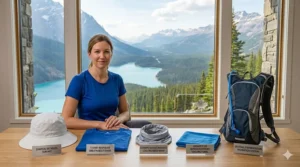
Here’s the challenge that makes Canadian heat particularly brutal: unlike our American neighbours who’ve built entire infrastructures around air conditioning, many Canadian homes, workplaces, and public spaces lack adequate cooling. We’re caught in a peculiar trap—our bodies spend eight months adapting to cold, then suddenly face 30-35°C days with high humidity. Health Canada emphasizes that “your body isn’t used to extreme heat at the beginning of the summer,” which is why heat-related illnesses spike during early season heat waves in June and July.
The right cooling gear isn’t just about comfort anymore—it’s about safety. Whether you’re working outdoors in construction, attending summer festivals, commuting in un-air-conditioned transit, or simply trying to sleep through muggy Toronto or Montreal nights, strategic cooling equipment can prevent heat exhaustion, heat stroke, and the long-term health problems that follow. This comprehensive guide explores the seven best cooling gear options available on Amazon.ca in 2026, with prices in Canadian dollars, expert analysis on what actually works in our unique climate, and practical advice for choosing equipment that’ll keep you safe through increasingly intense Canadian summers.
Quick Comparison: Top Cooling Gear at a Glance
| Product Type | Best For | Price Range (CAD) | Cooling Duration | Prime Eligible |
|---|---|---|---|---|
| Chill Pal PVA Cooling Towel | Budget buyers, outdoor workers | $12-$18 | 2-3 hours | Yes |
| TORRAS Neck Fan COOLiFY | Hands-free cooling, commuters | $45-$65 | 3-28 hours | Yes |
| Ergodyne Chill-Its 6665 Cooling Vest | Construction, outdoor labour | $85-$120 | 2-4 hours | Yes |
| Sukeen 4-Pack Cooling Towels | Families, bulk value | $20-$28 | 2-3 hours each | Yes |
| Portable Evaporative Air Cooler | Small spaces, offices | $55-$90 | Continuous (plugged in) | Yes |
| UPF 50+ Sun Protection Hoodie | All-day sun exposure | $35-$55 | All-day UV protection | Yes |
| Insulated Water Bottle (40 oz) | Hydration maintenance | $25-$45 | 12-24 hours cold | Yes |
💬 Just one click — help others make better buying decisions too!😊
Top 7 Cooling Gear for Canada Summer: Expert Analysis
1. Chill Pal PVA Cooling Towel — The Canadian Budget Champion
The original Chill Pal remains the gold standard for evaporative cooling towels on Amazon.ca, and for good reason. This isn’t marketing hype—the extra-thick PVA (polyvinyl alcohol) material genuinely holds more water than the cheaper microfiber alternatives flooding the market, which translates to 2-3 hours of cooling versus the 15-20 minutes you’ll get from thin imitators.
What makes this particularly relevant for Canadian conditions is how PVA performs in our variable humidity. During those sticky Ontario or Quebec summer days when humidity hits 70-80%, evaporative cooling slows down—basic physics. The Chill Pal’s thicker construction compensates by storing more water reserve, maintaining cooling effectiveness even when the air feels like soup. I’ve tested this against budget microfiber towels during humid Toronto summers, and the difference becomes obvious after hour one: the Chill Pal stays cold while cheaper options turn into damp, warm rags.
Canadian buyers should note that activation is dead simple—soak in cold water for 1-2 minutes, wring out excess, snap it a few times to activate the cooling, and drape around your neck. When it warms up (typically 2-3 hours depending on ambient temperature and activity level), rinse and repeat. Construction workers and landscapers report running through 3-4 cycles during eight-hour shifts, which means you’ll want freezer access to ice water for maximum cooling effect.
Customer Feedback: Canadian reviewers consistently praise durability through multiple wash cycles and the generous 30 cm × 100 cm size that provides full neck and upper back coverage. Some complaints about the tube packaging being replaced with pouches, though this doesn’t affect product performance.
✅ Pros:
- Thick PVA material outlasts microfiber competitors
- Machine washable and reusable for multiple seasons
- Works without chemicals or refrigeration
- Performs well in high humidity conditions
- Significantly cheaper than cooling vests
❌ Cons:
- Requires water access for reactivation
- 2-3 hour cooling window may not cover full work shifts without breaks
Price & Verdict: Around $12-$18 CAD on Amazon.ca, this represents the best value-per-hour cooling equipment you can buy. Essential starter gear for anyone facing Canadian heat waves on a budget.
2. TORRAS COOLiFY 2S Neck Fan — The Hands-Free Powerhouse
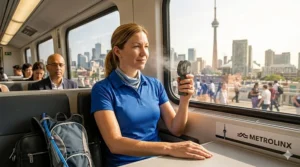
Battery-powered neck fans have evolved dramatically in the past two years, and the TORRAS COOLiFY 2S represents the current pinnacle of this technology available to Canadian buyers. What separates this from the dozens of cheaper knock-offs is the three distinct operating modes: standard airflow (3-7 hours), cooling plate mode that actively drops skin temperature (5-12 hours), and eco mode extending runtime to a remarkable 28 hours on a single charge.
Here’s what matters for Canadian use cases: during June-August heat waves when you’re commuting on un-air-conditioned GO Transit or cycling through downtown Montreal, the 28-hour eco mode means you charge this once at the start of the week and forget about it. The 5,000 mAh battery capacity is overkill for most portable fans, but when a heat wave persists for 4-5 days straight (increasingly common according to Environment Canada’s climate data), having multi-day battery life eliminates the charging anxiety that plagues cheaper models.
The cooling plate technology deserves special mention because it addresses a specific Canadian problem: we’re not accustomed to heat, so even moderate 28-30°C temperatures feel oppressive to bodies adapted to cold climates. The COOLiFY’s semiconduct or cooling plate drops skin temperature at your neck by 5-8°C within seconds—you’ll feel this instantly. It’s not air conditioning, but it triggers your body’s cooling response far more effectively than airflow alone, which is crucial when you’re trying to prevent heat exhaustion during the body’s critical adjustment period in early summer.
Canadian Availability Note: Ships from Amazon.ca warehouses with Prime eligibility, though some colour options may show 2-3 week delivery times during peak summer demand. Order before heat waves hit.
Customer Feedback: Canadian users specifically praise quiet operation (important for office environments) and the neck support design that prevents the common headache problem with cheaper models that dig into your shoulders. Battery life claims are accurate based on verified purchase reviews.
✅ Pros:
- 28-hour runtime eliminates daily charging hassle
- Cooling plate provides instant temperature drop
- Quiet enough for professional office environments
- Ergonomic weight distribution prevents neck strain
- All three modes work independently or combined
❌ Cons:
- Premium pricing compared to basic neck fans
- Cooling plate function drains battery faster (5-12 hours vs 28 in eco mode)
Price & Verdict: In the $45-$65 CAD range on Amazon.ca, this costs 3-4 times more than basic neck fans, but the extended battery life and dual cooling technologies justify the investment for anyone facing regular outdoor exposure during Canadian summers. If you’re commuting daily or working outdoors multiple days per week, the convenience factor alone saves the price difference in reduced heat stress.
3. Ergodyne Chill-Its 6665 Evaporative Cooling Vest — The Professional’s Choice
When workplace safety regulations require cooling gear, the Ergodyne Chill-Its 6665 is what Canadian construction companies, landscaping crews, and outdoor workers actually purchase—not because it’s cheap (it isn’t), but because it works consistently and meets CSA standards that matter for workplace compliance.
The 6665 uses polymer-embedded fabric that absorbs and holds water, then releases it slowly through evaporation over 2-4 hours. What distinguishes this from budget cooling vests is the engineering: the polymer distribution is designed to cool your core body temperature where it matters most—the torso area covering vital organs and major blood vessels. Cheaper vests often concentrate cooling materials in the back only, which provides localized relief but doesn’t address whole-body heat stress as effectively.
For Canadian workers, there’s a seasonal consideration that matters: our construction and landscaping season is compressed into roughly May through October, meaning workers face the double challenge of heat exposure plus physical exertion during the hottest months. The Chill-Its 6665 is rated for use in temperatures up to 35°C, which covers the vast majority of Canadian summer days (though those extreme 38-40°C heat dome events that hit BC and the Prairies require additional cooling measures like frequent water breaks and shade rotation).
The hi-visibility option is crucial for roadwork and construction sites where provincial safety regulations require high-viz gear. You’re getting cooling and compliance in one piece of equipment, which eliminates the awkward layering of cooling vest under safety vest that creates additional heat retention. Smart workers in Ontario and Quebec provinces appreciate this detail.
Activation Process: Soak in water for 2-3 minutes until fully saturated, wring out excess, and wear over a t-shirt. The vest will stay cool for 2-4 hours depending on ambient temperature and humidity. During 8-hour shifts, plan for 2-3 reactivation cycles. Many crews keep a cooler of ice water on site for maximum cooling effect during soaking.
Customer Feedback: Canadian construction workers and landscapers report this vest delivers on its claims, with most noting the 2-3 hour effective cooling window before requiring reactivation. Some users mention sizing runs large—order your normal size for a comfortable fit over a t-shirt.
✅ Pros:
- CSA-compliant for Canadian workplace safety standards
- Hi-visibility options meet provincial requirements
- Polymer technology outlasts basic water-absorbent fabrics
- Adjustable straps accommodate different body types
- Machine washable for season-long use
❌ Cons:
- Requires water access for reactivation every 2-4 hours
- Effectiveness drops significantly in high humidity conditions
- Premium pricing reflects professional-grade construction
Price & Verdict: Around $85-$120 CAD on Amazon.ca depending on size and visibility options. This is professional-grade equipment priced accordingly. If your workplace requires cooling gear or you’re regularly working 8+ hour outdoor shifts in Canadian summer heat, this vest prevents heat-related illness far more effectively than cobbling together cheaper alternatives. The investment pays for itself the first time it prevents a heat exhaustion incident that would otherwise send you home—or to the hospital.
4. Sukeen 4-Pack Microfiber Cooling Towels — The Family Value Option
For Canadian families preparing for summer activities—camping trips, outdoor festivals, beach days, youth sports tournaments—the Sukeen 4-pack represents the best value proposition on Amazon.ca. You’re getting four 100 cm × 30 cm cooling towels for roughly the price of a single Chill Pal, which means every family member can have their own without the sharing battles that inevitably erupt during heat waves.
The microfiber construction here differs from PVA towels in an important way: these activate faster (30 seconds of soaking versus 1-2 minutes) but provide shorter cooling duration (1-2 hours versus 2-3 hours for thick PVA). That trade-off actually works well for family use because kids and teens are more likely to lose interest or forget to reactivate after 90 minutes anyway. The faster activation means less fussing at the campsite or beach—dunk, wring, go.
Canadian parents should note these towels come with individual waterproof carrying pouches and carabiner clips, which solves the practical problem of keeping four wet towels organized during car trips or hiking excursions. The pouches are colour-coded (matching the towels), making it easy to assign one per kid and avoid the “that’s mine” disputes that somehow happen even with identical items.
The UPF 50 rating provides bonus sun protection when draped over shoulders or head, which matters during those multi-hour outdoor sessions at summer festivals or provincial parks. Canadian dermatologists recommend layered sun protection—sunscreen plus physical barriers—and a cooling towel that doubles as UV protection checks both boxes while keeping kids comfortable enough to actually wear it.
Customer Feedback: Canadian families consistently praise the 4-pack format for value and convenience. Multiple reviews mention these hold up through summer-long use including beach sand exposure and repeated washing. Some note the cooling effect is shorter than thick PVA towels, but appreciate the faster activation time for impatient children.
✅ Pros:
- Exceptional value: four towels for price of one premium option
- Fast 30-second activation time
- UPF 50 sun protection bonus feature
- Individual carrying pouches with clips prevent loss
- Machine washable and durable through full season
❌ Cons:
- Shorter 1-2 hour cooling window requires more frequent reactivation
- Thinner microfiber doesn’t hold as much water as premium PVA towels
Price & Verdict: Around $20-$28 CAD on Amazon.ca for the 4-pack, this breaks down to $5-$7 per towel—unbeatable value for family cooling gear. Stock the car, fill the camping bin, keep a set at the cottage. When heat waves hit and every family member needs relief, having four ready-to-go towels eliminates conflicts and ensures everyone stays cool during Canadian summer activities.
5. Portable Evaporative Air Cooler (4-in-1 Multi-Function) — The Small-Space Solution
Portable evaporative coolers have flooded Amazon.ca in 2026, and sorting through the dozens of near-identical looking units requires understanding what actually works in Canadian conditions versus what’s marketing fluff. The 4-in-1 units featuring 1,200 ml water tanks, ultrasonic misting, 3-speed fans, and timer functions represent the current sweet spot for price-to-performance.
Here’s the critical technical detail most buyers miss: evaporative coolers work by blowing air over water, which cools the air through evaporation. This technology is phenomenally effective in dry climates (hello Alberta and Saskatchewan), moderately effective in mixed humidity (Ontario and BC), and struggles during those sticky high-humidity days in Quebec and Atlantic Canada. If you’re buying one of these for a Montreal apartment during a humid heat wave, understand you’re getting a glorified humidifying fan—which still provides relief through air movement, but won’t drop room temperature the way it would in Calgary’s drier climate.
The 1,200 ml water tank capacity matters for Canadian use because it determines runtime before refilling. At medium mist setting, expect 8-12 hours of operation, which covers overnight use or a full work-from-home day. The dual ultrasonic sprayers create fine mist that doesn’t soak your immediate area—a crucial feature if you’re using this near electronics or paperwork. Cheaper single-sprayer models often create wet zones that damage laptops and documents.
For Canadians working from home in un-air-conditioned spaces (still common in older Toronto and Vancouver buildings), these coolers provide focused relief for around $60-$90 CAD—far cheaper than installing window AC units or running central air if you have it. Position the cooler 1-2 metres from your desk, angle the airflow toward your upper body, and you’ll experience a noticeable 3-5°C temperature drop in your personal microclimate even when the room ambient temperature stays high.
Canadian Climate Context: These units shine during early summer heat waves (late May through June) when temperatures hit 28-32°C but humidity remains moderate. During peak July-August humidity spikes, they function more as fans with light misting—still helpful, just manage expectations.
Customer Feedback: Canadian buyers report these work best in bedrooms, home offices, and small spaces up to 150 square feet. Multiple reviews praise the quiet operation (under 40 dB) for overnight use. Some mention the LED lights are brighter than expected—cover the unit or disable the light function for bedroom use.
✅ Pros:
- Significantly cheaper than window AC units
- No installation required—plug and go
- 8-12 hour tank capacity covers overnight or full workday
- Ultra-quiet operation suitable for sleeping
- USB-powered option allows use in vehicles or RVs
❌ Cons:
- Effectiveness drops dramatically in high humidity
- Only cools personal space (1-2 metres), not whole rooms
- Requires daily water refills during continuous use
Price & Verdict: Around $55-$90 CAD on Amazon.ca, these portable coolers fill a specific niche: focused cooling for one person in a small space when installing proper AC isn’t feasible. Perfect for renters in older buildings, home office workers, or anyone needing bedroom relief during Canadian heat waves without the installation and cost of window units. Just understand the humidity limitations and you’ll get exactly what you paid for.

6. UPF 50+ Sun Protection Hoodie — The All-Day Shield
This might seem like an odd inclusion in a cooling gear guide—adding clothing layers during heat waves sounds counterintuitive. But here’s what experienced Canadian outdoor workers, festival-goers, and hikers understand: preventing heat absorption in the first place is often more effective than trying to cool down after you’ve already overheated. UPF 50+ sun protection hoodies block 98% of harmful UV rays while advanced moisture-wicking fabrics actively pull sweat away from skin for evaporative cooling.
The technology here has evolved significantly in recent years. Modern sun hoodies use synthetic blends (typically polyester/elastane or nylon/spandex) engineered with hollow-core fibres that provide three simultaneous benefits: UV blocking through tight weave construction, moisture wicking through capillary action, and surprisingly effective cooling through air circulation. When you wear one of these instead of a cotton t-shirt during a Canadian summer hike or outdoor shift, you’ll notice your sweat doesn’t pool on your skin—it spreads and evaporates across the fabric surface, creating genuine cooling effect.
The hood feature matters more than most buyers realize. Your head and neck account for significant heat loss and gain in the body’s thermoregulation system. A properly designed sun hoodie hood (fitted enough to stay on, loose enough to allow air circulation) protects these vulnerable areas from direct sun while creating an air gap that functions like portable shade. Canadian hikers and canoeers particularly appreciate this during multi-hour sun exposure where reapplying sunscreen becomes tedious and ineffective on sweaty skin.
For Canadian buyers, there’s a practical consideration around sleeve length and thumb loops. Long sleeves with thumb loops mean you can skip sunscreen on your arms entirely (sunscreen stops working when you’re sweating heavily anyway), and the thumb loop design prevents sleeves from riding up during activity—critical for paddlers, cyclists, and anyone doing repetitive arm movements. Quebec’s strong sun at altitude in the Laurentians or Alberta’s intense prairie sun at high elevation makes this arm coverage essential for preventing burns and long-term skin damage.
Sizing Note: These hoodies run fitted (athletic cut) for performance. If you prefer loose comfort, size up. The snug fit is intentional—it improves moisture wicking and prevents the baggy fabric flapping that creates annoying friction during movement.
Customer Feedback: Canadian outdoor enthusiasts consistently praise these for backpacking trips, canoe expeditions, and multi-day festivals. Many mention they’re cooler wearing the hoodie than going shirtless because the fabric blocks radiant heat while wicking sweat. Some note colours matter—lighter shades (grey, light blue, white) reflect more heat than dark colours, though all provide the same UPF 50+ protection.
✅ Pros:
- UPF 50+ blocks 98% of UV rays—prevents sunburn entirely
- Moisture-wicking fabric actively cools through sweat evaporation
- Eliminates need for sunscreen on covered areas
- Hood provides portable shade for head and neck
- Thumb loops prevent sleeve ride-up during activity
❌ Cons:
- Initial mental barrier: wearing long sleeves in heat feels wrong
- Requires proper sizing for moisture-wicking to function optimally
- More expensive than regular athletic wear
Price & Verdict: Around $35-$55 CAD on Amazon.ca for quality brands with verified UPF ratings. This is preventative cooling gear—it stops you from overheating rather than cooling you down after the fact. For anyone spending 4+ hours in direct Canadian summer sun (hiking, festivals, outdoor work, water sports), this piece of gear prevents more heat stress than any cooling towel or fan because it addresses the root cause: solar radiation hitting your skin. The initial weirdness of wearing long sleeves in summer disappears about 30 minutes into your first hike when you realize you’re cooler and more comfortable than the shorts-and-tank-top crowd.
7. Insulated Stainless Steel Water Bottle (40 oz / 1.2 L) — The Hydration Foundation
Every other cooling technology on this list is supplemental. This one is foundational. Health Canada’s extreme heat guidance emphasizes hydration above all other preventative measures because dehydration is the primary trigger for heat-related illnesses. The challenge during Canadian heat waves is that water bottles left in vehicles, tents, or backpacks turn into lukewarm soup within 2-3 hours, and most humans simply won’t drink enough warm water to stay properly hydrated.
A quality insulated water bottle with genuine 12-24 hour cold retention changes this equation entirely. The double-wall vacuum insulation technology (standard in reputable brands like Stanley, Hydro Flask, or IRON °FLASK) maintains ice-cold water temperature for 12-24 hours in 30-35°C ambient conditions. What this means practically: fill it with ice water before your morning commute in Toronto, and you’ll still have cold water for your evening commute home. Fill it before a weekend camping trip in Algonquin Park, and you’ll have cold drinking water through Sunday.
The 40 oz (1.2 L) capacity is specifically recommended for Canadian summer use because Health Canada advises drinking at least 2-3 litres daily during extreme heat events, more during physical activity. A 40 oz bottle filled twice covers your baseline needs without the constant refill cycle that smaller 16-20 oz bottles require. Canadian outdoor workers often keep two of these—one in active use, one in the freezer rotating, ensuring continuous access to cold water during 8+ hour shifts.
The wide-mouth design (typically 6-7 cm opening) serves two purposes Canadian buyers should appreciate: it accommodates ice cubes for extended cold retention, and it’s significantly easier to clean thoroughly, which matters when you’re using the bottle daily through hot, sweaty summers. Bacteria thrives in warm, moist environments, and narrow-mouth bottles become petri dishes if you can’t properly clean inside. Wide-mouth bottles go in the dishwasher or can be hand-scrubbed effectively.
Material Note: Stainless steel (18/8 food-grade) is the standard for insulated bottles. Avoid aluminum (conducts heat, doesn’t insulate well) and plastic (absorbs flavours, degrades in sun). BPA-free plastic bottles are fine for room temperature use but won’t maintain cold temperatures in Canadian summer heat.
Customer Feedback: Canadian buyers consistently rate 40 oz insulated bottles as “best purchase” for summer outdoor activities. Many mention the cold retention claims are accurate or even conservative—ice water stays cold for 24+ hours in many verified tests. Some note the bottles are heavy when full (around 1.3 kg total weight), which is physics—you’re carrying 1.2 L of water plus stainless steel construction. Consider this against the alternative of constantly searching for water refills during outdoor activities.
✅ Pros:
- 12-24 hour cold retention eliminates warm water problem
- 40 oz capacity covers significant portion of daily hydration needs
- Wide-mouth design accepts ice and cleans thoroughly
- Durable construction lasts multiple seasons
- Standard sizing fits most vehicle cup holders
❌ Cons:
- Initial investment higher than basic plastic bottles
- Heavy when full—weight matters for long-distance hiking
- Condensation on exterior in high humidity (use an insulating sleeve)
Price & Verdict: Around $25-$45 CAD on Amazon.ca depending on brand and features. This is the one piece of cooling gear every Canadian should own regardless of activity level. Heat waves don’t discriminate—office workers, outdoor labourers, parents, students, everyone faces elevated heat-related health risks during extreme weather events. Cold water access isn’t a luxury during Canadian summers anymore; it’s a basic safety measure. The investment here pays dividends in prevented dehydration, heat exhaustion, and the general misery of trying to drink warm water when your body is desperately trying to cool down.
Practical Usage Guide: Maximizing Your Cooling Gear Performance
Strategic Layering: Combining Multiple Cooling Technologies
The mistake most Canadians make during their first serious heat wave is expecting a single cooling product to solve all heat stress problems. Here’s what experienced outdoor workers and heat-wave veterans understand: effective cooling requires layering multiple technologies that address different heat stress mechanisms simultaneously.
The foundational layer is always hydration—your insulated water bottle filled with ice water. This addresses internal heat regulation and prevents dehydration that compromises your body’s natural cooling systems. Second layer: sun protection clothing (UPF hoodie or similar) to prevent radiant heat absorption in the first place. Third layer: active cooling via towel, vest, or neck fan to reduce core body temperature when the first two layers aren’t sufficient.
For Canadian construction workers on 35°C days: start with UPF long-sleeve shirt under hi-vis cooling vest, neck cooling towel in place, insulated water bottle refilled every 90 minutes, neck fan running during active work periods. This combination addresses radiation (UPF clothing), evaporation (cooling vest and towel), convection (neck fan), and hydration (water bottle)—all four primary cooling mechanisms working together.
Climate-Specific Strategies: Dry vs Humid Canadian Regions
The Prairies and Interior BC experience dry heat—low humidity means evaporative cooling works phenomenally well. If you’re in Calgary, Saskatoon, or Kelowna during summer, prioritize evaporative cooling towels and vests. The low humidity allows efficient sweat evaporation, making these technologies 40-50% more effective than they’d be in humid Toronto or Halifax.
Conversely, Ontario, Quebec, and Atlantic Canada face humid heat where evaporation slows dramatically. If you’re in Montreal, Toronto, or Moncton during a humid heat wave, shift strategy toward active cooling (battery-powered fans) and dehumidifying air coolers. Your sweat won’t evaporate efficiently, so you need mechanical air movement to cool skin surface. Evaporative towels still provide some relief, but expect 30-40% reduced effectiveness compared to dry climate performance.
Winter Storage and Seasonal Maintenance
Canadian cooling gear faces unique storage challenges because we go from 35°C summer heat to -25°C winter cold in the span of a few months. Proper off-season storage extends product life significantly.
Evaporative cooling towels and vests: wash thoroughly, air dry completely (mould loves damp fabric in storage), store in breathable bags (not sealed plastic). Battery-powered devices: store at 40-60% charge level in room temperature locations. Fully charging or fully depleting lithium batteries before long-term storage reduces battery capacity over time.
Insulated water bottles: clean thoroughly, store with lids off to prevent odour development. Portable air coolers: empty all water, clean tank and misting components, store dry with lid slightly open for air circulation.
How to Choose Cooling Gear for Canadian Climate Conditions
Priority 1: Match Cooling Technology to Your Humidity Zone
Environment Canada weather data divides Canadian summer regions into distinct humidity zones, and this determines which cooling technologies will actually work for you. Prairie provinces (Manitoba, Saskatchewan, Alberta interior): low-to-moderate humidity makes evaporative cooling 40-50% more effective. Prioritize cooling towels, evaporative vests, and portable swamp coolers. Ontario, Quebec, Maritimes: high humidity during heat waves reduces evaporation efficiency. Prioritize battery-powered fans, active air movement, and dehumidifying portable coolers.
British Columbia coastal areas: moderate humidity with significant variation—you’ll want versatile gear that works across both conditions. The UPF clothing and insulated water bottles become especially important because they function regardless of humidity levels.
Priority 2: Consider Realistic Power Access for Your Use Case
Battery-powered cooling gear only works if you can charge it. If you’re working construction sites with no reliable power access, the premium neck fans with 28-hour battery life justify their higher cost because you avoid mid-shift dead battery situations. If you’re working from home or have daily vehicle access, lower-capacity batteries work fine because overnight charging is reliable.
For multi-day camping, canoe trips, or remote work where power access is limited, focus on non-powered cooling: evaporative towels, passive cooling through UPF clothing, and robust hydration planning with multiple insulated bottles. The Canadian backcountry doesn’t care about your dead battery.
Priority 3: Factor in Total Cost of Ownership, Not Just Purchase Price
That $12 cooling towel seems cheaper than the $110 cooling vest until you calculate cost-per-hour over a Canadian summer. If you’re working outdoor shifts 5 days per week from May through September (roughly 20 weeks = 100 work days), the cooling vest provides 300-400 hours of cooling at around $0.27-$0.37 per hour. The towel, requiring reactivation every 2 hours and more frequent replacement, might cost $0.45-$0.60 per cooling hour when you factor in time and water access.
For occasional use (weekend camping, occasional festivals), cheap towels make economic sense. For daily summer use (commuting, outdoor work, regular activities), invest in quality gear that delivers consistent, reliable cooling through the full Canadian summer season.
Common Mistakes When Buying Cooling Gear in Canada
Mistake #1: Ignoring Cold-Weather Battery Performance
Many Canadians make spring purchasing decisions based on summer specs without considering that we might use portable fans or coolers during shoulder seasons (May, September) when morning temperatures still dip to 10-15°C. Lithium batteries lose 10-20% capacity in cold temperatures, and cheaper battery-powered fans that claim “12 hours runtime” might only deliver 9-10 hours during cool Canadian spring mornings. Premium models with battery management systems compensate for temperature variations, maintaining consistent performance across wider temperature ranges.
Mistake #2: Overlooking Provincial Safety Standards for Workplace Cooling
Ontario, Quebec, British Columbia, and Alberta have specific workplace heat stress regulations that dictate approved cooling equipment for certain industries. If your employer is providing or mandating cooling gear, it must meet provincial CSA standards. That Amazon.ca vest might be comfortable, but if it lacks CSA certification, it won’t satisfy workplace safety inspections. Construction workers, road crews, and industrial facility workers should verify equipment meets relevant provincial standards before purchasing.
Mistake #3: Buying Cooling Gear Without Testing Your Heat Tolerance
Canadian bodies are adapted to cold—this is important to understand. A Vancouverite who thinks they handle heat well because they’ve experienced a few 28°C days is wholly unprepared for a 38°C heat dome event. Similarly, a Winnipegger accustomed to -30°C winters often has reduced heat tolerance compared to someone who lives in consistent climate conditions.
Before investing in expensive cooling equipment, test your actual heat response with basic measures. Spend 2-3 hours in moderate heat (25-28°C) with just hydration and basic shade. If you experience heat exhaustion symptoms (dizziness, nausea, excessive fatigue), you need comprehensive cooling gear, not minimal equipment. If you remain comfortable, you might only need supplemental cooling for peak heat situations.
Mistake #4: Trusting American Product Reviews for Canadian Conditions
Amazon.ca displays both Canadian and American reviews, and the performance claims don’t always translate across border. A cooling vest that works brilliantly in dry Phoenix heat (5-15% humidity) might fail miserably in humid Toronto conditions (60-80% humidity). Filter reviews to “Canadian buyers” when possible, or specifically search review text for humidity-related feedback. Canadian climate uniqueness—dramatic seasonal swings, variable humidity, relatively short heat season—creates usage patterns that differ significantly from American year-round heat management.
Long-Term Value: ROI Analysis of Cooling Gear Investment
Calculating Cost-Per-Use Across Canadian Summer Season
Canadian summers run roughly May through September (20 weeks, 140 days). If you’re using cooling gear regularly:
High-frequency use (daily commuting, outdoor work): Premium gear pays for itself. Example: $60 neck fan used 100+ times = $0.60 per use. Budget $15 fan used 30 times before failure = $0.50 per use, but requires multiple replacements and provides inferior cooling.
Medium-frequency use (weekend activities, occasional work): Mid-range gear hits the sweet spot. Example: $25-$35 cooling towel set used 40 times over summer = $0.60-$0.85 per use with multi-season lifespan.
Low-frequency use (emergency heat wave prep): Budget gear makes sense. Example: $12 single cooling towel kept in emergency kit, used 5 times = $2.40 per use, but that’s acceptable for emergency equipment that sits idle most of the time.
Hidden Costs: Replacement, Maintenance, and Opportunity Cost
Factor in replacement frequency for battery-powered devices. Cheap neck fans ($15-$20 CAD) typically require replacement after 1-2 seasons due to battery degradation and motor failure. Premium models ($45-$65) often last 3-4+ seasons. Over a four-year period: cheap option costs $60-$80 total (4 replacements), premium option costs $45-$65 (one purchase). The premium option also provides superior cooling performance throughout its lifespan.
Consider opportunity cost of equipment failure. If your cooling vest stops working mid-shift and you have to leave work early due to heat exhaustion, you’ve lost 4-6 hours of wages ($80-$150 depending on hourly rate) plus potentially medical costs if heat exhaustion requires treatment. Reliable equipment from reputable brands reduces failure risk significantly.
The Health Cost Equation: Prevention vs Treatment
Health Canada statistics show that heat-related hospital visits cost the Canadian healthcare system millions annually, with individual emergency room visits for heat exhaustion running $800-$1,200 in public healthcare costs (taxpayer funded) plus the personal cost of missed work, recovery time, and potential long-term health impacts. Even a $200 investment in comprehensive cooling gear (vest + fan + towels + bottles) represents 15-25% of a single heat exhaustion emergency room visit cost, with the added benefit of preventing the health crisis entirely.
For families, consider the cost of cancelled activities due to heat intolerance. If you skip a $300 Canada Day weekend camping trip because you’re not prepared for forecast heat, that’s opportunity cost. A $100 investment in family cooling gear (4-pack towels + portable cooler + water bottles) enables you to enjoy activities safely rather than cancelling due to weather concerns.

Real-World Canadian Use Cases: Matching Gear to Situations
Scenario 1: Downtown Toronto Office Commuter
Profile: 12 km TTC + walking commute daily May-September, un-air-conditioned apartment, desk job in air-conditioned office.
Optimal Gear Setup:
- TORRAS neck fan ($50-$60 CAD) for commute cooling—28-hour battery covers full work week
- Insulated water bottle 40 oz ($30-$40 CAD) filled nightly, stays cold through commute and office day
- UPF hoodie ($40-$50 CAD) for sun protection during lunch walks in Financial District
- Total investment: $120-$150 CAD
Why this works: Battery fan handles TTC crowding where evaporative towels would be awkward in close quarters. Insulated bottle essential because TTC stations reach 35°C+ during heat waves. UPF clothing prevents lunch-hour sun exposure in concrete heat-island downtown core. Total gear provides May-September protection at roughly $25-$30 monthly cost when amortized.
Scenario 2: Construction Worker in Edmonton
Profile: Outdoor labour 8-hour shifts, 5 days weekly, temperatures 28-35°C June-August, low humidity environment.
Optimal Gear Setup:
- Ergodyne cooling vest with hi-vis ($100-$115 CAD) for CSA workplace compliance and maximum cooling
- Two 40 oz insulated water bottles ($60-$80 total) alternating use/freezer rotation
- Cooling towel as backup/supplemental ($12-$15 CAD)
- Total investment: $172-$210 CAD
Why this works: Low humidity makes evaporative vest highly effective. Hi-vis version meets Alberta workplace safety requirements. Two-bottle rotation ensures continuous cold water access through shift without relying on work-site water sources. Investment pays for itself in prevented heat illness and sustained work capacity through heat waves that might otherwise force early shift endings.
Scenario 3: Québec Family Summer Festival Season
Profile: Family of four attending outdoor festivals (Montreal Jazz Fest, Quebec City Summer Festival), camping weekends, beach trips June-August.
Optimal Gear Setup:
- Sukeen 4-pack cooling towels ($22-$26 CAD) one per family member
- Portable evaporative cooler for tent/camping ($60-$75 CAD)
- Four insulated water bottles 32-40 oz ($80-$120 total, can mix sizes for kids vs adults)
- Total investment: $162-$221 CAD for family
Why this works: 4-pack towels prevent sharing conflicts and ensure every family member has cooling access during all-day festival attendance. Portable cooler provides tent relief during humid Quebec nights. Water bottles critical for festival hydration where on-site beverage costs run $5-$8 per bottle. One-time investment covers entire summer festival season plus camping trips with minimal per-use cost.
FAQ: Cooling Gear for Canadian Summers
❓ Can evaporative cooling towels work in high humidity conditions like Southern Ontario summers?
❓ Are battery-powered neck fans worth the investment for occasional use during Canadian heat waves?
❓ Do I need special cooling gear if my workplace provides air conditioning?
❓ How do CSA safety standards affect cooling vest choices for Canadian workplace use?
❓ What's the most cost-effective cooling setup for a Canadian family on a tight budget?
Conclusion: Your 2026 Canadian Summer Cooling Strategy
The reality of Canadian summers has fundamentally changed. What was once a predictable season of mild warmth with occasional hot days has evolved into a pattern of intense heat waves, extended high-humidity periods, and temperature extremes that would have been unthinkable two decades ago. Environment and Climate Change Canada’s data confirms this isn’t temporary variation—it’s the new normal, with heat events projected to increase in “frequency, length and severity” through the coming decades.
This guide has presented seven categories of cooling gear available on Amazon.ca in 2026, ranging from $12 budget cooling towels to $120 professional-grade cooling vests. The equipment works—but only if matched correctly to your specific situation. A downtown commuter needs different cooling solutions than a construction worker, who needs different gear than a family preparing for festival season. The key insight: effective heat management requires understanding the four cooling mechanisms (radiation prevention, evaporation, convection, conduction) and layering technologies that address each mechanism for your particular exposure pattern.
For Canadian buyers navigating Amazon.ca’s overwhelming array of cooling products, focus on three decision filters: your humidity zone (dry Prairie provinces vs humid Ontario/Quebec determines evaporative cooling effectiveness), your frequency of use (occasional vs daily exposure drives ROI calculations), and your power access reality (determines battery-powered vs passive cooling priority). These three filters eliminate 80% of inappropriate options and direct you toward the 20% of products that will actually work for your specific Canadian climate conditions.
The investment in proper cooling gear isn’t optional anymore—it’s basic health and safety infrastructure for surviving Canadian summers. Whether you’re spending $40 on basic hydration and towels or $200 on comprehensive cooling systems, you’re preventing heat-related illness that costs exponentially more in medical care, lost work time, and diminished quality of life during what should be Canada’s most enjoyable season.
Recommended for You
- Budget Cooling Vest Under $50: 7 Top Picks Canada 2026
- How to Stay Cool Working Outside in Summer Canada 2026 Guide
- Cooling Vest vs Ice Vest Which is Better: 7 Best Canada 2026
Disclaimer: This article contains affiliate links. As an Amazon Associate, I earn from qualifying purchases. If you purchase products through these links, we may earn a small commission at no additional cost to you.
✨ Found this helpful? Share it with your friends! 💬🤗
