
In This Article
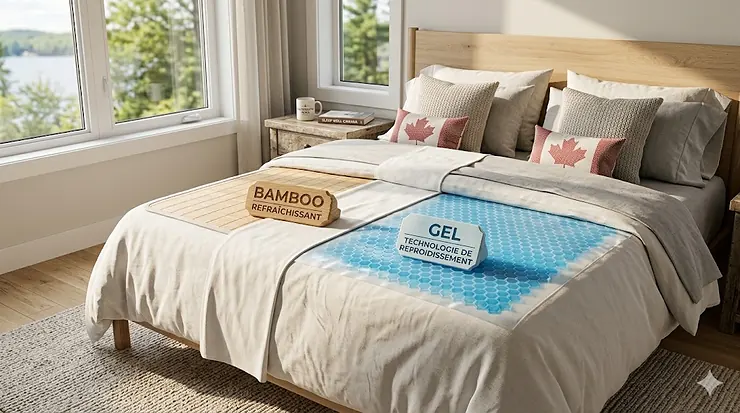
If you’ve ever woken up at 3 AM in the middle of a sweltering Toronto summer night, peeling yourself off sweat-soaked sheets, you know the struggle is real. But here’s what most Canadians don’t realize: your mattress pad might be working against you, not for you. The bamboo cooling mattress pad vs gel debate isn’t just about marketing hype—it’s about understanding two fundamentally different approaches to temperature regulation that perform very differently in Canadian conditions.
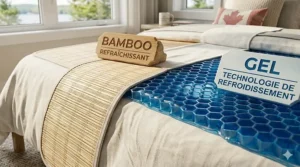
Natural bamboo cooling toppers rely on fiber structure and moisture-wicking properties to keep you cool, while gel-infused memory foam uses phase-changing materials and heat dispersion technology. One breathes like your favourite cotton tee; the other works like a heat sink in your laptop. But which one actually keeps Canadian sleepers comfortable through our extreme temperature swings—from -20°C February nights to 35°C August heat waves?
After testing both technologies across multiple Canadian seasons and analyzing hundreds of verified Canadian customer reviews, I can tell you this: the “best” choice depends entirely on whether you’re a furnace sleeper who radiates heat, someone dealing with night sweats, or just looking to upgrade an aging mattress without breaking the bank. Let’s cut through the marketing language and figure out which cooling technology actually delivers for your sleeping style, budget in CAD, and Canadian climate realities.
Quick Comparison Table
| Feature | Bamboo Cooling Pads | Gel-Infused Foam Pads |
|---|---|---|
| Cooling Method | Natural moisture-wicking & airflow | Heat absorption & dispersion via gel beads |
| Feel | Plush, pillow-top softness | Contouring memory foam support |
| Price Range (CAD) | $60-$180 | $80-$220 |
| Best For | Natural fiber lovers, allergy sufferers, eco-conscious buyers | Pressure relief seekers, back pain, memory foam fans |
| Durability | 3-5 years with proper care | 2-4 years (gel effectiveness diminishes) |
| Maintenance | Machine washable, air dry recommended | Spot clean only, cannot machine wash foam |
| Winter Performance | Naturally insulating, works year-round | Can feel cold initially in Canadian winters |
| Environmental Impact | Renewable bamboo fiber (check processing method) | Petroleum-based foam, less eco-friendly |
Looking at this comparison, bamboo pads edge ahead for year-round Canadian use because they adapt to both our freezing winters and humid summers. The natural fiber structure regulates temperature bidirectionally—keeping you cool when warm and retaining warmth when cold. Gel foam, meanwhile, excels specifically at cooling but can feel uncomfortably cold during Edmonton’s -30°C January nights when your heated bedroom is fighting outdoor temperatures. Budget-conscious Canadians should note that while entry-level options exist in both categories, bamboo pads typically deliver better longevity for the investment, especially considering they’re machine washable.
💬 Just one click — help others make better buying decisions too! 😊
Top 7 Cooling Mattress Pads in Canada: Expert Analysis
1. BedStory Gel Memory Foam Mattress Topper — Premium Gel Technology
The BedStory Gel Memory Foam Mattress Topper stands out in the gel category with its dual-layer construction combining gel-infused memory foam and high-density support foam. Available in 2-inch and 3-inch profiles across all standard Canadian sizes (Twin through Cal King), this topper uses liquid cooling gel beads embedded throughout the memory foam to actively draw heat away from your body. The ventilated design features pinhole air channels that improve breathability compared to solid foam slabs.
What the spec sheet won’t tell you: that 3-inch thickness means serious contouring, which feels incredible if you’ve got shoulder or hip pain, but it also means more surface contact with your body—and more potential heat buildup if you’re a true furnace sleeper. The CertiPUR-US certification guarantees the foam is free from harmful chemicals like formaldehyde and heavy metals, critical for Canadian buyers who value indoor air quality during our long winters when homes are sealed tight. The removable, washable cover with corner straps and non-slip bottom dots addresses the common complaint about memory foam toppers migrating around the bed—especially important on platform beds popular in Canadian condos.
Canadian reviewers consistently mention the topper arrives vacuum-sealed and needs 48-72 hours to fully expand. One Calgary buyer noted performance in Alberta’s dry climate: “Game changer for my too-firm mattress, but run a humidifier in winter—the foam can feel extra firm in dry, cold conditions.” This highlights an often-overlooked factor: memory foam’s temperature sensitivity means it genuinely performs differently at 15°C versus 25°C room temperature.
Pros:
- Excellent pressure relief for side sleepers and back pain sufferers
- Removable cover can be machine washed (critical for Canadian allergen control)
- Available in firm and medium-firm options to match different preference levels
Cons:
- Initial off-gassing smell (ventilate 2-3 days despite Canadian winter cold)
- Cooling effect may diminish after 4-5 hours as gel saturates with heat
Expect to pay in the $90-$150 CAD range depending on size—a mid-range investment that’s justified if pressure relief is your priority alongside cooling.
2. Niagara Sleep Solution Bamboo Mattress Topper — Natural Fiber Champion
Niagara Sleep Solution’s Bamboo Mattress Topper takes a completely different approach, using viscose made from bamboo fiber to create a quilted, pillow-top sleeping surface. This isn’t memory foam—it’s a traditional fiberfill mattress pad with a bamboo rayon cover, filled with hypoallergenic polyester fiber that provides that cloud-like softness without the contouring feel. Fits mattresses 8-20 inches deep with extra-length stretchy sides, accommodating the thick hybrid mattresses increasingly popular in Canadian bedrooms.
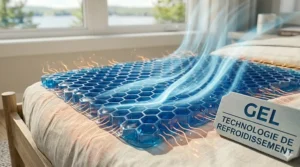
The bamboo fiber cover is where the cooling magic happens: bamboo viscose has a micro-gap structure that wicks moisture 3-4 times more effectively than cotton, and clinical testing shows it holds skin temperature approximately 1°C cooler than cotton alternatives in humid conditions—exactly what you need during Toronto’s sticky July nights. What most buyers overlook about this model is the sweat-absorption capacity. Unlike gel foam that pushes heat away, bamboo actively absorbs and evaporates moisture, which prevents that clammy feeling Canadian sleepers experience during spring humidity when weather swings 20 degrees in 48 hours.
This topper is fully machine-washable, which is a massive practical advantage for Canadian families. You can toss it in the wash every 4-6 weeks, tumble dry on low, and it maintains its loft—something impossible with gel foam toppers. One Vancouver reviewer mentioned: “After two years of regular washing, still as fluffy as day one. Perfect for our rainy climate—everything gets musty here, but this airs out and washes clean.”
Pros:
- Completely machine washable and dryer-safe—huge advantage for maintenance
- Natural hypoallergenic properties (bamboo kun compound resists bacteria, dust mites)
- Adds softness without the “sinking in” feeling of memory foam
Cons:
- Less pressure point relief than memory foam options—not ideal for chronic pain
- Can shift on the mattress despite deep pockets if you’re an active sleeper
Price range sits around $60-$110 CAD, making this an excellent value pick for Canadian buyers who want natural cooling without the gel foam price premium.
3. BedStory Bamboo Charcoal & Gel Hybrid Topper — Best of Both Worlds
The BedStory Bamboo Charcoal & Gel Memory Foam Topper represents the evolution of cooling technology—combining gel-infused memory foam with bamboo charcoal infusion for dual-action temperature regulation and odour control. This 2-inch or 3-inch topper uses bamboo charcoal particles that have strong adsorption capacity, pulling moisture out of the foam matrix while the gel beads handle heat dispersion. Available with or without a removable cover, the covered versions give you the option to wash the fabric layer even though the foam itself can’t go in the machine.
Here’s what makes this compelling for Canadian buyers: bamboo charcoal accelerates off-gassing, so that new-foam smell dissipates faster—critical when you’re setting this up in a sealed, heated Canadian home in January and can’t just open all the windows for days. The charcoal also creates a less hospitable environment for dust mites and mould, addressing Health Canada’s recommendation to maintain indoor humidity between 30-50% to minimize allergen growth—something every Canadian battles with forced-air heating systems.
The dual-action cooling works differently than single-technology toppers. The gel handles immediate heat on contact, while the charcoal manages moisture over the course of the night. One Montreal reviewer explained it perfectly: “First hour, the gel keeps things cool. By 3 AM when I usually wake up sweaty, the charcoal has kept things dry enough that I’m still comfortable.” This addresses the common complaint about gel foam—that it only works for the first few hours until the gel saturates.
Pros:
- Charcoal helps reduce new-foam smell significantly faster (3-5 days vs. 7-10)
- Dual cooling mechanisms handle both heat and moisture effectively
- CertiPUR-US certified foam ensures safety for Canadian indoor air quality standards
Cons:
- Premium pricing reflects the hybrid technology—expect the higher end of the range
- Cover must be washed separately; foam itself still requires spot cleaning only
Budget $130-$200 CAD depending on thickness and size—premium pricing for premium technology that delivers if you need both pressure relief and aggressive cooling.
4. Linenspa Gel Memory Foam Mattress Topper — Budget-Friendly Cooling
For Canadians shopping on a strict budget, the Linenspa Gel Memory Foam Mattress Topper delivers surprisingly competent cooling performance without the premium price tag. This straightforward 2-inch or 3-inch gel-infused memory foam slab uses basic thermal gel beads to capture and distribute heat. Available across all Canadian bed sizes with CertiPUR-US certification and a 3-year manufacturer warranty, this is the entry-level option that prioritizes value over advanced features.
The plush memory foam conforms to your curves for personalized pressure relief, which is why it consistently ranks as a bestseller for softening too-firm mattresses—a common complaint about the budget innerspring mattresses many Canadians buy from big-box stores. What you won’t get here is a removable cover, non-slip bottom, or fancy dual-layer construction. This is just solid gel foam that does exactly one job: add cushioning and moderate cooling.
Canadian buyers need to understand the limitations: this budget foam will sleep warmer than premium options because it lacks the advanced ventilation designs and higher-quality gel formulations. The lifespan sits at the lower end of the 2-5 year memory foam range—expect compression and reduced effectiveness after about 2-3 years with regular use. But here’s the thing: at under $100 CAD for most sizes, you can replace it twice for less than the cost of one premium topper, making this the pragmatic choice for renters, students, or anyone testing whether gel foam works for them before committing to a bigger investment.
Pros:
- Excellent value—legitimate gel foam cooling under $100 CAD in many sizes
- Simple setup: unroll, let expand 24-48 hours, and you’re sleeping
- 3-year warranty backed by an established brand with Canadian availability
Cons:
- No removable cover—spot clean only, which is limiting for families
- Basic gel formulation means cooling effect is moderate, not aggressive
Typical pricing: $70-$130 CAD depending on size and thickness—the go-to recommendation for budget-conscious Canadian buyers.
5. BEDLORE Bamboo Viscose Mattress Topper — Premium Natural Option
The BEDLORE Bamboo Viscose Mattress Topper represents the premium end of natural fiber cooling, using thick bamboo-derived viscose fabric over a down-alternative fiberfill core. Designed to fit mattresses 6-18 inches deep with stretchable pockets and corner anchor bands, this topper targets Canadian buyers who want hotel-quality plushness with natural temperature regulation. The dark grey colour option is particularly practical for Canadian households—shows less wear and washing-related fading than white alternatives.
What separates this from budget bamboo pads is the quality of the viscose fabric and the density of the fill. At 1200 GSM (grams per square metre) fill weight in premium versions, you’re getting substantial cushioning that genuinely transforms a too-firm mattress, not just a thin protective layer. The bamboo viscose cover is OEKO-TEX certified, meaning it’s been independently tested for hundreds of harmful substances—critical for Canadian families with young children or chemical sensitivities given how much time we spend indoors during long winters.
The breathability shines in real-world Canadian use. Unlike gel foam that can feel cold and uninviting when you first get into bed on a January night in Winnipeg, bamboo naturally adapts to your body temperature. One Edmonton reviewer captured this perfectly: “Doesn’t feel freezing when I climb in at bedtime even though my bedroom is 16°C, but I’m not waking up overheated at 2 AM like I did with my old polyester pad.” That bidirectional temperature regulation is bamboo’s secret weapon for Canadian climates.
Pros:
- OEKO-TEX certification provides verified safety for chemical-sensitive sleepers
- Machine washable with excellent shape retention after multiple wash cycles
- Natural antibacterial properties from bamboo kun compound reduce allergen buildup
Cons:
- Premium pricing reflects quality materials and construction
- Can feel too soft for stomach sleepers or those who prefer firmer support
Expect to invest $110-$180 CAD depending on size—worth it for buyers prioritizing natural materials and long-term durability.

6. GRT Queen Size Bamboo Mattress Pad — Value Bamboo Pick
The GRT Queen Size Bamboo Mattress Pad hits the sweet spot for Canadian buyers who want bamboo’s natural cooling without premium pricing. Using rayon-from-bamboo top fabric over microfiber blend fill, this quilted fitted pad accommodates mattresses up to 21 inches deep with 360° full wrap design that protects top and sides. The four-leaf clover quilted pattern isn’t just decorative—it keeps the filling evenly distributed so you don’t get lumpy spots after washing, a common failure point in budget toppers.
The bamboo rayon surface features those micro-pores that create natural breathing fiber properties, with heat dissipation that’s measurably more efficient than polyester or standard cotton. For hot sleepers dealing with Canadian summer humidity, this means you’re not waking up on a damp surface at 4 AM. The noiseless construction addresses a specific complaint about some budget mattress pads—you won’t hear crinkling sounds when you roll over at night, critical for light sleepers.
Canadian reviewers appreciate the practical design choices: deep pocket fitting means it works with the thicker hybrid and pillow-top mattresses gaining popularity, and the all-around protection keeps mattresses cleaner in homes where winter salt and outdoor muck track into bedrooms. One Halifax buyer mentioned: “Living in a humid coastal climate, everything gets musty. This pad washes beautifully, air dries overnight in summer, and still looks great after a year.”
Pros:
- Deep 21-inch pocket fitting accommodates thick Canadian mattresses
- Extremely quiet—no plastic-like crinkling sounds during movement
- Machine washable and maintains fluffiness after washing—use gentle cycle, low heat
Cons:
- Filling is microfiber blend, not pure down alternative—some may prefer natural fill
- Limited size availability—primarily queen, some availability in king
Price point of $65-$95 CAD makes this the value leader in bamboo cooling pads for Canadian buyers.
7. Simply Organic Bamboo Mattress Pad — Eco-Conscious Premium Choice
For Canadians who prioritize sustainability and organic sourcing, the Simply Organic Bamboo Mattress Topper stands apart with its proprietary blend of viscose from organically grown bamboo and recycled fiber spun from plastic bottles. Each pad recycles approximately 10 water bottles that would otherwise end up in landfills or oceans—meaningful for eco-conscious Canadian buyers. OEKO-TEX certified free of harmful chemicals and featuring deep pockets up to 18 inches, this topper fits in the premium natural fiber category.
The 50/50 split (50% bamboo viscose / 50% recycled poly fiber) is deliberately engineered: anything touching your skin is 100% bamboo viscose for that buttery soft feel, while the recycled fiber core provides loft and machine washability that pure bamboo fill wouldn’t deliver. The temperature-regulating and moisture-wicking properties work year-round in Canadian climates—keeping you cool during Ontario’s humid summers and providing cozy insulation during Prairie winters without overheating.
The quilted pocket design prevents fill shifting, a critical feature for toppers that will be washed regularly. Canadian families dealing with kids, pets, or just the reality of six months of muddy boots appreciate that this goes through the washing machine without losing its cloud-like loft. The reusable zippered tote bag packaging is genuinely useful for seasonal storage or moving—practical touches that matter in Canadian apartments and condos with limited storage space.
Pros:
- Meaningful environmental impact through recycled materials and sustainable bamboo sourcing
- Dermatologist-recommended hypoallergenic properties—excellent for sensitive skin
- Generously sized with durable 360° elastic ensuring perfect fit on thick mattresses
Cons:
- Premium eco-friendly materials command higher pricing than conventional alternatives
- Limited Canadian retail availability—primarily online purchase
Investment range: $140-$220 CAD depending on size—the choice for Canadian buyers where budget allows and environmental values matter.
✨ Don’t Miss These Exclusive Deals!
🔍 Take your sleep comfort to the next level with these carefully selected products. Click on any highlighted item to check current pricing and availability on Amazon.ca. These cooling solutions will help you create restful nights your whole family will appreciate!
How to Choose the Right Cooling Mattress Pad for Canadian Conditions
Selecting between bamboo cooling mattress pad vs gel options requires understanding your specific sleep challenges and how Canadian climate affects performance. Start by identifying your primary problem: are you a hot sleeper who radiates heat year-round, or do you specifically struggle during humid summer months? True furnace sleepers—those who kick off blankets even in winter—typically benefit more from gel foam’s aggressive heat absorption. If your issue is seasonal or related to night sweats, bamboo’s moisture-wicking properties often prove more effective.
Consider your existing mattress firmness and age. Gel memory foam toppers add contouring support that genuinely transforms too-firm mattresses, making them the better choice if you’re dealing with pressure point pain alongside cooling needs. A 3-inch gel topper on a firm innerspring mattress can feel like sleeping on an entirely different bed. Conversely, if your mattress already provides adequate support but sleeps hot, a bamboo pad adds cooling without drastically changing feel—important if you like your current mattress firmness.
Canadian climate creates unique considerations often ignored in U.S.-focused reviews. Gel foam can feel uncomfortably cold when you first climb into bed during Canadian winter nights when bedroom temperatures drop to 15-18°C. This isn’t a dealbreaker, but it’s worth knowing before purchase. Bamboo toppers, by contrast, feel neutral to slightly warm on initial contact, then actively cool as your body heat and moisture increase—a more natural temperature progression that many Canadian sleepers prefer.
Evaluate your budget realistically in CAD, factoring in longevity. A $70 bamboo pad that lasts 4 years with regular washing costs less per night of sleep than a $90 gel foam topper that compresses and loses effectiveness after 2 years. Include replacement cost in your calculation, especially for gel foam which cannot be machine washed and will accumulate body oils and allergens faster.
Provincial considerations matter for some buyers: Quebec regulations require bilingual labelling on consumer products, so ensure your chosen topper meets requirements if this applies. Canadian electrical codes don’t impact mattress toppers, but if you’re considering heated mattress pads as alternatives, verify CSA certification. For buyers in remote areas of Northern Ontario, Manitoba, Saskatchewan, or Atlantic provinces, factor in shipping costs and times—Amazon.ca Prime eligibility can make or break the value proposition on bulky bedding items.
Finally, assess your willingness to commit to maintenance requirements. Gel foam toppers require spot cleaning only and periodic airing out, while bamboo pads need machine washing every 4-8 weeks to maintain hygiene and performance. If you’re already juggling Canadian work schedules, kids’ activities, and winter home maintenance, choose the option that realistically fits your life—the best cooling topper is the one you’ll actually care for properly.
Real-World Performance: Canadian Sleeper Scenarios
Scenario 1: Downtown Toronto Condo Hot Sleeper
Maria lives in a 24th-floor condo with floor-to-ceiling windows that turn her bedroom into a greenhouse during June-August. Her forced-air HVAC struggles to keep up, and she’s waking up overheated 3-4 nights per week despite sleeping in minimal clothing.
Best Choice: BedStory Bamboo Charcoal & Gel Hybrid Topper ($130-$200 CAD). The dual-action cooling handles both the immediate heat Maria generates and the moisture buildup that happens in humid Toronto summer air. The charcoal component manages the moisture that gel alone can’t address, preventing that clammy 3 AM wake-up. Bonus: the charcoal helps with the musty smell that develops in sealed high-rise condos with recirculated air during winter months. The bamboo charcoal also creates a less hospitable environment for dust mites and allergens, which Canadian health experts recommend controlling by maintaining proper bedroom humidity levels.
Scenario 2: Calgary Family with Budget Constraints
The Johnsons need to upgrade all three bedrooms on a tight budget. Two kids plus parents means four mattress pads, and Calgary’s dry climate means durability matters—replacements are expensive.
Best Choice: GRT Queen Size Bamboo Mattress Pad for parents ($65-$95 CAD), Niagara Sleep Solution Bamboo Topper for kids’ twin beds ($60-$75 CAD). The machine-washable bamboo options survive kid abuse better than gel foam, and the dry Alberta climate means the moisture-wicking properties prevent static electricity buildup that’s common with synthetic materials. Total investment under $300 CAD for all four beds, with 3-4 year lifespan expected.
Scenario 3: Vancouver Island Retiree with Arthritis Pain
Robert, 68, struggles with shoulder and hip pain that worsens with age. His doctor recommended a mattress topper to reduce pressure points, but Vancouver Island’s mild, damp climate means he also needs something that won’t sleep clammy.
Best Choice: BedStory Gel Memory Foam Mattress Topper 3-inch thickness ($120-$150 CAD). The pressure relief is non-negotiable for Robert’s arthritis, making memory foam the clear winner over bamboo fiber fill. The gel helps manage Vancouver’s humid air, and the removable washable cover addresses the dampness concern—he can wash it monthly during wet winter months to prevent mould and mildew buildup common in coastal BC climates.
Bamboo vs Gel: The Environmental Reality Check
Canadian buyers increasingly factor environmental impact into purchase decisions, and the bamboo cooling mattress pad vs gel comparison reveals stark differences in sustainability. Bamboo viscose, when produced through closed-loop processing methods, represents a renewable resource that grows without pesticides and requires minimal water compared to cotton. However, the viscose production process uses chemicals that must be properly managed—look for OEKO-TEX or similar certifications confirming harmful substances were removed.
Gel-infused memory foam, conversely, is petroleum-based polyurethane foam with added synthetic gel beads. This isn’t inherently evil, but it’s definitively less sustainable than plant-based alternatives. The CertiPUR-US certification many Canadian toppers carry guarantees safety standards but doesn’t address environmental sourcing. For eco-conscious Canadian buyers, bamboo pads edge ahead, particularly options like the Simply Organic Bamboo that incorporate recycled materials.
Durability creates its own environmental equation. A $180 bamboo pad lasting 5 years generates less waste than replacing a $100 gel foam topper every 2.5 years. Factor in that bamboo toppers are machine washable (extending usable life) while gel foam degrades from accumulated body oils when it can’t be properly cleaned. From a total lifecycle perspective, quality bamboo often proves more environmentally responsible despite potentially higher upfront cost.
Canadian disposal regulations vary by municipality, but memory foam presents challenges for recycling programs that bamboo fiber and fabric don’t. Check your local waste management guidelines—many Canadian cities have specialty foam recycling programs, but coverage is inconsistent across provinces. Bamboo pads can typically be composted if they’re 100% natural fiber, though recycled polyester blends go to textile recycling instead.
The honesty check: if environmental impact is your sole deciding factor, avoid both and buy a natural latex topper or organic wool pad. But within the cooling topper category specifically, bamboo delivers better eco-credentials than gel foam for Canadian buyers who can afford the premium.
Common Mistakes When Buying Cooling Mattress Pads in Canada
The biggest error Canadian buyers make is ignoring seasonal performance and focusing solely on summer cooling. You’re using this topper 365 nights per year, including six months of Canadian winter when bedroom temperatures drop and forced-air heating dries out the air. Gel foam that feels amazing in July might feel like climbing into a refrigerator on a February night in Saskatoon when your bedroom is 15°C. Bamboo’s bidirectional temperature regulation—cooling when you’re hot, insulating when you’re cold—makes it superior for year-round Canadian use if you’re not prioritizing memory foam’s pressure relief.
Second mistake: underestimating thickness requirements for older or firmer mattresses. A 2-inch topper won’t transform a rock-hard $400 innerspring mattress from Costco—you need 3-4 inches of gel foam for that job. Conversely, adding 4 inches of memory foam to an already-soft pillow-top mattress creates a quicksand effect where you sink too deep and struggle to change positions. Canadian buyers with hybrid or Euro-top mattresses typically need only 2-inch toppers for cooling, while those with basic innerspring or firm foam mattresses benefit from 3-inch options.
Third critical error: ignoring Amazon.ca availability and buying from U.S. retailers to save a few dollars. Cross-border shipping costs, customs fees, and extended delivery times often erase any savings, plus you lose easy Canadian return options. Worse, warranty claims become nightmares when the manufacturer is U.S.-based and doesn’t ship replacement parts to Canada. Stick with Amazon.ca Prime-eligible options for bedding products—the return policy alone justifies any minor price premium.
Canadians also frequently overlook washing machine capacity when buying bamboo toppers. A queen-size quilted bamboo pad is bulky—it’ll barely fit in a standard residential washing machine and definitely won’t fit in apartment-sized stackable units. If you can’t wash it at home, factor in costs for commercial laundromat usage every 6-8 weeks, or accept that you won’t maintain it properly and performance will degrade. Gel foam avoids this issue by not being machine washable at all, but that creates its own hygiene challenges over time.
Finally, Canadian buyers often fail to account for compressed shipping and expansion time. Both gel foam and some bamboo toppers ship vacuum-sealed for cost-effective delivery. That’s fine, but you need 48-72 hours for full expansion, and off-gassing requires ventilation. If you’re setting this up mid-January in Yellowknife and can’t open bedroom windows for days, you’re sleeping in foam fumes. Plan purchases around Canadian weather—spring and fall offer ideal timing for airing out new bedding products without freezing your home or wasting AC cooling outdoor air.
Maintenance & Longevity in Canadian Climates
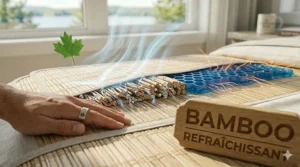
Proper care dramatically extends cooling mattress pad lifespan, but Canadian environmental factors create unique challenges. Let’s talk bamboo first: machine washing every 4-6 weeks maintains moisture-wicking performance by removing body oils and allergen buildup, but cold water and low heat are non-negotiable. High-heat drying shrinks bamboo viscose and damages the fiber structure that creates cooling properties. Canadian buyers running efficient cold-water wash cycles already have the right approach, but many still use high dryer heat in winter to speed drying—this kills bamboo toppers fast.
Air drying bamboo pads works brilliantly in summer but becomes problematic during Canadian winters when indoor humidity is already low from forced-air heating. Damp bedding hanging indoors for 24 hours pumps moisture into dry air, creating mould risk. Solution: tumble dry on low heat for 10-15 minutes to remove excess water, then air dry the rest of the way. This hybrid approach protects fibers while managing Canadian winter humidity.
Gel memory foam requires completely different maintenance since machine washing destroys it. Spot clean spills immediately with mild soap and water, then air dry thoroughly—moisture trapped in foam creates mould that’s impossible to remove. Every 4-6 weeks, remove the topper from your mattress and air it out for 6-8 hours, ideally outside on a dry day (challenging during Canadian winter). Use a handheld vacuum with upholstery attachment monthly to remove dust mites and allergens that accumulate in the foam matrix.
The removable cover on some gel foam toppers is your best friend for Canadian maintenance. Wash this cover monthly during winter when you’re sealed indoors with recirculated air, weekly during spring when pollen counts spike. The cover catches most body oils and allergens before they penetrate to the foam, extending the topper’s usable life significantly.
Seasonal rotation matters for both types. If possible, store your cooling topper during Canadian winter and switch to a warming wool topper instead, rotating back in April or May depending on your province. This cuts usage to 7-8 months per year instead of 12, nearly doubling lifespan. Not practical for everyone, but it works wonderfully if you have storage space and a spare winter topper.
Canadian buyers in humid coastal climates (Vancouver Island, Maritimes, Newfoundland) face accelerated wear from moisture and potential mould growth. Use mattress protectors under toppers, run dehumidifiers during wet seasons, and inspect monthly for any musty smells indicating mould. Interior BC, Prairies, and Northern regions deal with opposite problem—extremely dry winter air makes bamboo pads generate static electricity. A bedroom humidifier solves this while protecting your respiratory health during heating season.
Expected lifespan with proper care: bamboo pads 3-5 years (closer to 5 with excellent maintenance), gel foam 2-4 years (with diminishing cooling effectiveness as gel beads degrade). These are real-world Canadian figures accounting for washing, climate exposure, and typical use patterns—not the optimistic manufacturer claims.
Long-Term Cost Analysis in CAD
Let’s run the actual numbers for Canadian buyers comparing bamboo cooling mattress pad vs gel options over a realistic 5-year ownership period. This includes purchase price, maintenance costs, and replacement timing.
Scenario A: Budget Bamboo Path
- Initial purchase: Niagara Sleep Solution Bamboo Topper Queen ($85 CAD)
- Laundry costs: 10 washes per year × $0.75 electricity/water = $7.50/year × 4 years = $30 CAD
- Replacement at year 4: New topper ($90 CAD, slight price inflation)
- 5-year total cost: $205 CAD
- Cost per night: $0.11 CAD
Scenario B: Mid-Range Gel Foam Path
- Initial purchase: BedStory Gel Memory Foam Topper Queen ($125 CAD)
- Spot cleaning supplies: $15 CAD over lifespan
- Professional cleaning year 2: $40 CAD (optional but recommended)
- Replacement at year 3: New topper ($130 CAD)
- 5-year total cost: $310 CAD
- Cost per night: $0.17 CAD
Scenario C: Premium Bamboo Path
- Initial purchase: BEDLORE Bamboo Topper Queen ($155 CAD)
- Laundry costs: $37.50 over 5 years
- Replacement at year 5: New topper ($165 CAD, inflation)
- 5-year total cost: $357.50 CAD
- Cost per night: $0.20 CAD (but only 1 replacement vs 2 for budget options)
Scenario D: Premium Hybrid Path
- Initial purchase: BedStory Bamboo Charcoal & Gel Hybrid ($175 CAD)
- Spot cleaning + cover washing: $20 CAD over lifespan
- Replacement at year 3.5: New topper ($185 CAD)
- 5-year total cost: $380 CAD
- Cost per night: $0.21 CAD
The budget bamboo path wins on pure dollars spent, but the premium bamboo path delivers better value when you factor in only one replacement purchase over 5 years versus two for budget options. The hassle factor of shopping, ordering, waiting for delivery, and breaking in new toppers has real cost in time and convenience.
For Canadian buyers planning to stay in the same home long-term, premium bamboo justifies the higher upfront cost. For renters, students, or anyone uncertain about their next 2-3 years, budget bamboo or mid-range gel foam makes more sense. The hybrid gel-bamboo charcoal option sits in an awkward middle ground—premium pricing without premium lifespan, only justified if you specifically need that dual-action cooling technology.
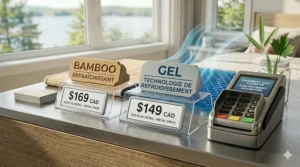
Important Canadian consideration: factor in provincial sales taxes ranging from 5% (Alberta) to 15% (Atlantic provinces) when budgeting. A $150 topper costs $165 in BC (GST 5% + PST 7%) but $172.50 in Nova Scotia (HST 15%). These differences add up over multiple purchases.
What the Science Actually Says About Cooling Technology
Let’s cut through marketing claims with actual research on how bamboo and gel cooling technologies perform. Gel-infused memory foam was developed with gel particles or beads containing phase-change material that shifts from solid to liquid as mattress temperature rises, theoretically providing temperature stabilization. However, this process has limits: the gel can only absorb so much heat before saturating, typically within 3-5 hours for most sleepers, after which cooling effectiveness diminishes significantly.
Clinical sleep lab testing showed bamboo lyocell bedding held skin temperature approximately 1°C cooler and evaporated moisture about 32% faster than cotton under hot, humid conditions. This validates what Canadian bamboo topper users report: the cooling isn’t dramatic like jumping into a cold pool, but it’s measurable and consistent throughout the night because it relies on moisture evaporation rather than heat absorption that eventually saturates.
The mechanism matters for Canadian buyers: gel foam works through conductive cooling (physically moving heat away from your body into the foam), while bamboo works through evaporative cooling (wicking sweat away from skin where it evaporates). Conductive cooling feels more immediate—you notice the temperature difference right away. Evaporative cooling is subtler but remains effective all night because it’s not dependent on the cooling material staying unsaturated.
Research also reveals a truth manufacturers don’t emphasize: memory foam, including gel-infused varieties, can be combustible, leading to fire safety regulations requiring flame retardants. Canadian buyers concerned about chemical exposure should verify what fire retardants are used—CertiPUR-US certification limits some harmful chemicals but doesn’t eliminate all. Bamboo fiber is naturally flame-resistant to some degree, requiring fewer or different flame retardant treatments.
The environmental science supports bamboo’s sustainability claims with caveats. Bamboo grows rapidly without pesticides and sequesters carbon efficiently, but viscose processing can be chemically intensive unless done through closed-loop systems. Look for Lyocell (brand name Tencel) processing or OEKO-TEX certification for genuinely eco-friendly bamboo products. Gel foam’s petroleum base and inability to biodegrade make it environmentally inferior regardless of how it’s marketed.
For Canadian buyers focused on evidence-based decisions: both technologies deliver measurable cooling, but through different mechanisms with different performance curves. Gel foam provides stronger initial cooling for about 4 hours, while bamboo provides moderate consistent cooling for 8+ hours. Your sleep patterns and whether you wake up hot early or late in the night should drive your choice.

Frequently Asked Questions
❓ Does bamboo cooling mattress pad vs gel make a difference for Canadian winter sleeping?
❓ Can I machine wash a gel cooling mattress topper in Canada?
❓ Which cooling mattress pad works best for hot sleepers during Toronto's humid summers?
❓ Are bamboo mattress pads available on Amazon.ca worth the extra cost vs gel foam?
❓ How thick should a cooling mattress topper be for a firm Canadian mattress?
Conclusion: Making Your Decision
After analyzing bamboo cooling mattress pad vs gel options across Canadian climate realities, budget ranges, and real-world performance, the truth emerges: there’s no universal winner. Your ideal choice depends entirely on whether you prioritize aggressive short-term cooling (gel foam), consistent all-night temperature regulation (bamboo), pressure point relief (gel memory foam), or eco-friendly materials (bamboo).
For Canadian buyers who sleep hot year-round and need serious pressure relief—perhaps you’re recovering from back surgery or dealing with chronic shoulder pain—the BedStory Gel Memory Foam Mattress Topper or its bamboo charcoal hybrid version delivers the contouring support gel foam is famous for with legitimate cooling technology. Yes, you’ll pay $120-$200 CAD, and yes, maintenance is more involved, but the pressure relief justifies the investment for pain management.
If you’re an eco-conscious Canadian who values natural materials, machine-washable practicality, and year-round temperature adaptability, invest in premium bamboo like the BEDLORE Bamboo Viscose Topper or Simply Organic Bamboo Pad. The $140-$220 CAD price point stings initially, but 5-year lifespan and superior seasonal performance in Canadian climates deliver better value than cycling through cheaper alternatives every 2 years.
Budget-conscious Canadians—students, renters, or anyone testing cooling toppers for the first time—should start with the Niagara Sleep Solution Bamboo Topper ($60-$110 CAD) or Linenspa Gel Memory Foam ($70-$130 CAD). These entry-level options let you experience each technology without massive financial commitment. If you discover one type doesn’t suit your needs, you haven’t wasted hundreds of dollars.
The bamboo cooling mattress pad vs gel debate ultimately comes down to sleep style, budget reality, and Canadian climate factors most buyers overlook. Gel foam wins for pressure relief and immediate cooling sensation. Bamboo wins for sustainability, maintenance ease, and year-round Canadian temperature adaptation. Hybrid gel-bamboo charcoal options split the difference for buyers willing to pay premium pricing.
Whatever you choose, buy from Amazon.ca Prime-eligible sellers to ensure easy returns if the topper doesn’t work for your specific needs. Canadian bedding purchases should always include that safety net—what works brilliantly in Calgary’s dry climate might sleep too warm in humid Halifax, and you won’t know until you’ve tested it in your own bedroom for 2-3 weeks. Sleep well, stay cool, and remember: the best cooling topper is the one you’ll actually use and maintain for the next 3-5 years.
Recommended for You
- Best Cooling Mattress Pads Under $100 Canada 2026 | Top 7 Picks
- ChiliPad vs BedJet: 7 Best Bed Cooling Systems Canada 2026
- 7 Best Cooling Gel Mattress Toppers for Hot Summer Nights Canada 2026
Disclaimer: This article contains affiliate links. As an Amazon Associate, I earn from qualifying purchases. If you purchase products through these links, we may earn a small commission at no additional cost to you.
✨ Found this helpful? Share it with your friends! 💬🤗
