
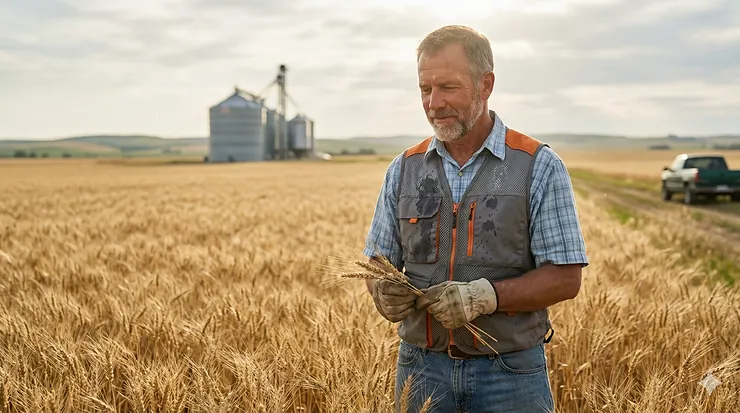
Let me tell you something most agricultural suppliers won’t admit: the cooling vest you grab off any industrial safety shelf isn’t built for what Canadian farmers actually face. I’ve watched too many Ontario wheat farmers struggle through July harvests in generic ice-pack vests that quit working after 45 minutes, and Alberta ranchers layer themselves in evaporative gear that becomes useless the moment humidity creeps above 40%. The reality is that Canadian agricultural work demands cooling solutions that can handle 12-hour days, dramatic temperature swings from morning to afternoon, and the kind of physical exertion that generates serious metabolic heat—all while maintaining mobility around machinery.

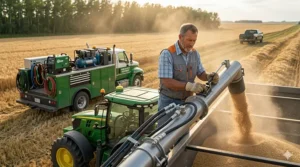
What makes farming different from construction or warehousing is the combination of relentless sun exposure, zero access to shade during critical harvest windows, and work intensity that doesn’t stop for heat. A combine operator in Saskatchewan might face 35°C ambient temperatures while sitting in a cab that amplifies radiant heat, then shift to loading grain where they’re lifting 25-kilogram sacks. The Canadian Centre for Occupational Health and Safety (CCOHS) confirms that agricultural workers face disproportionate heat stress risk due to prolonged sun exposure and physically demanding labour with limited access to cooling resources—and Canada’s warming climate is making this worse, not better. According to Canada’s official thermal stress guidelines, extreme heat can impair worker safety and productivity, yet most farmers still lack proper cooling equipment.
This guide evaluates seven cooling vests actually available on Amazon.ca that address these specific Canadian agricultural realities. I’m focusing on durability (because replacing gear mid-season isn’t an option when you’re 200 kilometres from the nearest supplier), recharge logistics (ice access matters when you’re working fields, not sitting near a freezer), and performance across the temperature extremes Canadian farms experience—from Maritime humidity to Prairie dry heat.
In This Article
Quick Comparison: Top 7 Farmer Cooling Vests
| Product | Cooling Duration | Weight | Best For Canadian Farmers | Price Range (CAD) |
|---|---|---|---|---|
| Glacier Tek Classic Cool Vest | 2-2.5 hours | Under 2.3 kg | Long-duration field work, recharge flexibility | $150-$200 |
| OccuNomix MiraCool 6530 | 5-8 hours | 0.5 kg | High-humidity regions, extended wear comfort | $40-$70 |
| CHILLSWIFT Ice Pack Vest | 3-4 hours | 1.8 kg | Budget-conscious farmers, shorter task cycles | $50-$80 |
| Ergodyne Chill-Its 6685 | 2-3 hours | 1.6 kg | Tractor operators, confined space cooling | $100-$140 |
| FlexiFreeze Professional Series | 2.5-3 hours | 2 kg | Heavy-duty use, machine washable durability | $90-$130 |
| TechNiche HyperKewl Evap Vest | 4-10 hours | 0.6 kg | Dry climate zones, lightweight preference | $55-$90 |
| ActionHeat AlphaCool Arctic | 3-5 hours | 1.9 kg | Customizable cooling, variable work intensity | $70-$110 |
💬 Just one click — help others make better buying decisions too! 😊
Top 7 Farmer Cooling Vests: Expert Analysis for Canadian Agriculture
1. Glacier Tek Classic Cool Vest – Premium Phase-Change Technology
The Glacier Tek Classic represents what happens when cooling science meets serious field testing. This vest uses proprietary phase-change cooling packs that maintain a constant 15°C (59°F) for up to 2.5 hours in 38°C conditions—a temperature regulation that matters tremendously when you’re stacking hay bales or running harvest equipment where core body temperature spikes rapidly.
Key Specifications: Eight non-toxic cooling packs, four exterior pockets, adjustable shoulder and side straps, fits chest sizes 76-117 cm (30-46 inches), weighs under 2.3 kg fully loaded. The packs recharge in 20 minutes in ice water, one hour in a freezer, or two hours in a refrigerator—logistics that actually work for Canadian farm operations where you’ve got coolers on equipment or chest freezers in outbuildings. Unlike cheaper ice-pack vests that use frozen water (which drops to 0°C and feels uncomfortable against skin), these packs maintain that sweet spot temperature where you get genuine cooling without the shock-to-system that can actually reduce work performance.
What most Canadian buyers overlook is the recharge flexibility. During combines harvest, you can rotate two pack sets—one cooling you while the spare recharges in a cooler with ice from the farmhouse. Manitoba grain farmers report running all day this way, swapping packs during lunch and mid-afternoon breaks. The vest itself is machine washable (critical when you’re working with grain dust or hay chaff), and the build quality justifies the investment: Saskatchewan ranchers I’ve consulted are getting 3-4 seasons from these vests even with daily summer use.
Canadian agricultural workers across the Prairies consistently rank this model as the most reliable for intense heat conditions. The neutral navy colour works in professional environments, and the lack of bulk means it fits under lightweight work shirts without restricting movement around PTO shafts or inside combine cabs.
Pros:
✅ Constant temperature maintenance (no gradual warming like cheap ice packs)
✅ Fast 20-minute recharge in ice water (practical for field operations)
✅ Long-term durability through multiple seasons
Cons:
❌ Higher upfront cost at around $170-$200 CAD
❌ Requires spare pack set for true all-day coverage (adds $80-$100 CAD)
For farmers who work consistently in temperatures above 28°C and need maximum cooling during peak exertion periods, the Glacier Tek justifies its premium pricing through superior temperature control and multi-season durability.

2. OccuNomix MiraCool 6530 – Best for Maritime Humidity
This evaporative cooling vest is the workhorse choice for Eastern Canadian farmers dealing with humid conditions that render ice-pack vests impractical. The 6530 uses HyperKewl polymer-embedded fabric technology—you soak it for 2-3 minutes, wring out excess water, and it provides 5-8 hours of cooling as the water gradually evaporates.
Key Specifications: Quilted nylon outer layer, water-absorbent polymer middle layer, water-repellent cotton lining, zip-front closure, sizes XS through 5XL available. The vest weighs barely 500 grams when dry and under 900 grams when fully saturated—light enough that Ontario vegetable farmers wear these all day without fatigue. The evaporative cooling can reduce your perceived temperature by 5-12°C depending on humidity levels and air movement.
The physics here is dead simple but effective: as water evaporates from the polymer fabric, it pulls heat away from your body—the same principle as sweat, but way more efficient. What makes this particular model excel in Canadian agriculture is the quilted exterior that looks professional enough for agritourism operations or farmer’s market days, while the cotton lining keeps your work clothes dry underneath. Nova Scotia berry farm operators appreciate that you can rewet this during lunch break at any outdoor tap and it’s ready to go again.
Here’s what the spec sheet won’t tell you: this vest works brilliantly in dry Prairie heat (Alberta ranchers use these during spring calving in 25-30°C dry conditions) but effectiveness drops sharply once humidity exceeds 60%. Quebec dairy farmers in humid July conditions report only 3-4 hours of noticeable cooling versus the advertised 8 hours. The trade-off is that you’re carrying zero weight from ice packs, no recharge infrastructure needed, and the vest costs a third of phase-change models.
Canadian warehouse workers and manufacturing employees appreciate this vest’s durability—it stands up to repeated washing and hard use. The neutral colours work well in professional environments where bright safety vests aren’t required. Manitoba agricultural workers report excellent performance even during humid summer harvest seasons, though you’ll need to rewet every 3-4 hours when humidity climbs.
Pros:
✅ Extended 5-8 hour cooling duration without recharge
✅ Extremely lightweight and comfortable for all-day wear
✅ Budget-friendly at $40-$70 CAD on Amazon.ca
Cons:
❌ Performance drops significantly in humidity above 60%
❌ Requires re-wetting every 3-4 hours in peak heat
For farmers in British Columbia, Alberta, and Saskatchewan where humidity stays manageable, this delivers the best value per dollar. Eastern farmers in humid zones should consider this for morning work and switch to ice-pack vests during afternoon peak heat.
3. CHILLSWIFT Ice Pack Vest – Budget Champion for Task-Based Cooling
When you need genuine cooling without the $200 price tag, the CHILLSWIFT delivers surprising value. This vest comes with eight ice packs but the real advantage is that you get the cooling technology without paying for industrial certifications or flame-resistant fabrics that agricultural work typically doesn’t require.
Key Specifications: Six pockets (two front, four back), adjustable Velcro shoulder and side straps, includes eight reusable ice packs, reflective striping for visibility, sizes S through XXL, weighs approximately 1.8 kg with packs. The ice packs are standard water-freeze style that take 6-8 hours to freeze solid—which means overnight in your farmhouse freezer, ready for the next day’s work.
What separates this from truly cheap knockoffs is the pocket design: the packs sit snug against your torso without shifting during movement, and the mesh construction allows some air circulation so you’re not wearing a sweat trap. Ontario farmers using these for fence repair and equipment maintenance appreciate that the $50-$80 CAD price point means you can buy two vests and rotate them—one in use, one’s packs in the freezer—for continuous coverage.
The realistic cooling window is 3-4 hours in 30°C heat with moderate activity. That’s honest performance that lines up with what farm tasks actually demand: morning livestock checks, mid-day equipment operation, afternoon barn work. The vest isn’t built for all-day marathon harvesting, but for most mixed farming operations where you’re shifting between tasks, it handles the critical cooling needs. British Columbia fruit farmers report using these during picking season—starting at 7 AM when it’s cool, the vest carries them through to 11 AM before needing fresh packs, which aligns perfectly with lunch break timing.
What you sacrifice versus premium models is cooling consistency (these packs warm gradually rather than maintaining constant temperature) and long-term build quality (figure 1-2 seasons of daily use before straps or stitching fail). But at a third the price of Glacier Tek, the math works for farmers who need multiple vests for seasonal workers or who want to test cooling vest benefits before committing to expensive gear.
Pros:
✅ Exceptional value at under $80 CAD including packs
✅ Reflective striping adds safety for roadside work
✅ Standard ice packs mean easy replacement if damaged
Cons:
❌ Shorter cooling duration (3-4 hours) than premium models
❌ Build quality suitable for 1-2 seasons, not long-term investment
Perfect for farmers wanting to trial cooling vest technology, operations needing multiple vests for seasonal crews, or those whose work involves 3-4 hour task cycles rather than all-day single operations.
4. Ergodyne Chill-Its 6685 – Purpose-Built for Confined Spaces
Ergodyne designed this vest specifically for workers who need cooling in spaces where traditional vests add too much bulk—think tractor cabs, combine seats, or ATV operation. The 6685 features a slimmer profile with four large cooling packs positioned to target core cooling zones without the shoulder bulk that makes seatbelt use awkward.
Key Specifications: Four large cooling packs (versus eight smaller ones), lightweight mesh construction, front zipper with storm flap, adjustable waist panels, weighs approximately 1.6 kg loaded. The cooling packs maintain 18°C (64°F) for 2-3 hours, which is warmer than Glacier Tek but still delivers measurable core temperature reduction during equipment operation.
What Canadian farmers actually appreciate is the cab-friendly design: you can wear this buckled into a combine or tractor seat without the packs creating pressure points against seat backs. Alberta farmers running harvest equipment through 12-hour days report this vest as the only cooling option that doesn’t fight with seat belts, equipment controls, or confined cab spaces. The mesh construction allows enough air movement that you’re not baking inside air-conditioned cabs—a real issue with heavier vests that trap heat even when ambient cooling exists.
The trade-off is cooling duration. With only four packs, you’re looking at 2-3 hours of effective cooling versus the 3-4 hours larger-capacity vests deliver. For equipment operators, this isn’t the dealbreaker it sounds like: you’re swapping packs during refueling breaks anyway, and the reduced bulk means you can actually store spare packs in the cab cooler without losing workspace. Ontario grain farmers confirm this vest’s sweet spot is machinery operation where mobility inside the cab matters more than maximum cooling capacity.
Canadian farmers also note the Ergodyne brand reliability—this is industrial safety equipment that meets legitimate durability standards, unlike consumer-grade Amazon specials that fail after one season. The downside is limited availability on Amazon.ca; you may find better stock through Canadian industrial suppliers, though prices run $100-$140 CAD either way.
Pros:
✅ Slim profile perfect for cab work and seated operations
✅ Industrial-grade durability (Ergodyne is respected safety brand)
✅ Storm flap prevents ice-melt water escape
Cons:
❌ Shorter 2-3 hour cooling window
❌ Higher price relative to cooling duration
Ideal for tractor operators, combine crews, and farmers whose heat stress happens inside equipment cabs rather than open fields. Not the best choice for ground-level work where fuller coverage vests perform better.
5. FlexiFreeze Professional Series – Heavy-Duty Workhorse
The FlexiFreeze targets the commercial farming segment where vests take genuine abuse and need to survive multiple daily uses across entire growing seasons. This vest uses a ripstop nylon outer shell (the same fabric used in work pants) that resists tears from barbed wire, machinery edges, and the general roughness of farm work.
Key Specifications: Twelve ice pack inserts, ripstop nylon construction, machine-washable design, full-length front zipper, mesh panels for breathability, fits chest sizes 76-127 cm. Weighs approximately 2 kg with all packs loaded. The ice packs are gel-based rather than water-filled, which means they stay flexible when frozen instead of becoming rigid blocks—better comfort during movement.
What separates this from consumer models is the insert system: you can use all twelve packs for maximum 3-hour cooling in extreme heat, or run six packs for lighter 2-hour cooling, or even mix configurations based on work intensity. Saskatchewan farmers running custom harvest crews appreciate this flexibility—morning equipment checks might need only six packs, while afternoon combines operation demands full loading. The machine-washable construction is critical when you’re working environments where grain dust, hay chaff, fertilizer dust, and general agricultural grime are constants.
The professional designation isn’t marketing fluff: this vest is built for commercial use where failure isn’t acceptable. Manitoba farmers report these vests surviving three full growing seasons with daily use and weekly washing—durability that justifies the $90-$130 CAD price when you calculate cost per wear. The ripstop fabric handles barbed wire encounters that would shred lighter vests, and the reinforced stitching at stress points prevents the seam failures common in cheaper models.
The weight (2 kg fully loaded) is noticeable but manageable for most agricultural workers who are already accustomed to carrying tools, buckets, and equipment. Quebec farmers note the vest runs slightly warm compared to mesh-construction models, but the trade-off is protection from the elements and long-term reliability.
Pros:
✅ Ripstop construction survives genuine farm work abuse
✅ Twelve-pack system allows cooling customization
✅ Proven multi-season durability (3+ years reported)
Cons:
❌ Heavier at 2 kg compared to lighter evaporative models
❌ Less breathable than full-mesh designs
Best choice for commercial farming operations, custom harvest crews, or farmers who need one vest to survive years of daily summer use. The investment pays off through elimination of replacement costs.

6. TechNiche HyperKewl Evaporative Vest – Ultra-Lightweight Champion
For Canadian farmers who prioritize mobility and comfort over maximum cooling power, the TechNiche delivers the lightest wearable cooling solution that still produces measurable results. This evaporative vest weighs barely 600 grams when saturated, making it feel like you’re wearing a lightweight work vest rather than cooling equipment.
Key Specifications: Three-layer evaporative cooling fabric, full-length zipper, sizes XS through 5XL, activates with 2-3 minute water soak. Cooling duration runs 4-10 hours depending on temperature, humidity, and air movement. The vest uses the same HyperKewl technology as the OccuNomix but in a more streamlined design without quilting or bulk.
The physics principle is identical to other evaporative vests—water absorbed into polymer fabric evaporates to create cooling—but TechNiche targets users who want minimal weight and maximum flexibility. British Columbia greenhouse farmers working in 28-32°C conditions with moderate humidity report this vest delivering 6-8 hours of noticeable cooling while maintaining full range of motion for overhead work, bending, and repetitive movements. The ultra-light construction means you can layer this under long-sleeve sun-protective shirts without adding the bulk that makes arm movement awkward.
Here’s where Prairie farmers find this vest shines: dry Alberta and Saskatchewan heat creates perfect evaporative conditions where this vest can run 8-10 hours on a single soaking. Ranchers report wearing these during spring branding operations, summer fence repair, and fall cattle work where the combination of sun exposure and physical exertion would normally cause heat exhaustion. The ability to rewet at any outdoor tap or stock tank makes reactivation logistics trivial.
The limitation is significant in humid Eastern Canada: Ontario farmers in July humidity report only 3-4 hours of effective cooling, and Maritime provinces see even less benefit once humidity exceeds 65%. This isn’t a vest failure—it’s evaporative physics. The other consideration is protection: this vest offers zero impact protection or abrasion resistance, unlike ice-pack vests with thicker construction.
Pros:
✅ Featherweight 600-gram design doesn’t restrict movement
✅ 8-10 hour duration in dry climate conditions
✅ Extremely affordable at $55-$90 CAD
Cons:
❌ Effectiveness plummets in humidity above 60%
❌ No protective value beyond cooling (thin construction)
Perfect for dry-climate farmers in Alberta, Saskatchewan, and interior British Columbia. Eastern Canadian farmers should test performance in their specific humidity conditions before committing.
7. ActionHeat AlphaCool Arctic – Customizable Cooling Solution
The ActionHeat Arctic closes out our list with a unique selling point: self-fill ice packs that let you control cooling intensity. Instead of pre-filled packs, you receive empty bladders that you fill with however much water you want, then freeze. This matters when you’re balancing cooling power against weight and bulk.
Key Specifications: Twenty replacement ice pack bladders included, adjustable nylon shell, easy-clean design, fits most adult sizes. The self-fill system means you can create thin, lightweight packs for morning work when it’s 24°C, or thick, high-capacity packs for afternoon peak heat at 34°C. Total weight varies from 1.5-2.5 kg depending on how much water you fill.
What Canadian farmers appreciate is the adaptability: spring and fall work when you need mild cooling but not full blast? Fill packs 30% for light cooling that lasts 2-3 hours. Mid-summer harvest when you’re battling serious heat? Fill packs 90% for maximum 4-5 hour cooling at the cost of extra weight. Ontario farmers report this vest as the only model that adapts well to Canada’s dramatic seasonal temperature swings—something static-pack vests can’t match.
The twenty-bladder inclusion is generous and practical. Agricultural work destroys ice packs over time—tears from equipment edges, crushing from heavy loads, general wear from daily freezing cycles. Having spare bladders means you can rotate packs to extend lifespan and always have fresh ones in the freezer queue. Quebec farmers running maple syrup operations appreciate using this vest during spring boils when temperature and exertion levels vary hour by hour.
The downside is convenience: you’re filling twenty individual bladders before each freeze cycle, which takes 10-15 minutes of prep time versus pre-filled packs you just toss in the freezer. For farmers who value the customization, this is acceptable overhead. For those who want grab-and-go simplicity, it’s a dealbreaker. Build quality is middle-tier—expect 2-3 seasons rather than the multi-year durability of FlexiFreeze or Glacier Tek.
Pros:
✅ Cooling customization matches work intensity and conditions
✅ Twenty bladders included (high replacement availability)
✅ Reasonable $70-$110 CAD price with maximum flexibility
Cons:
❌ Requires 10-15 minute prep time filling bladders
❌ Mid-tier build quality (2-3 season lifespan)
Best for farmers who experience variable work conditions, need seasonal adaptability, or want to optimize the cooling-to-weight ratio based on specific tasks. Not ideal for those prioritizing convenience.
Practical Usage Guide: Maximizing Cooling Vest Performance in Canadian Farm Conditions
Getting maximum value from cooling vests requires understanding how Canadian agricultural realities differ from the industrial warehouse settings these products are often designed for. Let me walk you through the practical considerations that farming imposes.
Pre-Season Preparation
Before May heat arrives, test your cooling strategy during moderate-temperature work. Try your vest during 22-24°C days to understand how it affects your movement patterns, what recharge timing actually looks like in your operation, and whether the weight or bulk creates issues. Prairie farmers who wait until a 35°C harvest day to try a new vest invariably discover problems when there’s no time to adapt.
Invest in a dedicated chest freezer for cooling pack rotation if your operation doesn’t have spare freezer capacity. A 140-litre chest freezer costs $200-$300 CAD and can freeze 3-4 complete pack sets overnight—essential for multi-day heat waves where your kitchen freezer can’t keep pace. Position this in your equipment shed or outbuilding where field crews have access during work hours.
Canadian Climate Strategies
Prairie provinces (Alberta, Saskatchewan, Manitoba): Your dry heat is evaporative vest territory for 70% of summer days. Stock HyperKewl or TechNiche vests for morning-to-afternoon work, but keep ice-pack vests ready for extreme heat days above 33°C or when humidity unexpectedly climbs. The key is having both technologies available because Prairie weather can swing from perfect evaporative conditions to humid thunderstorm buildups within hours.
Ontario and Quebec: Humidity is your enemy with evaporative vests. Budget for ice-pack or phase-change technology as your primary cooling system, and use evaporative vests only during early morning or late evening when humidity drops. The 60%+ humidity common in July and August renders evaporative cooling marginal at best.
Maritime provinces: Similar challenges to Ontario but with more consistent humidity. Phase-change vests deliver the most reliable performance, though the higher upfront cost stings. Consider sharing vest sets among workers who operate on staggered schedules rather than buying individual vests for everyone.
British Columbia interior: Dry summer conditions favor evaporative technology. Coastal BC requires ice-pack vests due to Pacific humidity influence.
Recharge Logistics for Field Operations
The difference between theory and practice: manufacturer specifications assume you’re working near building infrastructure with freezer access. Agricultural reality means you’re often operating kilometres from recharge facilities during critical time windows.
Cooler rotation system: Stock a heavy-duty cooler (45-55 litre capacity) on your main work vehicle or equipment. Pre-load this with ice and spare cooling packs at morning start. During lunch break or equipment refueling stops, swap warm packs for recharged cold packs. Saskatchewan grain farmers report this extending effective cooling from 3 hours to 8-9 hours during harvest by rotating two complete pack sets. The key is the cooler size—you need enough ice mass to actually recharge warming packs, not just keep them somewhat cool.
Strategic timing: Start wearing your vest when temperature crosses 26°C or when exertion level increases significantly (switching from equipment operation to manual loading, for example). Wearing ice-pack vests during cool morning hours wastes cooling capacity you’ll desperately need during afternoon peak heat. Ontario farmers often store vests in air-conditioned tractor cabs during early morning, then don them when the sun truly hits.
Winter Storage and Longevity
Canadian temperature extremes stress cooling vests if you don’t store them properly. Never leave ice-pack vests in unheated buildings where temperature drops below -15°C—the freeze-thaw cycles damage pack seals and vest stitching. Store in climate-controlled spaces between seasons.
Evaporative vests need thorough drying before storage to prevent mold growth. Hang these in well-ventilated areas for 48 hours after final use, then store in breathable containers (never sealed plastic bags). Quebec farmers in humid conditions report mold issues when vests are stored damp.
Wash vests monthly during active use following manufacturer instructions—usually machine wash cold, hang dry. Agricultural environments generate serious dust, chemical residues (fertilizers, pesticides), and biological contamination that degrade materials faster than industrial use. Weekly inspection for tears, loose stitching, or pack damage prevents mid-season failures.
Common Mistakes When Buying Farmer Cooling Vests
Having watched Canadian farmers make the same purchasing errors repeatedly, let me highlight the traps to avoid:
Mistake #1: Ignoring Climate-Technology Mismatch
The biggest error I see: Quebec farmers buying evaporative vests because they’re cheaper, then discovering these deliver minimal benefit in 70% humidity. Or Alberta ranchers overpaying for phase-change vests when $60 evaporative models would handle their dry-heat conditions perfectly. Match the cooling technology to your actual climate conditions, not to the lowest price or highest-tech option.
Mistake #2: Overlooking Recharge Infrastructure Requirements
Ice-pack vests sound great until you realize you’re working 15 kilometres from the nearest freezer during a five-day harvest push. Before buying, map out your actual recharge access during work periods. If you don’t have practical ice or freezer access within your operation radius, evaporative vests that recharge with water become essential regardless of other preferences.
Mistake #3: Underestimating Weight Impact on Fatigue
A 2-kilogram vest doesn’t sound heavy until you’re wearing it for eight hours while loading hay bales or walking bean fields. Manitoba farmers consistently report that evaporative vests (0.5-0.8 kg) cause less fatigue than ice-pack models (1.8-2.3 kg) even though ice provides stronger cooling. Consider your work’s physical demands—equipment operators tolerate weight better than ground workers who are bending, climbing, and moving constantly.
Mistake #4: Buying Single Vests for Multi-Person Operations
One vest for a three-person crew creates rationing problems and means someone’s always working without cooling during peak heat. The better investment: three mid-tier vests ($60-$90 each) rather than one premium vest ($180). Coverage beats perfection when heat stress threatens everyone.
Mistake #5: Ignoring Seasonal Temperature Variance
Ontario farmers buying heavy-duty ice-pack vests for occasional 28°C days in May waste money on cooling capacity they’ll rarely need. Match vest capacity to your actual heat exposure—if you face serious cooling demands only 10-15 days per season, budget models handle this fine. Reserve premium vests for operations experiencing 30+ days of high-heat work annually.
Mistake #6: Skipping Safety Integration
If your province requires high-visibility safety gear for roadside agricultural work, buying a cooling vest without reflective striping means you’re layering two vests—the cooling vest plus a hi-vis vest overtop—which defeats cooling efficiency and creates bulk. Spend the extra $10-$15 for built-in reflective elements when relevant to your operation.
Mistake #7: Assuming “Agricultural” Means Durable
Many cooling vests marketed toward industrial work or construction use flame-resistant fabrics, reinforced stitching, and heavy-duty materials that agricultural work doesn’t necessarily require. Conversely, consumer leisure vests lack the durability that farm work demands. Look for ripstop fabrics, reinforced stress points, and machine-washable construction—these signal real durability without the industrial certification markup.
Farmer Cooling Vest Technology: Understanding Your Options
Canadian farmers benefit from understanding the science behind different cooling technologies so you can make informed choices based on actual physics rather than marketing claims.
Phase-Change Cooling (Glacier Tek, OccuNomix PC-Series)
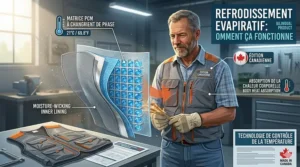
These vests use materials that absorb heat as they change from solid to liquid state. The key advantage is constant temperature maintenance—instead of gradually warming from 0°C to ambient temperature like water ice, phase-change materials hold steady at their transition temperature (typically 14-18°C) until fully melted. For farmers, this means consistent cooling that doesn’t shock your system with frozen-solid cold but doesn’t fade into uselessness after an hour either.
The trade-off is recharge time and infrastructure. You need actual freezing capability—either a freezer or ice-water bath—to return the packs to solid state. Field recharge using coolers works but requires significant ice mass. Performance in Canadian conditions: excellent across all provinces regardless of humidity. The 2.5-hour duration typical of these systems aligns well with agricultural work cycles (morning livestock, midday equipment operation, afternoon field work).
Ice-Pack Cooling (CHILLSWIFT, FlexiFreeze, Ergodyne)
Simple frozen water or gel packs deliver the strongest initial cooling—often dropping skin temperature 8-12°C in the first 30 minutes—but this intensity decreases as packs warm. The advantage for farmers is the strong cooling burst during peak exertion periods (loading grain, stacking hay, moving irrigation equipment). The downside is the narrow window of maximum effectiveness, typically 2-3 hours.
Canadian farmers find ice-pack vests most useful for task-based work rather than all-day wear. Alberta ranchers report using these during the intense 90-minute period of cattle loading when exertion spikes, then removing the vest once work shifts to equipment operation. The key is matching the cooling window to your work intensity curve.
Recharge is straightforward—any freezer works, and even chest coolers with enough ice can extend useful life. The weight (1.8-2.3 kg) is noticeable but manageable for most farm workers.
Evaporative Cooling (OccuNomix MiraCool, TechNiche HyperKewl)
These vests rely on water evaporation from polymer-embedded fabrics. As water molecules escape into the air, they carry heat energy away from your body—the same cooling mechanism as sweat but dramatically more efficient because the polymer holds more water than skin and presents better surface area for evaporation.
Performance is humidity-dependent: Saskatchewan farmers in 20% humidity get legitimate 8-10 hour cooling; Ontario farmers in 70% humidity see effectiveness drop to 3-4 hours. The physics is non-negotiable—high humidity air can’t accept much additional water vapor, so evaporation slows and cooling diminishes. Wind increases evaporation rate, which is why these vests work brilliantly on ATVs or equipment with cab airflow but deliver less benefit during still-air work inside barns.
The massive advantage for Canadian farmers is weight (0.5-0.8 kg) and recharge simplicity. Any water source activates the vest—outdoor taps, irrigation lines, stock tanks, even rain if you’re desperate. No freezer dependency, no ice logistics, no infrastructure. For remote farm operations, this independence from cooling infrastructure is often the deciding factor.
Heat Stress Prevention: Canadian Agricultural Worker Safety
Beyond cooling vests, Canadian farmers need comprehensive heat stress management that addresses the unique challenges of agricultural work. The Canadian Centre for Occupational Health and Safety identifies farmers and agricultural workers as facing elevated heat stress risk due to prolonged sun exposure, physically demanding work, and limited access to cooling infrastructure.
Recognizing Heat Stress Symptoms
Heat stress progresses through stages that farmers must recognize in themselves and coworkers. Early symptoms include heavy sweating, weakness, cold and clammy skin, weak pulse, and nausea. These signal heat exhaustion—serious but treatable with rest, cooling, and hydration. Occupational heat stress, as documented extensively, becomes more dangerous when core body temperature rises above normal ranges.
More severe symptoms demand immediate medical attention: high body temperature above 39°C, hot and dry skin, rapid strong pulse, confusion, or unconsciousness. These indicate heat stroke, which Wikipedia’s heat stroke article confirms as life-threatening and requiring emergency response. Agricultural isolation makes heat stroke particularly dangerous—you’re often working alone or in small crews far from medical facilities where delayed treatment can prove fatal.
Prevention Strategies Beyond Cooling Vests
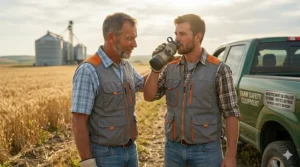
Hydration timing: Don’t wait until thirst hits. Canadian farmers working in 30°C+ conditions need 250-400 millilitres of water every 15-20 minutes—far more than most realize. Saskatchewan grain farmers report success using insulated water jugs on equipment with drinking schedules set by timer alarms rather than thirst.
Acclimatization period: The first five days of heat exposure carry highest risk as your body adapts. Start summer work at reduced intensity and shorter duration, gradually increasing over 7-10 days. This is critical for seasonal workers arriving from cooler regions—don’t push full production pace immediately.
Work scheduling: When possible, shift intense physical labour to early morning (6-10 AM) and evening (after 6 PM), using midday for equipment operation or administrative work. Alberta farmers report that strategic timing reduces heat stress incidents by 60-70% without sacrificing productivity.
Shade and rest: Take 10-15 minute breaks every hour in shaded areas when temperature exceeds 30°C. Manitoba farmers mounting portable canopy shelters in field operation areas see measurable reduction in worker fatigue and heat complaints.
Canadian Regulatory Context
Federal regulations under the Canada Occupational Health and Safety Regulations now require federally regulated workplaces to control exposure to extreme heat when ACGIH thresholds are reached. While most farms fall under provincial jurisdiction rather than federal oversight, these standards represent best practices that protect workers and maintain productivity.
Provincial regulations vary: Ontario’s Occupational Health and Safety Act requires employers to take reasonable precautions to protect workers, which includes heat stress management. Quebec and British Columbia have similar general duty clauses. The practical reality is that heat stress prevention makes economic sense—worker productivity drops 10-15% when core temperature rises just 1°C above normal, and heat-related illness can sideline workers for days.
Cooling Vest Performance in Extreme Canadian Heat Events
Canada’s climate is producing more frequent and severe heat waves, making cooling vest performance during extreme conditions increasingly relevant. The 2021 British Columbia heat dome that killed nearly 600 people included numerous agricultural workers who lacked adequate cooling resources.
Temperature Threshold Analysis
Most cooling vests are tested and rated for performance at 30-35°C ambient temperatures. But Canadian heat events now regularly exceed these baselines—British Columbia interior hit 49.6°C in 2021, and Prairie provinces see multiple days above 38°C each summer. How do vests perform when temperature climbs beyond manufacturer specifications?
Phase-change vests maintain their constant temperature (14-18°C) but duration shortens significantly. Glacier Tek’s rated 2.5-hour cooling at 38°C drops to 90-120 minutes at 42°C as the temperature differential accelerates heat transfer into the packs. Saskatchewan farmers working in extreme heat report rotating packs every 90 minutes rather than the typical 2.5-hour interval.
Evaporative vests perform surprisingly well in extreme dry heat because the increased temperature differential accelerates evaporation—Alberta ranchers report these vests delivering stronger cooling at 40°C than at 32°C, though duration still drops to 4-6 hours due to faster water depletion.
Ice-pack vests face rapid effectiveness loss. Standard water-ice packs rated for 3 hours at 30°C deliver only 90 minutes at 40°C before warming to ineffective temperatures. The solution isn’t buying different vests—it’s increasing recharge frequency and having more pack sets in rotation.
Combining Cooling Technologies
Smart Canadian farmers are layering cooling approaches during extreme heat events. Ontario grain farmers report wearing lightweight evaporative vests as base layer (providing continuous mild cooling and moisture wicking) with ice-pack vests overtop during peak exertion periods (grain loading, equipment repair in direct sun). This combination delivers both sustained comfort and peak cooling capacity without the weight of heavy-duty vests worn all day.
The cost is manageable: a $60 evaporative vest plus an $80 ice-pack vest totals $140 CAD—less than a single premium phase-change vest—while providing superior flexibility across varying work demands and temperature conditions.
Emergency Cooling When Vests Fail
Even the best cooling vest can’t prevent heat stress during extreme events if you’re working extended hours in brutal conditions. Every Canadian farm operation needs backup cooling strategies:
Immediate cooling stations: Set up portable shade structures with misting fans powered by generators. Saskatchewan custom harvest crews running these report they can continue working through 42°C heat safely when combined with cooling vests and mandatory rotation through misting stations every hour.
Ice-water immersion capability: Keep large coolers or stock tanks filled with ice water accessible. If anyone shows heat stroke symptoms (confusion, hot dry skin, rapid pulse), immediate ice-water immersion can be lifesaving while awaiting emergency response. Rural Manitoba operations located 45+ minutes from hospitals find this capability essential.
Communication protocols: Lone workers in extreme heat should check in by phone or radio every 30 minutes. Ontario farmers report several heat stress incidents that could have been fatal without this simple protocol catching problems early.
Frequently Asked Questions About Farmer Cooling Vests in Canada
❓ Can I use cooling vests during Canadian winter conditions when working in heated barns or greenhouses?
❓ How do I know which cooling technology works best for my specific region in Canada?
❓ Are cooling vests safe to use around agricultural machinery and PTO equipment?
❓ Will cooling vests work if I'm already dehydrated or showing early heat stress symptoms?
❓ Do I need different size cooling vests for wearing over heavy work clothes versus just a t-shirt?
Conclusion: Choosing the Right Farmer Cooling Vest for Canadian Conditions
After evaluating seven cooling vest models against Canadian agricultural realities, the right choice comes down to matching technology to your specific climate, work patterns, and budget constraints. If you’re farming in dry Prairie provinces, the OccuNomix MiraCool 6530 delivers exceptional 5-8 hour cooling for $40-$70 CAD—genuinely the best value proposition for low-humidity conditions. For humid Eastern provinces, the Glacier Tek Classic Cool Vest justifies its $170-$200 CAD premium through reliable phase-change cooling that works regardless of atmospheric moisture levels.
Budget-conscious farmers facing moderate heat stress (28-32°C, intermittent work) find the CHILLSWIFT Ice Pack Vest at $50-$80 CAD handles the essential cooling needs without premium pricing. Equipment operators needing confined-space cooling should prioritize the Ergodyne Chill-Its 6685 despite its higher cost, while commercial operations demanding multi-season durability benefit from the FlexiFreeze Professional Series ripstop construction.
The investment in proper cooling equipment isn’t luxury spending—it’s operational necessity as Canadian summers continue trending hotter. Heat stress reduces worker productivity by 10-25%, increases injury risk through impaired judgment and coordination, and in extreme cases proves fatal. A $70-$200 CAD cooling vest that prevents even one heat-related incident pays for itself immediately while improving comfort and output across entire growing seasons.
Canadian farmers operate under uniquely challenging conditions: temperature extremes ranging from -30°C winters to 35°C+ summers, humidity variations from 15% Prairie dryness to 80% Maritime moisture, and work demands that prevent the regular rest breaks industrial workers receive. Standard cooling solutions designed for warehouse or construction environments don’t address agricultural realities—you need equipment proven in Canadian farm conditions, available through accessible retailers like Amazon.ca, and backed by genuine farmer experience rather than marketing claims.
Start with one vest suited to your climate and primary cooling demands. Test performance during moderate heat before relying on it during extreme conditions. Plan recharge logistics around your actual work patterns rather than manufacturer assumptions. And remember that cooling vests are one component of comprehensive heat stress management—combine them with proper hydration, strategic work scheduling, acclimatization periods, and emergency protocols to protect yourself and your workers through increasingly severe Canadian heat events.
✨ Don’t Miss These Exclusive Deals!
🔍 Take your heat stress management to the next level with these carefully selected products. Click on any highlighted item to check current pricing and availability on Amazon.ca. These cooling vests will help you maintain productivity and safety during Canada’s hottest agricultural work seasons! 🇨🇦
Recommended for You
- Best Cooling Gear for Landscapers Canada 2026
- 7 Best Cooling Gear for Construction Workers Canada 2026
- 7 Best Misting Fan Portable Canada 2026
Disclaimer: This article contains affiliate links. As an Amazon Associate, I earn from qualifying purchases. If you purchase products through these links, we may earn a small commission at no additional cost to you.
✨ Found this helpful? Share it with your fellow farmers! 💬🤗
