
In This Article
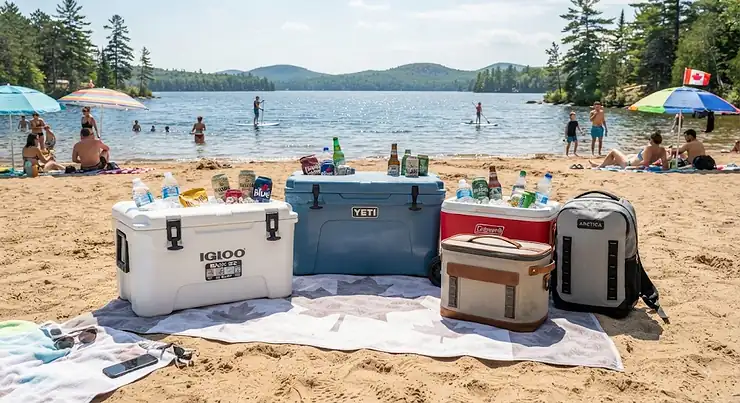
Let’s be honest: nothing ruins a perfect lakeside afternoon faster than warm pop and soggy sandwiches. If you’ve ever watched a flimsy dollar-store cooler sink axle-deep into dry sand while your arms scream for mercy, you already understand why so many Canadians spend their May long weekend hunting for top rated beach coolers instead of grabbing whatever’s on the shelf at the grocery store. The right cooler isn’t just a box with a lid — it’s the difference between a lazy, well-fed afternoon on the shore and a hangry retreat to the parking lot by 2 p.m.
This guide breaks down seven genuinely good beach coolers, chosen after digging through real spec sheets, manufacturer testing data, and aggregated customer feedback rather than recycled marketing copy. We looked specifically at how each model handles the two things that make beach coolers different from regular camping coolers: soft, shifting sand underfoot and hours of direct summer sun overhead. Whether you’re hauling gear for a family reunion at Wasaga Beach or just need something to keep six beers cold on a solo paddleboard outing, there’s a pick here that fits your budget and your beach day. Let’s get into it.
What Is a Top Rated Beach Cooler?
A top rated beach cooler is an insulated container engineered specifically for sandy, sun-exposed environments — meaning it combines strong ice retention (measured in days, not hours) with wide, sand-ready wheels or a lightweight, easily carried body. Unlike a standard kitchen cooler, it’s built to resist UV degradation, sand infiltration in the seals, and the extra drag that loose sand puts on small wheels.
That last point trips up more shoppers than anything else. A cooler can have a fantastic ice-retention rating and still be a nightmare to actually use if its wheels sink the moment they leave pavement. Keep that tension in mind as you read — it’s the thread running through every recommendation below.
💬 Just one click — help others make better buying decisions too!😊
Quick Comparison Table
| Cooler | Type | Capacity | Ice Retention | Price Range (CAD) | Best For |
|---|---|---|---|---|---|
| RTIC 30 Can Ultra-Tough Soft Cooler Pro | Soft, portable | 19L / 30 cans | Up to 2 days | C$100-C$130 | Solo trips, kayaks, floats |
| Coleman Classic Series 62-Quart Wheeled Cooler | Hard, wheeled | 62 qt / 50 cans | Up to 5-6 days (claimed) | C$140-C$180 | Budget-conscious families |
| Arctic Zone Titan Deep Freeze 60-Can Wheeled Cooler | Soft-hybrid, wheeled | 40 qt / 60 cans | Up to 3 days | C$90-C$120 | Light gear, easy lifting |
| Igloo Trailmate Journey 70-Quart Wheeled Cooler | Hard, wheeled | 70 qt / 112 cans | Multi-day (THERMECOOL) | C$270-C$330 | Large groups, dune access |
| RovR RollR 60 Wheeled Cooler | Hard, wheeled | 60 qt / up to 80 cans | Up to 10 days (claimed) | C$550-C$620 | Sand specialists, campers |
| Pelican Elite 45QW Wheeled Cooler | Hard, wheeled | 45 qt / 35 cans | Up to 7-10 days (claimed) | C$480-C$550 | Multi-day ice retention |
| Yeti Tundra Haul Wheeled Cooler | Hard, wheeled | 82 cans / 64 lbs ice | 5-10 days (real-world) | C$550-C$620 | Brand durability, all-terrain |
Looking at the spread above, the gap between the entry-level Arctic Zone and the premium RovR and Yeti models isn’t really about how cold either one gets on a single afternoon — it’s about consistency over multiple days and how confidently the wheels handle loose, dry sand. Budget shoppers doing single-day trips can comfortably stop at the Coleman or Arctic Zone, while anyone camping beachside for a long weekend should weight ice retention and wheel quality far more heavily, even at a higher price point.
Top 7 Beach Coolers: Expert Analysis
1. RTIC 30 Can Ultra-Tough Soft Cooler Pro — lightest true portable pick
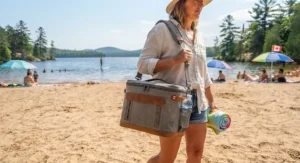
The standout here is weight: at roughly 5 pounds empty, this is the only cooler on this list you can genuinely sling over one shoulder and forget about. The 19-litre interior holds 30 cans plus up to 18 pounds of ice, insulated by roughly 1.5 to 2 inches of closed-cell foam behind a welded, waterproof interior. In practice, that construction keeps contents cold for up to two days when pre-chilled properly, which is plenty for a single beach outing but not something you’d want to rely on for a three-day camping trip. Based on the spec comparison with hard-sided rivals, this is the pick for anyone prioritizing portability over multi-day performance — solo paddlers, cyclists riding to the shore, or families who already have a vehicle-based hard cooler and just need a satellite bag for the water’s edge. It’s also genuinely a floating cooler, a detail that matters more than it sounds like it should if you’re anywhere near a dock or a canoe. Reviewers consistently note that the shoulder strap and dual carry handles make it comfortable across soft sand in a way that wheeled coolers, ironically, sometimes aren’t for solo users navigating around beach towels and umbrellas.
Pros:
- ✅ Among the lightest true portable options in this category
- ✅ Floats and resists leaks thanks to a welded waterproof liner
- ✅ Budget-friendly compared with every hard-sided cooler on this list
Cons:
- ❌ Roughly 2-day ice retention ceiling limits multi-day use
- ❌ No wheels, so it’s a poor fit for hauling heavy loads solo
At around C$100-C$130, this is the easiest entry point on the list, and the value verdict is straightforward: buy it as a lightweight companion cooler, not your only one for a full weekend away.
2. Coleman Classic Series 62-Quart Wheeled Cooler — best budget wheeled all-rounder
The 62-quart body holds roughly 50 cans plus 26 pounds of ice, and Coleman rates the fully insulated lid and body for up to five to six days of ice retention in lab conditions — a number that, as with most cooler manufacturers, tends to shrink once real sun, sand, and repeated lid-opening enter the picture. What most buyers overlook about this model is the Have-A-Seat lid, rated to 250 pounds, which quietly turns your cooler into a second folding chair once the towels run out. The 6-inch wheels are the honest limiting factor: they’re fine on packed wet sand near the shoreline but start to bog down in dry, loose sand the way any narrow wheel does. Aggregated customer feedback on Coleman’s own product pages is genuinely mixed — plenty of buyers report solid performance for the price, but a recurring theme in lower-rated reviews describes wheels wobbling out of the box and ice life falling well short of the advertised multi-day claim in hot, humid conditions. That’s a useful reality check: budget wheeled coolers can absolutely handle a day trip, but don’t plan a four-day camping stint around the marketing number alone.
Pros:
- ✅ Have-A-Seat lid doubles as extra seating for up to 250 lbs
- ✅ Roomy 50-can capacity at one of the lowest wheeled-cooler prices
- ✅ Two-way handles make loading it into a trunk easy
Cons:
- ❌ 6-inch wheels struggle once sand gets dry and loose
- ❌ Some reviewers report ice retention falling short of the advertised days
Priced around C$140-C$180, it’s a sound choice for families doing day trips to a maintained beach with a paved or packed-sand access path.
3. Arctic Zone Titan Deep Freeze 60-Can Wheeled Cooler — best for easy lifting
Arctic Zone built its name on soft-sided coolers, and the Titan Deep Freeze line is its attempt to bridge that lighter-weight DNA with the convenience of a rolling cart. The 40-quart, 60-can main compartment uses Deep Freeze insulation with an integrated radiant heat barrier, rated for up to three days of ice retention — noticeably less than the rotomolded hard coolers further down this list, but also noticeably lighter and easier to lift empty into a car trunk. Here’s what to weigh: the removable all-terrain cart with a telescopic handle means you can detach the cooler itself once you’ve reached your spot, which none of the fully integrated hard-sided wheeled coolers allow. On paper this means more flexibility for beach layouts where you want the cart back at the car but the cooler beside your towel. The trade-off is structural rigidity — soft-sided coolers simply can’t match the insulation thickness of a rotomolded shell, so this isn’t the pick if you’re chasing the longest possible ice life.
Pros:
- ✅ Detachable all-terrain cart adds real layout flexibility
- ✅ Noticeably lighter to lift and carry than hard-sided rivals
- ✅ Microban-protected lining resists odours and staining over time
Cons:
- ❌ Roughly 3-day ice retention ceiling, well below premium rotomolded rivals
- ❌ Smaller wheels than dedicated sand-focused carts like the RovR or Igloo
At an estimated C$90-C$120, it’s a smart pick for buyers who want wheels without committing to the weight and price of a hard-sided rolling cooler.
4. Igloo Trailmate Journey 70-Quart Wheeled Cooler — best 10-inch wheels for sand
If cooler wheels for sand are your top priority, this is the one to look at first. The Trailmate Journey ships with 10-inch, never-flat wheels specifically engineered for traction and ground clearance on loose terrain, paired with a horizontal dual-trigger steel Glide handle that Igloo claims cuts pulling effort by roughly half. The math behind that claim checks out logically: bigger wheel diameter distributes weight over more surface area, which is exactly why wide, tall wheels outperform narrow ones in sand regardless of brand. Inside, THERMECOOL foam insulation and Cool Riser Technology — which lifts the cooler body off hot surfaces — combine for genuinely strong multi-day ice retention in a 70-quart body that holds up to 112 cans. Reviewers consistently note the thoughtful extras: a removable Butler Tray for serving drinks, a lockable water-resistant dry box for phones and keys, and four self-draining cup holders. The trade-off for all that capacity is bulk — this is a big cooler, and hauling it fully loaded up a set of beach stairs solo is a two-person job.
Pros:
- ✅ 10-inch all-terrain wheels genuinely built for sand, not an afterthought
- ✅ 112-can capacity comfortably serves large groups or long weekends
- ✅ Butler Tray and lockable dry box add real day-to-day convenience
Cons:
- ❌ Large footprint and weight make solo transport awkward when full
- ❌ Overkill capacity for small families or solo beach trips
At roughly C$270-C$330, the value case is strongest for families or groups who genuinely need the 70-quart capacity and the sand-specific wheel size to match.
5. RovR RollR 60 Wheeled Cooler — best all-terrain wheels for sand specifically
Independent outdoor-gear reviewers have singled out the RollR’s 9-inch inflatable, all-terrain tires as some of the best wheels in the wheeled-cooler category, and it’s easy to see why once you compare the tire construction against every other pick here: this is the only cooler on this list using genuinely inflatable, tread-pattern tires rather than solid rubber or plastic wheels. That difference matters enormously on sand, where air-filled tires flex and float over the surface instead of digging a trench the way rigid wheels do. The 60-quart body holds up to 80 cans and pairs with a DeepFreeze removable dry bin that splits the interior so food stays cold and dry separately from ice and drinks. RovR’s own testing claims up to ten days of retention, and independent testers who put it through real trips reported excellent short-to-medium-term ice retention alongside genuinely smooth rolling over sand, gravel, and rocky shoreline. What most buyers overlook is the weight once loaded — at roughly 40 pounds empty, a fully packed RollR is a two-person lift into a vehicle, even though the wheels make ground transport effortless.
Pros:
- ✅ Inflatable all-terrain tires outperform every solid-wheel rival on sand
- ✅ DeepFreeze dry bin keeps food organized and separated from ice
- ✅ IGBC-certified bear resistance adds real backcountry versatility
Cons:
- ❌ Premium price puts it out of reach for casual, occasional beachgoers
- ❌ Loaded weight makes lifting it into a vehicle a two-person task
At an estimated C$550-C$620, this is the pick specifically for buyers whose beach is genuinely sandy and dry, where cheaper wheels simply won’t roll.
6. Pelican Elite 45QW Wheeled Cooler — best extreme ice retention
Pelican built its reputation on rugged equipment cases, and that DNA shows in the 45QW: 2 inches of polyurethane insulation behind a 360-degree freezer-grade gasket delivers what independent testers have called amazing temperature retention, with Pelican’s own claims ranging from seven to ten days depending on conditions and how often the lid gets opened. The spec sheet won’t tell you this, but user reports suggest the difference between Pelican’s claimed retention and real-world performance is smaller than most competitors, largely because of that gasket seal — a detail that matters more on a hot, breezy beach than in a shaded campsite. The 45-quart interior holds 35 cans, a comparatively modest capacity next to the Igloo or RovR, positioning this cooler as the pick for smaller groups who prioritize ice life over sheer volume. Pelican backs it with a lifetime “you break it, we replace it” guarantee, which is a meaningfully stronger warranty than most rivals offer. Reviewers consistently praise the reinforced hasp, stainless bottle opener, and anti-shear hinge system as details that hold up to years of abuse rather than one summer.
Pros:
- ✅ Among the strongest independently-tested ice retention on this list
- ✅ Lifetime warranty backs the build quality with real accountability
- ✅ Bear-resistant IGBC certification and Made-in-USA construction
Cons:
- ❌ 35-can capacity is modest for larger groups or multi-day trips
- ❌ Wheels handle firm, wet sand well but lag inflatable-tire rivals on dry dunes
Priced around C$480-C$550, the value case is clearest for smaller groups or couples who care more about how cold day five feels than about maximum can count.
7. Yeti Tundra Haul Wheeled Cooler — toughest build on this list
Yeti’s first-ever wheeled cooler pairs the brand’s signature rotomolded, virtually indestructible shell with NeverFlat solid tires and a welded-aluminum StrongArm handle. The 82-can capacity and up to 2 inches of PermaFrost pressure-injected insulation deliver real-world ice retention that owners and independent testers commonly report in the five-to-ten-day range, with one long-term reviewer noting pre-chilled ice packs were still frozen four days later. Here’s what most marketing pages leave out, and it’s worth repeating because Yeti says it plainly on its own site: these wheels can handle rocky paths, gravel trails, and marine docks, but the company itself acknowledges they may struggle rolling over genuinely soft, loose sand. That’s an honest admission most brands wouldn’t make, and it’s exactly the kind of detail this article exists to surface — a Tundra Haul is an outstanding all-terrain cooler that happens to be good at sand, rather than a sand specialist first. Reviewers consistently praise the build quality and the option to use the lid as a seat or table, and aggregate review scores sit around 4.7 out of 5 across thousands of verified purchases.
Pros:
- ✅ Rotomolded construction is close to indestructible over years of use
- ✅ Doubles as a seat or table thanks to the reinforced lid
- ✅ Strong resale value and brand reputation in the secondhand market
Cons:
- ❌ Yeti’s own materials note the solid wheels can struggle in soft, dry sand
- ❌ Among the heaviest coolers here to lift fully loaded
At roughly C$550-C$620, it’s the pick for buyers who want one cooler that excels at camping, tailgating, and boating, with beach days as one strong use case among several.
Beach Cooler vs Traditional Camping Cooler
A general camping cooler and a purpose-built beach cooler often look nearly identical on a store shelf, but the differences matter the moment sand and sun enter the picture. Traditional camping coolers are optimized for campsite use: they sit still for hours at a time, often in shade, and get carried short distances from a vehicle to a picnic table. Beach coolers face a rougher combination — direct UV exposure for hours, salt or lake spray, and long hauls across loose, uneven terrain from a parking lot to your spot on the sand.
| Feature | Traditional Camping Cooler | Beach Cooler |
|---|---|---|
| Wheel size | Often 4-6 inches or none | Typically 7-10 inches, wide tread |
| UV resistance | Variable, rarely a focus | Usually UV-stabilized plastics |
| Handle design | Basic side handles | Telescoping tow handles common |
| Sand sealing | Standard gaskets | Reinforced, sand-resistant gaskets |
The comparison above shows why a cooler that performs beautifully at a forested campsite can still be a poor beach companion. Small wheels that glide over packed gravel will dig into dry sand within a few metres, and gaskets that keep out dust may still let fine sand work into hinges over a full season of beach trips. If your outdoor life splits fairly evenly between campgrounds and beaches, models like the Igloo Trailmate Journey 70-Quart Wheeled Cooler or RovR RollR 60 Wheeled Cooler are worth the premium precisely because they’re engineered for both environments rather than one.
How to Choose the Best Beach Cooler for Sand
- Start with wheel diameter, not brand name. Anything under 7 inches will struggle in dry sand regardless of how premium the rest of the cooler is; look for 7 to 10-inch wheels or genuinely inflatable tires like those on the RovR RollR 60.
- Match capacity to trip length, not group size alone. A family of four on a single afternoon needs far less capacity than the same family camping beachside for three days — oversizing wastes ice and money.
- Check the real ice retention window, not just the headline number. Manufacturer claims are typically measured in controlled conditions; expect real-world beach performance to run shorter, especially with frequent lid-opening.
- Weigh portability against durability. Soft-sided options like the RTIC 30 Can Ultra-Tough Soft Cooler Pro win on weight; rotomolded hard coolers win on multi-day insulation and structural toughness.
- Look for sand-specific seals and drainage. A tethered, hose-compatible drain plug and a gasket rated against dust intrusion both reduce the maintenance headache that comes with regular beach use.
- Factor in lift weight when fully loaded, not just empty weight. A cooler that’s easy to wheel across sand can still be brutal to lift into a trunk once it’s packed with ice and drinks.
- Decide whether extras genuinely matter to you. Dry bins, butler trays, and bottle openers are nice, but they shouldn’t outweigh wheel quality and ice retention in your final decision.
Cooler Wheels for Sand: What Actually Works
Not all cooler wheels are built the same, and this is where most budget wheeled coolers quietly fall short of their premium counterparts. Standard hard plastic wheels under about 6 inches are designed for pavement, patios, and packed campground gravel — the moment they hit dry, granular sand, the narrow contact patch sinks and drag increases dramatically, which is exactly the complaint that shows up repeatedly in aggregated reviews of budget wheeled coolers like the Coleman Classic Series.
Wider, taller wheels distribute weight over more surface area, and that’s the entire reason 10-inch designs like the one on the Igloo Trailmate Journey 70-Quart Wheeled Cooler roll noticeably easier across loose sand than a 6-inch wheel of similar hardness. The next tier up is genuinely inflatable, tread-pattern tires, like the 9-inch all-terrain tires on the RovR RollR 60 Wheeled Cooler — these flex slightly under load rather than staying perfectly rigid, which lets them ride over the surface of soft sand instead of cutting a trench through it. If you’re buying primarily for a beach with soft, dry dunes rather than firm, wet sand near the waterline, this is the single spec worth prioritizing above almost everything else on the list, including price.
Ice Retention Time: What the Ratings Really Mean
Every cooler brand advertises an ice retention time, and almost every one of those numbers comes from a controlled lab test: a sealed cooler, packed with commercial ice, sitting in a temperature-controlled chamber with no lid-opening. Pelican, for instance, notes its multi-day claims are based on testing in a 90-degree Fahrenheit environment with forced air circulation — useful for comparing models against each other, but not a perfect predictor of your actual beach day.
Real-world ice retention time depends heavily on three factors: how often the lid gets opened, how much direct sun the cooler sits in, and whether you pre-chilled it before loading fresh ice. Reviewers consistently note that pre-chilling a cooler with a bag of ice for an hour before packing it properly — then draining that water and adding fresh ice — meaningfully extends real performance versus loading room-temperature ice straight into a warm cooler. On paper, this means a cooler rated for five days might realistically deliver three solid days of hard ice at a sunny, frequently-opened beach setup, while the same cooler in a shaded, rarely-opened campsite could approach its rated maximum. When comparing the coolers in this guide, treat the manufacturer’s number as a ceiling, not a guarantee, and lean toward models with a meaningful retention buffer above what your trip actually requires.
✨ Don’t Miss These Exclusive Deals!
🔍 Take your beach setup to the next level with these carefully selected picks. Click on any highlighted cooler to check current pricing and availability. These picks will help you keep every drink and snack genuinely cold for your next family trip to the shore!
Sand-Resistant Design: Materials & Engineering That Matter
A cooler earns the sand-resistant label through a handful of specific engineering choices, not marketing language alone. First is the gasket: a freezer-grade rubber gasket, like the one on the Pelican Elite 45QW Wheeled Cooler, creates a genuine seal against dust and grit rather than just moisture, which matters because fine sand is abrasive enough to wear down cheaper hinge and latch mechanisms over repeated seasons.
Second is UV stabilization in the plastic itself. Rotomolded polyethylene, used in the Yeti Tundra Haul Wheeled Cooler and similar premium models, resists the brittleness and fading that cheaper plastics develop after repeated sun exposure — a genuine concern for anything that spends entire summer afternoons uncovered on a beach. Third is drainage: a threaded, hose-compatible drain plug that sits flush with the base, rather than a plug that sticks out and can jam with sand, makes cleanup considerably less frustrating after a day at the shore. What most buyers overlook is that sand-resistant design isn’t a single feature you can check off a spec sheet — it’s the sum of the gasket, the plastic quality, the drain design, and the wheel construction all working together, which is why the premium picks on this list justify part of their price through engineering you won’t notice until year three of ownership.
Portable Beach Cooler vs Wheeled Cart: Which Fits Your Beach Day?
The portable beach cooler category and the wheeled cart category solve genuinely different problems, and conflating them is a common mistake. A portable beach cooler, like the RTIC 30 Can Ultra-Tough Soft Cooler Pro, wins when your walk from car to sand is short, your group is small, and you want to move freely — tossing it in a kayak, carrying it while chasing kids, or packing it as a second cooler alongside a larger one already at your site.
A wheeled cart-style cooler earns its keep on longer hauls, larger groups, or multi-day stays, where the extra weight of a rotomolded shell and wheel assembly pays for itself in reduced physical effort. Based on the spec comparison across this guide, the breakeven point tends to sit around a five-to-ten-minute walk from parking to your spot on the sand: shorter than that, a portable soft cooler is usually more convenient; longer than that, especially over loose sand, the wheels on something like the RovR RollR 60 Wheeled Cooler start saving real effort. Plenty of experienced beachgoers actually run both — a small portable cooler for drinks kept close at hand, and a larger wheeled cooler back at the base camp for backup ice and food.
Practical Usage Guide: Setup, Pre-Chilling & First 30 Days
Getting the most out of any beach cooler starts well before you reach the sand. Pre-chill the interior the night before or at least an hour ahead of packing, either by running a bag of ice through it or storing it somewhere cool; a cooler that starts cold holds ice noticeably longer than one loaded straight from a hot garage. When you do pack it, use a mix of block ice at the bottom (it melts slower than cubed ice) and cubed or crushed ice around your items for faster initial cooling, then drain any melted water through the plug rather than tipping the whole cooler over.
During your first month of ownership, a few habits will extend the cooler’s working life considerably. Rinse the interior with mild soap and water after every beach trip specifically — sand and salt residue left in seams and gaskets is the single biggest cause of premature wear on wheeled coolers. Leave the drain plug open and the lid propped ajar while it dries fully before storage; sealing in trapped moisture is a common first-month mistake that leads to lingering odours. Finally, resist the urge to overpack ice to the very top on your first few trips — give yourself a feel for how the cooler performs at a realistic ice-to-contents ratio before you start optimizing for maximum multi-day retention.
Real-World Scenarios: Matching Coolers to Beach Days
Consider a young couple heading to a quiet lake beach for a single afternoon, carrying everything themselves from a nearby parking lot. Their priority is weight and simplicity, which points squarely at something like the RTIC 30 Can Ultra-Tough Soft Cooler Pro — light enough to carry with a folding chair in the other hand, with more than enough ice retention for a few hours in the sun.
Now picture a family of five spending a long weekend at a cottage with a genuinely sandy beach access point roughly a hundred metres from the driveway. Capacity and wheel performance both matter here, which makes the Igloo Trailmate Journey 70-Quart Wheeled Cooler or the Coleman Classic Series 62-Quart Wheeled Cooler far more sensible than a soft cooler, depending on budget — the Igloo’s 10-inch wheels justify the higher price if that hundred-metre walk is genuinely soft, dry sand rather than a packed path. Finally, imagine a group of four friends camping beachside for four days on Prince Edward Island’s north shore, where dune sand is notoriously loose and fine. That’s precisely the scenario where the RovR RollR 60 Wheeled Cooler‘s inflatable tires and multi-day retention earn their premium price — cheaper wheels would genuinely fail on that terrain, turning a relaxing trip into a dragging match.
Common Mistakes When Buying a Beach Cooler for Sand
The most frequent mistake is buying based on capacity alone without checking wheel size, which is how so many families end up dragging a beautiful 70-quart cooler through sand on wheels meant for a patio. A close second is trusting the advertised ice-retention number without accounting for real conditions — direct sun, frequent lid-opening, and hot ambient temperatures can shrink a five-day claim down considerably, so it pays to buy a little extra buffer above what your trip technically requires.
Another common misstep is ignoring loaded weight in favour of empty weight listed on the box; a cooler that wheels effortlessly across sand can still be miserable to lift into a trunk once it’s full of ice and drinks, especially for a solo traveller. Buyers also frequently skip pre-chilling entirely, then blame the cooler when ice melts faster than expected on the first trip — the spec sheet assumes proper pre-chilling, and skipping that step meaningfully undercuts real performance. Finally, some shoppers overspend on premium bear-resistant certification or multi-day capacity they’ll never actually use for casual day trips, when a mid-range option like the Arctic Zone Titan Deep Freeze would have served them just as well for a fraction of the price.
Long-Term Cost & Maintenance: Total Cost of Ownership
Sticker price only tells part of the story with beach coolers. A budget cooler in the C$90-C$180 range might need replacing within three to five seasons of regular sandy-beach use if the wheels or gaskets wear out, while a premium rotomolded model in the C$480-C$620 range, backed by a lifetime warranty in Pelican’s case, can realistically last a decade or more with basic maintenance.
| Price Tier | Typical Lifespan | Warranty Support | Cost-Per-Season (Rough) |
|---|---|---|---|
| Budget (C$90-C$180) | 3-5 seasons | Limited, 1-2 years | Lower upfront, higher long-term |
| Mid-range (C$270-C$330) | 5-8 seasons | 3-5 years typical | Balanced |
| Premium (C$480-C$620) | 8-15+ seasons | Lifetime or 5+ years | Lowest long-term cost-per-use |
Interpreting the table above, a premium cooler that costs three to four times more than a budget option can still work out cheaper per season if it lasts twice as long and needs no wheel or gasket replacements along the way. That said, this math only favours premium models if you’re genuinely a frequent beachgoer; someone taking two beach trips a year is unlikely to ever recoup the price difference, making a mid-range or even budget cooler the more rational financial choice despite the shorter expected lifespan.
Beach Cooler Safety & Food Safety Guidelines in Canada
Keeping food genuinely cold isn’t just about comfort — it’s a real food safety issue, particularly on hot summer days near water. Health Canada and registered dietitians recommend keeping cold food at or below 4°C, and treating anything between 4°C and 60°C as sitting in the temperature “danger zone” where bacteria can multiply quickly, a guideline worth reviewing in detail through Unlock Food’s outdoor food safety guide from Dietitians of Canada before a long beach day with perishables in tow.
Sun exposure matters too, both for your cooler’s contents and for you. Canada’s UV index frequently climbs to moderate or higher during peak beach hours, and light-coloured sand and open water both reflect additional UV rays back at you, according to Health Canada’s sun safety guidance. Practically, that means keeping your cooler in shade whenever possible extends both food safety and ice retention simultaneously — a rare case where the two priorities point in exactly the same direction. Packing a separate small cooler for drinks, so the food cooler isn’t opened constantly, is a simple habit that measurably reduces how quickly your ice melts over a full beach day.
Frequently Asked Questions
❓ What size beach cooler do I need for a family?
❓ Do wheeled coolers actually work on sand?
❓ How long do beach coolers keep ice?
❓ What's the difference between a hard-sided and soft-sided beach cooler?
❓ Are expensive coolers like Yeti or Pelican worth it for occasional beach trips?
Conclusion
There’s no single best beach cooler for every Canadian summer — there’s only the best beach cooler for your specific trip, terrain, and group size. If you’re chasing pure portability, the RTIC 30 Can Ultra-Tough Soft Cooler Pro is hard to beat. If your beach access genuinely involves loose, dry sand and you’re willing to pay for it, the RovR RollR 60 Wheeled Cooler and Igloo Trailmate Journey 70-Quart Wheeled Cooler stand out for wheel performance specifically built for that terrain. And if multi-day ice retention with a lifetime warranty matters most, the Pelican Elite 45QW and Yeti Tundra Haul remain the two most consistently well-reviewed premium options.
Whatever you land on, the core lesson from every product in this guide holds true: wheel size and gasket quality matter as much as headline ice-retention numbers once sand and sun actually enter the picture. Match the cooler to how you actually get from your car to your towel, not just to how many cans it claims to hold, and you’ll get far more genuine use out of it than the marketing copy alone would suggest.
✨ Don’t Miss These Exclusive Deals!
🔍 Ready to upgrade your next beach day? Check current pricing on any of the coolers above and grab the one that matches your terrain, group size, and budget before your next trip to the shore!
Recommended for You
- Insulated Camping Cooler: 7 Top Picks for Canada in 2026
- 12V Camping Fridge Guide 2026: 7 Real Picks, No Guesswork
- Solar Powered Cooler vs Battery Powered Cooler: 7 Top Picks 2026
Disclaimer: This article contains affiliate links. As an Amazon Associate, I earn from qualifying purchases. If you purchase products through these links, we may earn a small commission at no additional cost to you.
✨ Found this helpful? Share it with your friends! 💬🤗
