
In This Article
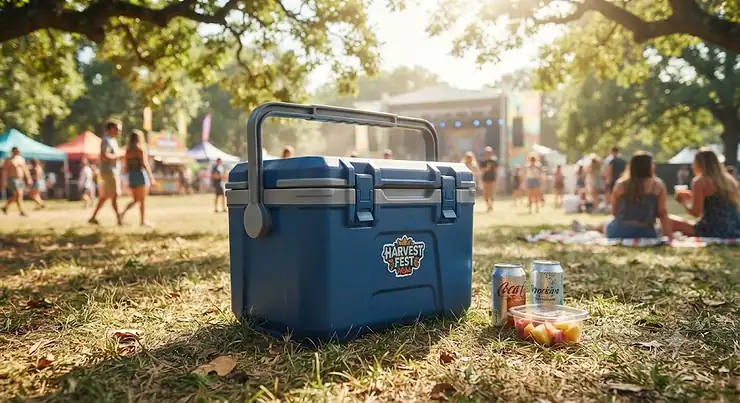
Nobody remembers the festival where their beer was cold. They remember the one where it wasn’t — the sad, lukewarm sip at 4 p.m. while the sun does its worst impression of a blowtorch. That single moment is usually the reason people start shopping for a small hard cooler for festivals in the first place, and honestly, it’s a good reason. A great little hard-sided cooler does more than chill drinks; it becomes your seat, your table, your “don’t touch my stuff” perimeter marker in a sea of camping chairs and glitter.
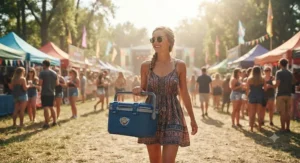
What is a small hard cooler for festivals? It’s a compact, rotomolded or heavy-duty molded cooler — usually in the 18 to 30-quart range — built to hold ice for multiple days, survive being dropped, sat on, and dragged across gravel, and still fit in a car trunk or festival wagon without eating your whole packing budget. That toughness comes from a manufacturing process called rotational moulding, which fuses the walls into a single seamless shell instead of gluing pieces together.
This guide breaks down seven real, currently available coolers pulled from actual product listings and aggregated review data — no invented specs, no fabricated five-star testimonials. We compared insulation thickness, latch design, weight, and genuine reviewer feedback so you can pick a hard cooler for festivals that matches your crew size, your budget, and how far you have to carry it from the parking lot. Prices below are shown as ranges in Canadian dollars because retailers adjust pricing constantly — always check the current listing before buying.
Quick Comparison Table
| Cooler | Capacity | Construction | Ice Retention | Price Range (CAD) |
|---|---|---|---|---|
| Grizzly 20 | 20 qt | Rotomolded | 6+ days | C$270–C$360 |
| RTIC 20 QT Ultra-Tough | 20 qt | Rotomolded | Up to 3–4 days | C$140–C$190 |
| Yeti Roadie 24 2.0 | ~20 qt usable | Rotomolded | 3–5 days | mid-C$300s–low C$400s |
| Pelican 20QT Elite | 20 qt | Injection-molded | 2–3.5 days | C$210–C$280 |
| ORCA 26 | 26 qt | Rotomolded | 3–7+ days | C$270–C$320 |
| Igloo BMX 25 | 25 qt | Blow-molded | Up to 4 days | C$95–C$130 |
| Coleman Chiller 28QT (Wheeled) | 28 qt | Injection-molded | Under 24 hrs | under C$90 |
A quick read of this table tells the real story: rotomolded construction (Grizzly 20, RTIC 20 QT Ultra-Tough, Yeti Roadie 24 2.0, ORCA 26) dominates the ice-retention column, while the injection- and blow-molded options trade a couple of days of cold for a much lighter price tag. If your festival is a single-day event with a parking lot ten steps from your tent, the Coleman Chiller 28QT is honestly plenty. If you’re base-camping for three nights, you want one of the rotomolded four.
💬 Just one click — help others make better buying decisions too!😊
Top 7 Small Hard Coolers for Festivals: Expert Analysis
1. Grizzly 20 — toughest build for the price, made in the USA
The Grizzly 20 opens this list because it’s the closest thing to a bomb-proof lunchbox in the small-cooler category. Its RotoTough rotomolded shell is paired with pressure-injected insulation rather than traditional foam, which manufacturers claim is both lighter and more durable — and the BearClaw latches close with a satisfying, no-hardware snap that doesn’t loosen over a muddy weekend.
At roughly 16 lbs empty and a 20-quart interior, the Grizzly 20 holds around 24 cans with 5 lbs of ice, which sounds modest until you remember that’s what you actually need for two people over a long weekend. Aggregated owner feedback consistently praises the sturdy handle and lockable latches, with several reviewers specifically buying it because cheaper coolers “have weak handles held on by a tiny screw.” That’s the kind of detail you only learn from people who’ve broken a cheaper cooler first.
This is the pick for festival-goers who treat gear like an investment rather than a disposable purchase — campers, hunters-turned-concertgoers, and anyone who’s tired of replacing a $60 cooler every two seasons.
Pros:
- ✅ Rotomolded shell shrugs off drops and rough handling
- ✅ Lifetime warranty backs genuine long-term confidence
- ✅ Doubles comfortably as a camp seat or table
Cons:
- ❌ Among the pricier options in this small-capacity class
- ❌ 20-quart interior is tight for groups larger than two
Expect to pay in the C$270–C$360 range depending on colour and retailer; given the lifetime warranty, it’s a strong long-haul value even at the top of that band.
2. RTIC 20 QT Ultra-Tough — best value rotomolded pick
The RTIC 20 QT Ultra-Tough is the cooler most festival veterans recommend when someone asks for a rotomolded option without the premium-brand price tag. It uses roughly 1.7 to 3 inches of closed-cell foam insulation behind a freezer-style gasket, which in practice means it holds cold noticeably longer than the injection-molded coolers on this list, even if it doesn’t quite match pricier rivals over a five-day stretch.
At about 15.7 to 18.3 lbs empty and a 30-can capacity, this cooler sits right in the sweet spot for two to three festival-goers. Reviewers and testers who’ve put it through side-by-side trials describe it as a “simple, straightforward” performer — lightweight for its class, though a few note the stainless handle can feel awkward without a second grip point. Based on that spec comparison, the trade-off is honest: you’re getting most of the performance of a $300+ cooler for well under half the price.
Buyers who want the rotomolded durability story without the rotomolded price tag will find this the easiest justification on the list.
Pros:
- ✅ Closed-cell foam insulation rivals pricier rotomolded rivals
- ✅ Doubles as a bench, table, or step stool
- ✅ Wide colour range for personalizing your festival gear
Cons:
- ❌ Single handle can feel awkward on long carries
- ❌ No dry-goods basket included by default
Priced around C$140–C$190 at the time of research, this is the pick most reviewers call the smartest dollar-for-dollar buy in the small rotomolded cooler category.
3. Yeti Roadie 24 2.0 — best all-rounder for solo or duo trips
The Yeti Roadie 24 2.0 is the cooler people picture when they hear “premium small hard cooler,” and the updated 2.0 version earns that reputation with real engineering, not just branding. Yeti says the redesign weighs about 10% less than the original Roadie while holding roughly 20% more and delivering close to 30% better thermal performance — numbers worth noting because insulation upgrades on a compact cooler are genuinely hard to pull off without adding bulk.
Externally it measures about 16.6″ W x 14.1″ D x 17.4″ H and holds 18 to 33 cans depending on the ice-to-can ratio you use, with an empty weight around 13.1 lbs. What most buyers overlook about this model is the tall internal profile — it’s specifically shaped to stand a wine bottle upright, which makes it as much a “nice dinner at the campsite” cooler as a “beer in a field” one. Aggregated reviews frequently mention it performing well after three days in extreme heat, with the main recurring gripe being confusion over Yeti’s sizing convention (a “24” holds closer to 20 quarts).
Pros:
- ✅ Genuinely strong thermal performance for its size
- ✅ DoubleDuty strap makes solo carrying comfortable
- ✅ Tall shape fits wine bottles and tall cans upright
Cons:
- ❌ Among the priciest coolers in the compact class
- ❌ Interior volume runs smaller than the “24” name implies
Expect a price in the mid-C$300s to low C$400s range. It’s a splurge, but reviewers consistently rate the thermal performance as worth the premium for anyone who camps more than a couple of times per summer.
4. Pelican 20QT Elite — lifetime warranty, tailgate-ready
The Pelican 20QT Elite leans on brand trust and a genuinely generous lifetime guarantee rather than chasing the absolute best ice-retention numbers, and for a lot of festival buyers, that trade-off makes sense. Pelican rates the cooler for roughly two to 3.5 days of ice retention depending on conditions, achieved through press-and-pull latches and a freezer-grade seal rather than the thicker rotomolded walls used by some competitors on this list.
At about 12.5 lbs empty with interior dimensions around 12″ x 6.7″ x 14.1″, it comfortably fits 15 to 18 cans plus ice — tall and narrow rather than deep, which some testers found made it feel top-heavy when full. Independent testing has flagged fit-and-finish quibbles, including seams that aren’t perfectly trimmed and a hinge that can creak under pressure, so this isn’t the toughest build here — but real owner feedback still skews positive, especially from tailgaters who value the built-in bottle opener, cupholders, and embossed fish ruler.
Pros:
- ✅ Backed by a genuinely broad lifetime guarantee
- ✅ Built-in cupholders and bottle opener add convenience
- ✅ Wide colour selection to match festival aesthetics
Cons:
- ❌ Tall, narrow shape can feel top-heavy when full
- ❌ Fit-and-finish falls short of true rotomolded rivals
Pricing typically runs C$210–C$280 in Canada. It’s a reasonable middle-ground pick if the warranty matters more to you than squeezing out an extra day of ice life.
5. ORCA 26 — best ice retention in this size class
If ice retention is your single deciding factor, the ORCA 26 earns its spot through consistently strong third-party testing. ORCA’s own claims stretch to 10-plus days, and while independent reviewers are quick to note real-world numbers usually land lower, multiple testers still measured five to seven full days of solid ice — genuinely impressive for a 26-quart cooler.
Made in the USA, this model holds around 46 standard cans with ice (or roughly 87 without) thanks to a rotomolded shell integrated directly with the insulation layer rather than foam poured in afterward. A detachable cargo net on the exterior is a small but clever touch — it keeps sunscreen, snacks, and phone chargers off the wet interior without adding bulk. Reviewers who’ve compared it head-to-head with premium rivals frequently report the ORCA 26 outlasting them by a full day or two on ice, though the trade-off is a price point that sits noticeably above mid-range competitors, especially in specialty colourways.
Pros:
- ✅ Multi-day ice retention that outperforms most rivals
- ✅ Detachable cargo net adds smart external storage
- ✅ Rotomolded, American-made build quality
Cons:
- ❌ Premium price, especially for specialty colours
- ❌ Heavier to carry solo when fully loaded
Expect around C$270–C$320 for the standard colourway. For a small rotomolded cooler built specifically to outlast a long festival weekend, this is the one to beat on cold retention alone.

6. Igloo BMX 25 — best budget-friendly step up
The Igloo BMX 25 sits in the gap between disposable foam coolers and true rotomolded builds, using a heavy-duty blow-molded design with reinforced base corners instead of a single rotomolded shell. Igloo rates it for up to four days of ice retention, and its Cool Riser Technology lifts the interior basket slightly off the bottom to reduce direct contact with melted ice water.
At an empty weight of about 11.3 lbs and a 25-quart capacity, it’s genuinely easy to carry solo, and the built-in fish ruler and threaded drain plug with hose compatibility are nice touches for a cooler at this price. Aggregated customer feedback is largely positive on portability and value — “priced right compared to competitors” is a recurring theme — though a notable number of reviewers wish it had a smoother drain design, and a few mention the lack of a bottom drain entirely on certain sub-models. Based on the spec comparison with the rotomolded options above, you’re sacrificing a day or two of peak ice life in exchange for roughly half the price.
Pros:
- ✅ Lightest cooler on this list at just over 11 lbs
- ✅ Genuinely budget-friendly without feeling flimsy
- ✅ Fish ruler and drain hose compatibility are handy extras
Cons:
- ❌ Blow-molded shell is less rugged than rotomolded rivals
- ❌ Some sub-models ship without a functional drain
Typical pricing lands around C$95–C$130, making the Igloo BMX 25 the easiest entry point for anyone testing whether a hard cooler for festivals is worth the upgrade from a soft-sided bag.
7. Coleman Chiller 28-Quart (With Wheels) — best for rolling straight from the lot
Closing the list is the Coleman Chiller 28-Quart With Wheels, the pick for festivals where the walk from parking to campsite is long enough that wheels matter more than an extra day of ice life. TempLock insulation is a lighter-duty system than the rotomolded options above, and Coleman doesn’t claim multi-day performance here — reviewer estimates cluster around eight hours of solid ice retention on a hot day, stretching to roughly a full day if you’re topping up periodically.
It holds up to 19 cans plus 14 lbs of ice, with a retractable handle and recessed wheels that owners repeatedly single out as the reason they bought it over a heavier rotomolded model. What most buyers overlook about this model is that it isn’t trying to compete on insulation at all — it’s a portability play, and reviewers who bought it for exactly that reason are consistently satisfied, even as a few flag the wheel-axle cap as a weak point that can pop loose with rough use.
Pros:
- ✅ Genuinely easiest option here to roll long distances
- ✅ Lowest price point of any cooler on this list
- ✅ Compact enough for a car back seat or trunk
Cons:
- ❌ Ice retention trails well behind rotomolded rivals
- ❌ Wheel-axle cap reported as a durability weak point
At under C$90 in most listings, it’s less an ice-retention champion and more a convenience tool — genuinely the right call for single-day festivals or short walks from the car.
Practical Festival Cooler Packing & Ice Guide
A cooler is only as good as how you load it, and this is where most festival packing goes wrong before the gates even open. Start by pre-chilling: put your cooler in a shaded spot with a bag of ice inside for 30 to 60 minutes before you actually load drinks and food. This drops the internal plastic temperature so incoming ice doesn’t spend its first hours just cooling the cooler itself instead of your drinks.
Layer smart. Ice on the bottom, dense items like cans and bottles in the middle, and anything crushable or heat-sensitive near the top where you’ll reach it first. A 2:1 ice-to-contents ratio is the rule of thumb most manufacturers use in their own ice-retention testing, so don’t skimp — a half-full cooler loses cold air every time you open the lid, while a packed one holds temperature far longer. Block ice also outlasts cubed ice significantly because it has less surface area exposed to melt.
Keep the lid closed as much as humanly possible; every open-and-close cycle at a hot festival lets warm, humid air rush in and speeds up melt dramatically. If temperatures climb into extreme-heat territory, Health Canada’s guidance on protecting yourself from extreme heat is worth a skim before you go — the same hydration and shade principles that protect you also protect your ice. Finally, keep the drain plug tethered or in a labelled pocket; it’s the single most commonly lost part across every cooler brand’s review section.
Real-World Scenario: Which Festival Cooler Fits Your Crew
The solo camper. You’re pitching a one-person tent, hiking gear in from a distant lot, and mostly need cold water and a couple of beers over two days. The Igloo BMX 25 or Coleman Chiller 28-Quart fits this profile perfectly — light, cheap, and easy to carry without a second person’s help.
The weekend duo. Two people, three nights, a mix of drinks and light food. This is exactly the use case the RTIC 20 QT Ultra-Tough and Yeti Roadie 24 2.0 were designed around — enough capacity for two without becoming a burden to haul, and enough insulation to survive most of a weekend on a single ice run.
The group festival cooler crew. Four or more friends splitting a campsite for a long weekend need a group festival cooler that can outlast the whole event on maybe one or two ice top-ups, and that’s where the ORCA 26 and Grizzly 20 earn their higher price tags — both are built for exactly this kind of sustained, multi-day group use where reliability matters more than shaving off a few dollars.
How to Choose a Small Hard Cooler for Festivals
- Match capacity to your crew and trip length. A 20-quart cooler suits one or two people for a weekend; scale up toward 26–30 quarts for groups or longer stays.
- Prioritize insulation type over brand name. Rotomolded shells with 1.5 to 3 inches of foam consistently outperform blow- and injection-molded coolers on multi-day ice retention.
- Weigh portability against performance. Wheels and lighter shells help on long walks from parking, but they typically trade away a day or two of cold.
- Check the latch and gasket design. Freezer-style rubber gaskets and locking latches keep cold air in far better than simple friction lids.
- Consider the lifetime cost, not just the sticker price. A C$300 cooler that lasts a decade often beats replacing a C$60 cooler every other season.
- Look for a tethered drain plug. It’s a small detail, but it’s the most frequently cited annoyance across aggregated reviews when missing.
- Read aggregated review themes, not star averages alone. Recurring complaints (a weak handle, a missing drain) tell you more than a 4.6-star rating ever will.
Ice Retention: What Actually Keeps Ice Frozen Longer
Ice retention comes down to three physical factors, and none of them are marketing gimmicks: insulation thickness, seal quality, and how often the lid opens. Thicker closed-cell foam or pressure-injected insulation slows heat transfer through the walls, which is why the rotomolded coolers on this list — the Grizzly 20, RTIC 20 QT Ultra-Tough, Yeti Roadie 24 2.0, and ORCA 26 — consistently outlast the thinner-walled Igloo BMX 25, Pelican 20QT Elite, and Coleman Chiller 28-Quart in side-by-side testing.
Seal quality matters just as much as wall thickness. A freezer-grade rubber gasket running the full perimeter of the lid, like the ones on the ORCA 26 and Grizzly 20, blocks the tiny air gaps that let warm humid air creep in — even a millimetre-wide gap can measurably shorten ice life over three or four days. Reviewers consistently note that coolers without a full gasket, relying instead on a simple friction-fit lid, lose noticeably more ice by day two.
Here’s what the spec sheet won’t tell you: colour matters too. Darker exteriors absorb more radiant heat in direct sun, so a white or light-coloured cooler tucked in the shade will outperform an identical dark one left in direct light, sometimes by half a day or more over a long weekend.
Cooler Durability: Rotomolded vs Blow-Molded vs Injection-Molded
| Construction Type | Typical Durability | Weight | Best For |
|---|---|---|---|
| Rotomolded (e.g. Grizzly 20, ORCA 26) | Seamless shell, highest impact resistance | Heaviest | Multi-day festivals, group festival cooler use |
| Blow-molded (e.g. Igloo BMX 25) | Reinforced but seam-prone under heavy impact | Light | Budget weekend trips |
| Injection-molded (e.g. Pelican 20QT Elite, Coleman Chiller 28-Quart) | Solid for casual use, more prone to hinge/latch wear | Light to moderate | Day trips and tailgates |
Cooler durability isn’t just about surviving one drop — it’s about how the shell ages after dozens of trips in and out of a trunk. Rotomolding creates a single continuous piece of plastic with no seams to crack, which is exactly why the Grizzly 20 and ORCA 26 carry lifetime or near-lifetime warranties with real confidence behind them. Blow-molded and injection-molded coolers, by contrast, are typically assembled from separate pieces joined at hinges and latches — cheaper to produce, but those joints are usually the first thing to fail after a couple of rough seasons, based on the pattern of complaints showing up across aggregated review data for lighter-duty models.
Small Hard Cooler for Festivals vs Tailgate-Style Cooler vs Soft Cooler
A small hard cooler for festivals, a tailgate-style cooler, and a soft-sided cooler solve overlapping but genuinely different problems, and picking the wrong category is a common regret reviewers mention after the fact.
| Type | Capacity | Ice Retention | Portability | Best Use |
|---|---|---|---|---|
| Small hard cooler | 18–30 qt | 1–7+ days | Moderate | Weekend camping festivals |
| Tailgate-style cooler | 45–75+ qt, often wheeled | 3–6 days | Low without wheels | Large group parking-lot events |
| Soft cooler | 12–30 qt | Under 24 hrs typically | High | Day festivals, backpack-in sites |
A tailgate-style cooler, generally larger and often wheeled, is built for parking-lot setups where you’re not carrying it far — think stadium lots or festival campgrounds you can drive right up to. Soft coolers win on sheer portability and folding down to nothing when empty, but even the best insulated fabric models can’t match a rotomolded hard shell’s multi-day ice life. For most festival-goers hiking any real distance from a car, a small hard cooler for festivals like the ones reviewed above hits the sweet spot: tough enough to sit on, insulated enough to matter, light enough to actually carry.
✨ Still deciding between styles? Compare all three side by side before you buy — your future self at 3 p.m. on day two will thank you.
Common Mistakes When Buying a Hard Cooler for Festivals
Buyers regularly overspend on capacity they’ll never use — a 45-quart cooler sounds appealing until you’re the one lugging it half-full across a muddy field. Another frequent misstep is ignoring gasket quality entirely and shopping on price and colour alone, then wondering why a bargain cooler is empty of ice by lunchtime on day two.
People also underestimate weight-when-full. A cooler that feels light in the store can become genuinely unmanageable once it’s loaded with 20 lbs of ice and a dozen cans, so it’s worth mentally adding that weight before deciding a smaller crew member will be the one carrying it. Finally, plenty of shoppers skip checking whether a drain plug is tethered or even included — a detail that seems trivial until you’re hunting for a lost cap in the grass on day one.
Long-Term Cost & Maintenance
The real cost of a cooler isn’t the sticker price; it’s price divided by years of use. A C$90 injection-molded cooler that cracks at a hinge after two festival seasons costs you more over five years than a C$300 rotomolded model backed by a lifetime warranty, especially once you factor in the ice, drinks, and food lost to an early failure.
Maintenance itself is refreshingly simple across every model on this list: rinse with warm water after each trip, use a mild soap and soft cloth for deeper cleans, and keep the drain plug threads clear of grit so they seal properly next time. Avoid pressure-washing gaskets directly, since repeated blasting can wear the rubber seal faster than normal wear-and-tear would. A cooler treated this way — and never used as a step stool for anything heavier than a person — will comfortably outlast several festival seasons regardless of price tier.
✨ Don’t Miss These Exclusive Deals!
🔍 Take your festival packing list to the next level with these carefully selected coolers. Click through to check current pricing and availability before your next trip — a few minutes now saves a lot of warm beer later!
Safety & Regulations: Bringing a Cooler to a Canadian Festival
Most Canadian festivals allow hard coolers on-site, but rules vary widely by venue and province, so it’s worth checking event guidelines before you pack — some sites restrict cooler size, prohibit glass containers entirely, or ban coolers altogether inside ticketed concert bowls while allowing them in campgrounds. If you’re bringing alcohol across a provincial or international border to reach a festival, the Canada Border Services Agency’s traveller alcohol limits are worth reviewing, since provincial liquor authorities set their own caps on quantities and minimum age requirements that vary by destination.
Heat safety deserves equal attention. Festival grounds routinely run hotter than the surrounding area thanks to crowds, asphalt, and limited shade, so treat your cooler as part of your overall heat plan, not just a drink accessory — pack extra water alongside the beer, and check on friends showing signs of overheating the same way you’d check that the ice hasn’t melted. A well-packed hard cooler for festivals genuinely supports both goals at once.
Frequently Asked Questions
❓ What size cooler is best for a festival weekend?
❓ How long does ice actually last in a small hard cooler?
❓ Are hard coolers allowed at Canadian music festivals?
❓ Is a rotomolded cooler worth the extra cost for festival use?
❓ What's the difference between a hard cooler and a soft cooler for festivals?
Conclusion
Choosing the right small hard cooler for festivals really comes down to being honest about your trip — how many people, how many days, and how far you’re carrying it from the car. Budget-conscious solo campers and single-day attendees will get real value from the Igloo BMX 25 or Coleman Chiller 28-Quart, while duos planning a proper weekend should look hard at the RTIC 20 QT Ultra-Tough or Yeti Roadie 24 2.0. Groups splitting a multi-night campsite are best served by the sustained ice retention of the ORCA 26 or the sheer toughness of the Grizzly 20, and anyone who wants brand-backed peace of mind above all else will appreciate the Pelican 20QT Elite‘s warranty.
None of these are perfect for every situation, and that’s fine — the goal isn’t finding one “best” cooler, it’s matching real specs and real review patterns to your actual festival plans. Pack smart, keep that lid closed as much as you can stand to, and your drinks — and your patience — will both last a lot longer than expected.
✨ Ready to Upgrade Your Festival Kit?
🔍 Check current pricing on today’s pick before the weekend crowd buys it out — your future self, standing in a hot field with a cold drink, will be very grateful.
Recommended for You
- Best Backpack Cooler for Festivals: 7 Picks That Won’t Wreck Your Back (2026)
- 7 Best Beach Cooler Under $80 CAD Picks for Summer 2026
- Backpack Cooler for Beach: 7 Top Picks You’ll Love in 2026
Disclaimer: This article contains affiliate links. As an Amazon Associate, I earn from qualifying purchases. If you purchase products through these links, we may earn a small commission at no additional cost to you.
✨ Found this helpful? Share it with your friends! 💬🤗
