
In This Article
If you’ve ever slid into your car on a sweltering July afternoon in Toronto, Calgary, or Vancouver, you know the uncomfortable reality: your vehicle transforms into a mobile sauna within minutes. According to Environment and Climate Change Canada, 2026 is forecasted to be among the hottest years on record, with global temperatures staying between 1.35°C and 1.53°C above pre-industrial levels. For Canadian drivers, this means dealing with extreme heat that’s becoming more frequent and intense, even in traditionally temperate regions.
A cooling car seat pad for hot Canadian summers isn’t just about comfort—it’s a practical investment in your daily driving experience. The Canada Safety Council reports that on a 35°C day, the air temperature inside a closed vehicle can exceed 50°C within just 20 minutes, even after air conditioning. Your car’s upholstery, whether leather, vinyl, or cloth, absorbs and radiates this heat directly onto your body, causing excessive sweating, discomfort, and fatigue during commutes. Canadian summers might be shorter than in southern climates, but when heat waves hit provinces from British Columbia to Ontario, the intensity can be overwhelming.
The right cooling car seat pad creates a breathable barrier between you and those scorching seats, using technologies like ventilation fans, gel cooling layers, or moisture-wicking mesh fabrics. These solutions work particularly well during Canadian heat domes—those multi-day extreme heat events that have become increasingly common. Whether you’re navigating Calgary’s summer traffic, driving through the Fraser Valley’s humid heat, or commuting across the GTA during a heat advisory, a quality cooling pad can reduce seat surface temperatures by 5-10°C and significantly improve your driving comfort.
For Canadian drivers, the considerations extend beyond just temperature. Our vehicles often sit in direct sunlight during long work hours, baking the interior until it’s almost unbearable by quitting time. Add in the humidity that plagues regions like southern Ontario and the Maritimes, and you’re dealing with a genuinely miserable situation that affects concentration, increases irritability, and makes every drive feel longer than it actually is. The solution? A cooling car seat pad for hot Canadian summers that’s specifically designed to tackle these challenges head-on.
Quick Comparison: Top Cooling Car Seat Pads Available in Canada
| Product | Type | Power Source | Speed Settings | Price Range (CAD) | Best For |
|---|---|---|---|---|---|
| ZONETECH Cooling Car Seat Cover | Fan-based ventilation | 12V cigarette lighter | High/Low | $55-$75 | Budget-conscious drivers |
| Snailax Cooling Seat Cushion | Turbofan with 3D mesh | USB powered | Low/Medium/High | $65-$95 | Daily commuters |
| LGNORA USB Cooling Cushion | 5-fan ventilation system | USB (12V-24V compatible) | 3-speed adjustable | $45-$70 | Versatile multi-vehicle use |
| CooCoCo Ventilated Seat Cover | Turbo fan circulation | 12V powered | 3-speed | $60-$85 | Quick cooling needs |
| Shkalacar Breathable Cushion | 5 high-speed fans | USB powered | 3-speed | $50-$75 | Office/car dual use |
| Gel-Infused Cooling Pad | Passive gel technology | No power required | N/A | $35-$55 | Silent operation preference |
| 3D Mesh Ventilated Cover | Passive airflow | No power required | N/A | $30-$50 | Basic cooling needs |
Looking at this comparison, the powered options with multiple fan speeds dominate the mid-range price bracket of $50-$85 CAD, which represents the sweet spot for Canadian buyers seeking genuine cooling performance. The passive gel and mesh options come in under $55 CAD but sacrifice the active airflow that makes a real difference during extreme heat. If you’re commuting daily through summer traffic in cities like Montreal or Edmonton, the investment in a powered unit with adjustable speeds pays off quickly—you’re not just moving warm air around, you’re creating genuine ventilation that works synergistically with your vehicle’s air conditioning system.
💬 Just one click — help others make better buying decisions too! 😊
Top 7 Cooling Car Seat Pads for Hot Canadian Summers: Expert Analysis
1. ZONETECH Cooling Car Seat Cover — The Reliable Canadian Favourite
The ZONETECH Cooling Car Seat Cover has earned its reputation among Canadian drivers as a dependable workhorse for summer heat management. This 12V-powered cushion features a built-in fan system that circulates air through hundreds of tiny spaces in its microfiber and mesh construction, creating a breathable layer between your body and your seat.
What sets this model apart for Canadian conditions is its straightforward design—plug it into your cigarette lighter, adjust between high and low settings, and you’re cooling down within 60 seconds. The fan circulates air to your back, legs, and thighs, actively pulling heat away from your body rather than just passively sitting there. In practical terms, this means you’re arriving at work or home without that telltale sweat-soaked back that’s so common during Canadian summer commutes. The unit draws from your vehicle’s 12V system, so there’s no battery anxiety or USB compatibility issues to navigate.
Canadian reviewers consistently praise its durability through multiple summers, noting that it holds up well against the temperature swings our vehicles experience—from frigid winter storage to blazing summer heat. The universal fit works with most cars, trucks, and SUVs, secured with adjustable straps that don’t require any permanent installation. For drivers in provinces like Saskatchewan or Manitoba where summer heat can spike unexpectedly, having this ready to deploy makes a tangible difference in daily comfort.
Customer feedback indicates the fan noise is noticeable but not intrusive—you’ll hear it over your stereo at low volumes, but it’s far from distracting. Some Canadian users mention that the cooling effect is most pronounced when combined with your vehicle’s air conditioning, which makes sense given our climate where AC is standard equipment. The mesh material stays breathable even after hours of use, preventing that sticky, uncomfortable feeling that builds up on long drives.
Pros:
✅ Quick setup via 12V cigarette lighter—no USB adapters needed
✅ Durable construction proven through Canadian climate extremes
✅ Universal fit secures to most vehicle seat types
Cons:
❌ Fan noise audible during quiet driving conditions
❌ Two-speed limitation—some drivers want more granular control
Price & Verdict: In the $55-$75 CAD range, the ZONETECH offers solid value for Canadian drivers who want reliable active cooling without overthinking the purchase. It’s the straightforward solution that simply works.
2. Snailax Cooling Car Seat Cushion — Premium Comfort for Serious Commuters
The Snailax Cooling Car Seat Cushion elevates the game with its large turbofan design and genuine 3D breathable mesh that provides six-sided ventilation—a feature that makes a noticeable difference during extended drives across Canada’s vast distances. This USB-powered unit offers three distinct wind speeds (low, medium, high) with intuitive side-mounted button controls that don’t interfere with your driving position.
What makes this particularly valuable for Canadian drivers is its intelligent engineering. The turbofan creates significantly more airflow than basic models, generating enough circulation to work independently of your car’s AC—though combining both creates a genuinely refreshing environment even when outside temperatures hit 30-35°C. The 3D mesh fabric doesn’t just look technical; it actually performs by creating air channels between your body and the seat, allowing heat and moisture to escape continuously rather than building up during your commute.
The USB power option is brilliantly versatile for Canadian vehicle owners. Most newer vehicles (2018+) include USB ports that deliver sufficient amperage, but the unit also works with standard USB car adapters plugged into your 12V socket. This means you can easily transfer the cushion between vehicles, use it in your home office during hot afternoons, or even take it on road trips where you might switch drivers and seats frequently. The 90-minute auto shut-off function prevents battery drain if you forget to unplug it—a thoughtful touch that matters during Canadian camping trips or long highway drives.
Canadian reviewers consistently highlight the build quality and comfort level. The mesh feels substantial without being bulky, adding minimal thickness to your seat while delivering maximum breathability. For drivers who spend 45-90 minutes daily in traffic through cities like Toronto, Vancouver, or Calgary, the difference in arriving sweat-free and comfortable rather than sticky and irritated justifies the slightly higher investment. The cooling effect extends across your entire back and seat contact area, not just localized spots.
One limitation worth noting: the USB power requirement means you need to ensure your vehicle provides adequate amperage (typically 2A or higher) for optimal fan performance. Most modern Canadian vehicles meet this specification, but older models might require a dedicated high-output USB adapter.
Pros:
✅ Superior turbofan delivers powerful, concentrated airflow across entire contact area
✅ Genuine 3D mesh with six-sided ventilation prevents heat and moisture buildup
✅ USB versatility enables easy transfer between car, office, and home use
Cons:
❌ Higher price point compared to basic models
❌ Requires adequate USB power output (2A+) for full performance
Price & Verdict: At $65-$95 CAD, the Snailax represents the premium tier for Canadian drivers who view their cooling cushion as a daily necessity rather than a luxury. If you’re commuting regularly through summer months, the quality and performance gap is worth every dollar.
3. LGNORA USB Cooling Cushion — The Versatile Multi-Vehicle Solution
The LGNORA USB Cooling Cushion distinguishes itself with a five-fan ventilation array that delivers comprehensive cooling coverage from hips to shoulders. This unit’s claim to fame is its exceptional flexibility—it works with 12V-24V power sources, making it compatible with virtually every vehicle class from compact cars to heavy-duty trucks used across Canadian industries.
For Canadian drivers who operate multiple vehicles or commercial equipment, this voltage range compatibility is genuinely valuable. Construction workers driving pickups, delivery drivers switching between vans, or families with multiple vehicles can move this cushion seamlessly between them without worrying about power compatibility issues. The USB connection standard means you’re not locked into proprietary connectors or adapters that inevitably get lost or damaged.
The five built-in fans are strategically positioned to create overlapping airflow zones, eliminating those frustrating hot spots that single-fan units sometimes leave. The cushion offers three speed adjustments controlled via an integrated panel, giving you precise control over cooling intensity based on outside temperature and personal preference. During Canadian heat waves when temperatures spike into the mid-30s, the high setting provides aggressive cooling, while the low setting handles more moderate warm days without creating excessive wind noise.
Build quality reflects thoughtful engineering. The outer layer uses quality faux leather with deliberate ventilation perforations, while the center features breathable mesh fabric. This hybrid approach delivers both durability and performance—the faux leather edges resist wear from repeatedly getting in and out of your vehicle, while the mesh center provides the breathability that actually keeps you cool. The free-flowing internal air channels enhance this effect, creating genuine ventilation rather than just moving warm air around.
Canadian reviewers particularly appreciate the anti-slip silica gel bottom that keeps the cushion securely positioned even during spirited driving or navigating rough roads. For drivers covering Saskatchewan highways, Alberta foothills, or Maritime coastal routes where road conditions vary, this stability prevents the annoying shifting that cheaper cushions suffer from. The cushion measures 45 cm (17.7 inches), fitting 99% of standard car seats plus office chairs, couches, and even wheelchair applications.
Pros:
✅ Five-fan array eliminates hot spots with comprehensive coverage
✅ 12V-24V compatibility works across all vehicle types
✅ Anti-slip backing maintains position during varied driving conditions
Cons:
❌ Currently showing limited availability on Amazon.ca—check stock before ordering
❌ Slightly bulkier profile than single-fan alternatives
Price & Verdict: In the $45-$70 CAD range, the LGNORA delivers exceptional value for Canadians needing multi-vehicle compatibility. The wide voltage range and portable design make it ideal for commercial drivers or families with diverse vehicle fleets.
4. CooCoCo Ventilated Cooling Seat Cover — Rapid Response for Immediate Relief
The CooCoCo Ventilated Cooling Seat Cover focuses on one clear objective: getting you cool fast. This unit features an enhanced turbo-large fan with high-speed yet surprisingly quiet operation, positioned to provide all-around ventilation covering both hips and back simultaneously. The manufacturer claims cooling within 5 seconds of activation, and while that’s slightly optimistic, Canadian users report feeling noticeably cooler within 15-20 seconds—impressively quick when you’re climbing into a heat-soaked vehicle.
The engineering behind this rapid response centers on strategic fan positioning combined with 3D stereoscopic breathable fabric. Rather than a single centralized fan, the airflow architecture distributes cooling across your entire seat contact area right from startup. For Canadian drivers facing that critical moment when you first enter your vehicle after it’s been baking in a parking lot all day, this immediate cooling impact makes a psychological and physical difference. You’re not waiting 5-10 minutes for traditional fans to build up effective circulation.
The three-speed wind adjustment accommodates varying intensity needs. During extreme heat advisories that periodically hit Canadian cities in July and August, the high setting provides aggressive cooling. During milder summer days or evening drives when temperatures drop into the comfortable 20-25°C range, the low setting maintains pleasant airflow without overcooling or creating excessive noise. The USB power delivery system (compatible with 5V USB ports) makes the unit exceptionally easy to integrate into any modern Canadian vehicle.
Build quality emphasizes practical durability. The ergonomic non-slip backing combines with top-middle securing mechanisms to keep the cushion firmly positioned regardless of vehicle type or driving style. There’s also a convenient front storage pocket—useful for keeping phone charging cables, sunglasses, or other small items easily accessible. The universal fit design works smoothly with cars, SUVs, and trucks, secured through adjustable straps that accommodate different seat depths and heights.
One consideration for Canadian buyers: the USB 5V power requirement means it draws from standard USB ports, which should provide adequate cooling for most situations. However, during extreme heat events or if you prefer maximum cooling intensity, some users report the fan performance doesn’t quite match 12V-powered alternatives. It’s a trade-off between convenience and maximum power.
Pros:
✅ Rapid cooling response delivers relief within seconds
✅ Strategic fan positioning provides comprehensive coverage
✅ Front storage pocket adds practical convenience
Cons:
❌ 5V USB power limits maximum fan intensity compared to 12V models
❌ Premium positioning reflected in price point
Price & Verdict: At $60-$85 CAD, the CooCoCo targets Canadian drivers who prioritize immediate cooling response and are willing to invest slightly more for that performance edge. If you frequently encounter baking-hot vehicles and need quick relief, this model delivers.
5. Shkalacar Breathable USB Cooling Cushion — The Budget-Friendly Performer
The Shkalacar Breathable USB Cooling Cushion proves you don’t need to spend premium dollars to get effective cooling performance. This five-fan system delivers intelligent cooling using high-speed fans strategically distributed throughout the cushion, combined with a thoughtful design that prioritizes both functionality and user convenience.
What makes this model particularly appealing for budget-conscious Canadian drivers is its versatility without compromise. The USB power delivery works with 12V-24V vehicle systems through standard adapters, making it compatible with everything from compact cars to commercial trucks. The three wind speed settings provide adequate control for varying temperature conditions throughout Canadian summers—from the intense heat of southern Ontario’s July peaks to the more moderate warmth of BC coastal regions.
The engineering includes several practical touches that reflect real-world usage considerations. The back features a zipper design allowing you to remove the internal functional board, while the outer layer detaches completely for washing. For Canadian drivers dealing with road dust, tree pollen during spring/summer transition, or the general accumulation of grime through regular use, this washability extends the cushion’s useful life significantly. The bottom receives silicone treatment for anti-slip performance, ensuring the cushion stays positioned even on slippery leather seats or during spirited driving through winding roads.
Build quality exceeds expectations for the price point. The materials feel substantial without adding excessive bulk, and the fan assembly generates meaningful airflow rather than just token circulation. Canadian reviewers note it performs admirably during typical summer conditions (25-32°C), though it naturally doesn’t match the pure cooling power of premium units during extreme heat events. For most drivers, that performance level proves entirely adequate given the price advantage.
The universal application extends beyond automotive use. The USB power option makes it equally effective in home offices, studios, or wherever you need portable cooling. During Canada’s increasingly common heat waves, having a portable cooling solution you can move between your vehicle, workspace, and home provides genuine value. The compact design stores easily when not needed, unlike bulkier models that occupy space year-round.
Pros:
✅ Exceptional value delivers effective cooling at accessible price point
✅ Removable, washable components extend useful lifespan
✅ Silicone anti-slip bottom maintains positioning on varied seat materials
Cons:
❌ Five-fan array doesn’t match turbofan power during extreme heat
❌ Build quality, while good, doesn’t quite reach premium territory
Price & Verdict: At $50-$75 CAD, the Shkalacar represents outstanding value for Canadian drivers who want genuine active cooling without premium pricing. It’s the smart choice for occasional users or budget-conscious buyers seeking reliable performance.
6. Gel-Infused Cooling Pad — Silent Passive Cooling Technology
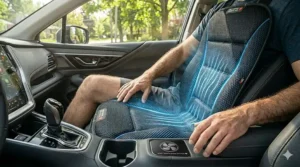
The Gel-Infused Cooling Pad takes a completely different approach from powered alternatives, relying on advanced polymer gel technology to absorb and dissipate heat through passive thermal transfer. This no-power-required solution appeals to Canadian drivers who prefer silent operation or need cooling in situations where electrical connections aren’t practical.
The technology works through non-toxic polymer gel encased within breathable fabric layers. When you first sit down, the gel absorbs your body heat and the radiated warmth from your seat, creating an immediate temperature reduction of 5-10°C compared to direct seat contact. This effect is particularly noticeable during that critical first 5-10 minutes when you’re climbing into a heat-soaked vehicle—exactly when discomfort peaks. For enhanced performance, you can pre-chill the pad in your refrigerator for 10-20 minutes before use, though it functions effectively at room temperature.
The dual-sided construction features twin-layer breathable mesh fabric on both surfaces, creating a non-irritating interface that remains comfortable during extended contact. Unlike powered fans that create localized cooling spots, the gel technology distributes temperature reduction evenly across the entire contact area. This makes it particularly valuable for Canadian drivers on long highway journeys through the Prairies or cross-country trips where comfort during extended sitting matters as much as initial cooling.
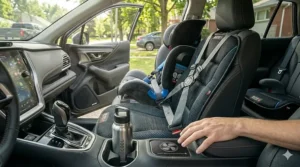
Installation simplicity represents a major advantage. Two open slots accommodate seat and stroller straps (yes, these work in child safety seats too), requiring no electrical connections, USB ports, or battery management. For Canadian families with multiple vehicles, young children, or varying usage scenarios, this plug-and-play simplicity eliminates compatibility concerns entirely. Move it between vehicles, use it at outdoor events, take it camping—the gel technology works anywhere.
The trade-off comes in cooling duration and intensity. The gel maintains peak effectiveness for approximately 2-3 hours under typical Canadian summer conditions before requiring regeneration (either air cooling or refrigeration). During extreme heat waves when ambient temperatures exceed 35°C, performance duration shortens. The passive approach also can’t match the active airflow that powered units provide when combined with your vehicle’s air conditioning system.
Pros:
✅ Completely silent operation—no fan noise whatsoever
✅ No power requirements eliminate compatibility and battery concerns
✅ Universal application works in vehicles, strollers, office chairs
Cons:
❌ Cooling duration limited to 2-3 hours before regeneration needed
❌ Passive technology can’t match powered fan performance during extreme heat
Price & Verdict: At $35-$55 CAD, gel-infused pads offer the most affordable entry point for Canadian drivers seeking legitimate cooling technology. They’re ideal for shorter commutes, occasional use, or situations where silent operation matters more than maximum cooling power.
7. 3D Mesh Ventilated Cover — Basic Breathability for Moderate Conditions
The 3D Mesh Ventilated Cover represents the minimalist approach to automotive cooling—no fans, no gel, no power requirements. Just engineered fabric technology designed to create airflow channels between your body and seat surface, preventing the heat and moisture buildup that makes summer driving uncomfortable.
The 3D mesh construction creates a hollow, ventilated structure that functions through simple physics. Rather than sitting directly against your seat’s surface (whether leather, vinyl, or cloth), the mesh maintains a small air gap that allows natural convection and moisture evaporation. Your body heat rises through the mesh structure and dissipates rather than getting trapped against the seat. During Canadian summer conditions where humidity compounds heat discomfort, this moisture-wicking property provides surprising relief.
For Canadian drivers in moderate climates or those who primarily drive with effective air conditioning, this basic approach often proves sufficient. If you’re commuting 15-30 minutes through cities like Victoria, Halifax, or Ottawa where summer temperatures typically range 25-30°C, the mesh cover delivers noticeable improvement over direct seat contact without requiring any electrical infrastructure. The universal fit (typically 104 cm × 46 cm or similar) accommodates most standard car seats, trucks, and SUV seats.
The construction typically uses honeycomb mesh or similar ventilated fabric, often with integrated massage-style raised sections that create additional airflow channels while providing mild cushioning. These covers secure through adjustable straps or elastic attachment systems, maintaining position without permanent installation. The lightweight, foldable design makes storage trivially easy—throw it in your trunk during winter, deploy it for summer months.
The limitations are straightforward. With no active cooling mechanism, you’re entirely dependent on ambient conditions and your vehicle’s air conditioning to determine actual cooling effectiveness. During Canadian heat waves when temperatures spike into the mid-30s, the mesh alone won’t provide adequate relief—you’ll still arrive sweaty and uncomfortable after extended drives. The mesh also requires regular cleaning to maintain hygiene and appearance, as it accumulates dust, sweat, and general grime through regular use.
Pros:
✅ Lowest price point makes it accessible for any budget
✅ Zero power requirements or installation complexity
✅ Lightweight and easily stored during off-season
Cons:
❌ Passive design provides minimal relief during heat waves
❌ Effectiveness entirely dependent on ambient conditions and vehicle AC
Price & Verdict: At $30-$50 CAD, 3D mesh covers are the entry-level solution for Canadian drivers seeking marginal comfort improvement. They work adequately for shorter commutes in moderate conditions but shouldn’t be your choice if you’re serious about summer cooling performance.
How to Actually Stay Cool During Canadian Summer Drives
Understanding the products is one thing; knowing how to deploy them effectively is what transforms a purchase into genuine daily comfort. Here’s what I’ve learned through years of Canadian summer driving and testing various cooling solutions across different provinces and temperature extremes.
Start With Pre-Cooling Your Vehicle
Your cooling car seat pad for hot Canadian summers works best when it’s not fighting a losing battle against extreme initial temperatures. On days when your vehicle has been sitting in the sun, crack the windows slightly (if weather permits) or use remote start with AC if your vehicle includes that feature. Even 2-3 minutes of air circulation before you enter drops interior temperature significantly. Position your cooling pad before you start driving—don’t wait until you’re already sweating and uncomfortable.
Layer Your Cooling Strategies
The most effective approach combines multiple technologies rather than relying solely on one solution. Use your powered cooling pad as the primary active cooling element, but support it with your vehicle’s air conditioning directed toward floor vents to feed cool air into the pad’s circulation. During extreme heat, consider combining a gel pad underneath a fan-powered unit—the gel handles initial heat absorption while the fan provides sustained airflow. This layered approach works particularly well during extended drives across Canadian distances where single solutions might falter.
Understand Maintenance Requirements
Powered cooling pads accumulate dust in their fan mechanisms, reducing airflow efficiency over time. Every 4-6 weeks during active use, vacuum the mesh surfaces and fan intakes to maintain performance. For models with removable covers, wash them monthly following manufacturer specifications. Gel pads should be wiped clean with damp cloth weekly and allowed to regenerate (air dry) between uses. Basic mesh covers require most frequent washing—typically every 2 weeks—to prevent odour and maintain breathability.
Adjust for Canadian Climate Variations
What works perfectly during Ontario’s humid summers requires different settings during Alberta’s dry heat. High humidity environments benefit from maximum fan speed to prevent moisture buildup, while dry climates allow lower fan settings with equal comfort. Coastal BC drivers should prioritize moisture-wicking properties, while Prairie drivers need maximum airflow during those intense July afternoons when temperatures spike unexpectedly. Your cooling pad isn’t a set-it-and-forget-it device—adjust based on actual conditions.
Plan for Long-Distance Driving
Canadian road trips often involve 4-6 hour highway segments where cooling pad performance matters continuously. Powered units with auto-shutoff functions typically cycle at 90-minute intervals—factor this into your strategy by timing shutoffs with planned rest stops. Gel pads lose effectiveness after 2-3 hours; bring a backup or plan to regenerate at stops. For multi-day trips, choose USB-powered models that can regenerate overnight in hotels rather than 12V-only units that require vehicle power.
Real Canadian Driver Scenarios: Matching Products to Your Needs
Choosing the right cooling car seat pad for hot Canadian summers depends less on specs and more on understanding how it fits your actual driving patterns and environment. Let me walk through some specific scenarios that cover the range of Canadian driving experiences.
The Downtown Toronto Commuter
Sarah drives 45 minutes each way through heavy GTA traffic, with her car sitting in an outdoor parking lot from 9 AM to 5 PM. Her vehicle bakes all day, and by quitting time, it’s brutal. She needs immediate cooling that works within the first 5 minutes because she’s already uncomfortable before leaving the parking lot. The CooCoCo Ventilated Cooling Seat Cover or Snailax Cooling Car Seat Cushion both deliver that rapid response. The investment of $65-$95 CAD spreads across 200+ commutes annually, making the cost per use trivial compared to the daily comfort improvement.
The Calgary Truck Driver (Commercial Use)
Michael operates a pickup truck for construction work, constantly moving between job sites across Calgary and surrounding areas. He needs something rugged that handles frequent in-and-out cycling, works with his truck’s 12V system, and doesn’t require delicate handling. The ZONETECH Cooling Car Seat Cover or LGNORA USB Cooling Cushion both handle commercial use effectively. The LGNORA’s 12V-24V compatibility is particularly valuable if he ever switches between different truck classes, while the ZONETECH’s straightforward design survives construction site conditions without babying.
The Vancouver Island Family
The Martinez family in Victoria needs cooling solutions for multiple vehicles—two cars plus occasional use in their motorhome for camping trips. They’re looking for versatility rather than maximum power since Victoria’s summer temperatures rarely exceed 30°C. USB-powered options like the Shkalacar Breathable USB Cooling Cushion or gel-infused passive pads work perfectly. The $50-$75 CAD price point lets them equip multiple vehicles affordably, while the USB power makes the units easily transferable. During camping trips, they can even run them from a portable power bank when needed.
The Manitoba Highway Traveller
Elena regularly drives 3-4 hour stretches between Winnipeg and rural communities for work. She needs sustained performance across long distances where a cooling pad that works for 30 minutes but fades afterward becomes useless. The Snailax Cooling Car Seat Cushion with its powerful turbofan and 90-minute auto-shutoff timing aligns perfectly with highway rest stop intervals. She can time the shutoff with fuel stops, grab coffee, and restart fresh for another segment. The premium $65-$95 CAD investment justifies itself immediately during Manitoba’s intense July heat when highway driving becomes exhausting without adequate cooling.
The Budget-Conscious Student
Thomas is a university student in Montreal with limited budget but genuine need—his aging vehicle has weak air conditioning that barely keeps up during Quebec’s humid summers. He needs the cheapest solution that actually works rather than just looking like it might. The 3D Mesh Ventilated Cover at $30-$50 CAD provides legitimate improvement for short commutes to campus and part-time work. While it won’t handle extreme heat waves, it makes moderate summer days bearable, which covers 80% of his driving situations. When he upgrades his vehicle eventually, he can move up to powered options, but right now, this basic solution fits his reality.
Common Mistakes When Buying Cooling Car Seat Pads in Canada
Through years of helping friends, family, and readers choose cooling solutions, I’ve watched people repeat the same purchasing mistakes. Here’s how to avoid them so your money buys actual cooling comfort rather than disappointment.
Mistake #1: Ignoring Power Requirements
Many Canadian drivers order cooling pads online without verifying their vehicle’s power specifications. You plug in a USB unit expecting good results, but your vehicle’s USB port only delivers 0.5A when the cushion needs 2A for effective fan operation. The result? Weak airflow that barely makes a difference. Before buying, check your vehicle’s USB specifications (owner’s manual or sticker near the port) or purchase a high-output USB adapter from Canadian Tire or similar retailers. The $15-$25 CAD adapter investment saves you from returning an otherwise good product.
Mistake #2: Choosing Maximum Power When You Don’t Need It
The instinct to buy the most powerful option available often backfires. If you’re driving 15 minutes to work in a modern vehicle with effective AC, paying $95 CAD for a premium turbofan system is wasted money. A $50-$60 mid-range option or even passive gel pad provides adequate cooling for short commutes. Power matters during extended drives or extreme heat, but for typical Canadian urban driving where your AC handles most of the work, moderate solutions perform perfectly well.
Mistake #3: Forgetting About Canadian Winter Storage
Many drivers excitedly install their new cooling pad in June without considering where it goes for the other 8-9 months. Some units are compact and fold easily; others take up significant trunk space year-round. Gel pads can degrade if subjected to extreme cold storage without proper protection. Before purchasing, think through your storage reality—do you have garage space, a dedicated storage bin, or will this pad need to live in your trunk through freeze-thaw cycles? This consideration often tips the decision toward more compact USB-powered units versus bulkier 12V models.
Mistake #4: Overlooking Canadian-Specific Availability
Just because a product exists on Amazon.com doesn’t mean it’s readily available on Amazon.ca or ships to Canada at reasonable cost. Many buyers add items to their cart only to discover during checkout that shipping costs $40 CAD or delivery requires 4-6 weeks. Always verify you’re shopping Amazon.ca specifically and check Prime eligibility. Products that ship from Canadian warehouses arrive in 2-5 days; those shipping from the US can take weeks and sometimes incur customs charges.
Mistake #5: Dismissing Warranty and Return Policies
Cooling pads fail. Fans burn out, gel develops leaks, mesh tears. Yet many Canadian buyers skip reading return windows and warranty terms, assuming they’re buying from a local retailer with generous policies. Online purchases, especially from third-party sellers on Amazon.ca, often have limited return windows (sometimes just 15 days) and may require you to cover return shipping. Verify these terms before purchasing, particularly for premium-priced units where a failed pad after 90 days represents significant lost money.

Features That Actually Matter (And Those That Don’t)
Marketing materials overflow with impressive-sounding specifications, but only a handful of features genuinely impact your cooling experience during Canadian summers. Here’s my honest assessment of what deserves your attention and what’s just marketing noise.
Critical Features — These Change Everything
Airflow volume measured in CFM (cubic feet per minute): This determines actual cooling power. Quality turbofans move 20-30 CFM; basic fans manage 10-15 CFM. The difference is tangible when you’re sitting in 35°C heat—more airflow means faster cooling and better sustained comfort. Unfortunately, most manufacturers don’t publish this spec, so you’re often judging by user reviews and personal testing.
Fan noise level in decibels: A cooling pad running at 65+ dB becomes irritating during quiet driving, phone calls, or when listening to podcasts. Quality units operate at 50-60 dB—audible but not disruptive. This matters more than you think for daily commuting where you’re using the pad 10+ hours weekly. Poor designs can sound like you’re driving beside a desktop computer fan.
Mesh breathability rating: The difference between basic woven fabric and genuine 3D engineered mesh is dramatic. Poor mesh traps moisture even with fan assist, leaving you sticky rather than cool. Quality mesh features hollow structures that promote true ventilation rather than just token airflow. Press the material together; quality mesh springs back immediately and feels noticeably hollow.
Moderately Important — Worth Considering But Not Deal-Breakers
Speed settings: Three adjustable speeds provide genuine value; more than three becomes excessive complexity. Two speeds (high/low) covers most situations adequately. Canadian summer conditions vary enough that adjustability helps, but don’t overpay for 5-7 speed options you’ll never meaningfully distinguish.
Auto-shutoff timing: The 90-minute cycle common in quality units aligns well with driving patterns and prevents battery drain. Shorter cycles (30-45 minutes) require constant attention; longer cycles (2+ hours) risk draining your battery if you forget to unplug. For Canadian long-distance driving, the 90-minute standard works perfectly.
Universal fit adjustability: Most units claim “universal fit,” but those with multiple adjustment points actually deliver on that promise across different seat depths and heights. Basic elastic straps work for standard cars; you’ll appreciate the extra adjustability if you drive trucks or SUVs with larger seating dimensions.
Marketing Fluff — Safely Ignore These Claims
Massage functionality: Vibrating cushions add complexity and failure points without meaningful benefit. Legitimate therapeutic massage requires much more sophisticated mechanisms. These token vibrations are marketing additions that break first and add minimal value meanwhile.
Temperature display/readouts: Digital displays showing temperature readings sound impressive but serve no practical purpose. You know if you’re comfortable; having a number tell you it’s 22°C adds nothing to your experience. These features increase price and provide additional failure points without genuine value.
Multiple colour options: Whether your cooling pad comes in black, grey, or burgundy doesn’t affect its cooling performance. Yes, darker colours absorb slightly more heat, but the difference is negligible compared to actual cooling mechanism quality. Don’t let aesthetic options distract from functional specifications.

FAQ: Your Cooling Car Seat Pad Questions Answered
❓ Do cooling car seat pads actually work during Canadian heat waves?
❓ Can I leave my cooling pad installed through Canadian winter?
❓ Will a cooling pad drain my car battery if I forget to unplug it?
❓ Are gel cooling pads safe for children's car seats in Canada?
❓ Do USB-powered cooling pads work as well as 12V cigarette lighter models?
Conclusion: Choosing Your Perfect Cooling Solution for Canadian Summers
After reviewing seven distinct cooling car seat pad options available to Canadian drivers, several clear patterns emerge. If you’re commuting daily through urban traffic in cities like Toronto, Montreal, or Calgary, the active cooling provided by powered units like the Snailax Cooling Car Seat Cushion ($65-$95 CAD) or CooCoCo Ventilated Cooling Seat Cover ($60-$85 CAD) justifies the investment through genuine comfort improvement. These turbofan systems deliver measurable temperature reduction that transforms your driving experience from uncomfortable to genuinely pleasant.
Budget-conscious Canadian drivers or those with shorter commutes find excellent value in the mid-range options. The ZONETECH Cooling Car Seat Cover ($55-$75 CAD), LGNORA USB Cooling Cushion ($45-$70 CAD), and Shkalacar Breathable USB Cooling Cushion ($50-$75 CAD) all provide legitimate active cooling without premium pricing. These represent the practical sweet spot where performance meets value for typical Canadian summer driving conditions.
For specific use cases—commercial drivers, families with multiple vehicles, or those seeking silent operation—the passive options including gel-infused pads ($35-$55 CAD) and 3D mesh covers ($30-$50 CAD) deliver targeted solutions. They won’t match powered alternatives during heat waves, but they solve specific problems effectively while maintaining minimal complexity and maximum portability.
The reality facing Canadian drivers in 2026 is clear: our summers are getting hotter, heat waves are becoming more frequent, and the discomfort of driving in extreme heat is transitioning from occasional annoyance to regular challenge. Investing in a quality cooling car seat pad for hot Canadian summers isn’t about luxury—it’s about maintaining comfort, reducing fatigue, and arriving at your destination ready to function rather than sweaty and irritable.
Choose based on your actual driving patterns rather than specs alone. Consider where you drive, how long your typical commutes last, whether you need multi-vehicle compatibility, and what your realistic budget allows. The right cooling pad isn’t the most expensive option or the one with the most features—it’s the one that matches your specific Canadian driving reality and delivers reliable comfort throughout our intense but magnificent summer months.
✨ Don’t Miss These Exclusive Deals!
🔍 Take your summer driving comfort to the next level with these carefully selected products. Click on any highlighted item to check current pricing and availability on Amazon.ca. These cooling solutions will help you arrive cool, comfortable, and ready to enjoy your day rather than recovering from a sweaty commute!
Recommended for You
- 7 Best Cooling Pads for Leather Office Chairs Canada 2026
- Best Cooling Chair Pad for Back Sweat in Canada 2026
- Best Cooling Seat Cushion for Office Chair Canada | 7 Top Picks 2026
Disclaimer: This article contains affiliate links. As an Amazon Associate, I earn from qualifying purchases. If you purchase products through these links, we may earn a small commission at no additional cost to you.
✨ Found this helpful? Share it with your friends! 💬🤗
