
In This Article
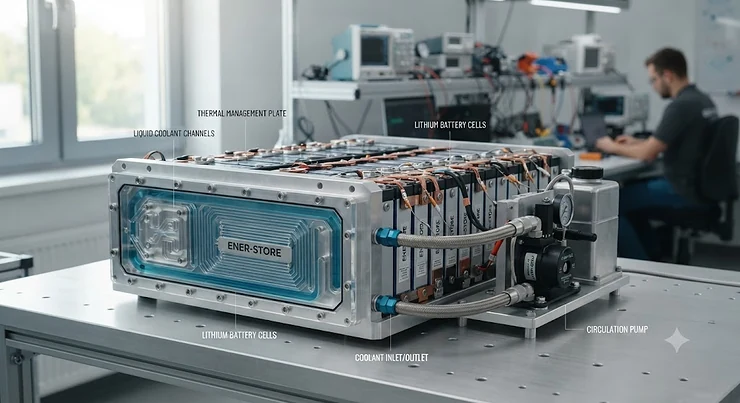
There’s a specific kind of disappointment that only shows up around hour six of a camping trip: you open the cooler lid expecting cold cuts and find lukewarm cuts instead, because the ice gave up sometime around lunch. A lithium battery cooler exists to erase that entire scenario. In plain terms, it’s a compressor-driven fridge or fridge-freezer built with (or paired to) a rechargeable lithium battery pack instead of relying purely on a wall outlet, a vehicle’s 12V socket, or a bag of ice — using lithium iron phosphate cell chemistry that’s become the default choice for portable power because it’s stable, long-lasting, and doesn’t mind being bounced around in a truck bed.
What makes 2026 a genuinely interesting year to buy one is how far the category has split. You can still find a bare-bones fridge with a bolt-on battery pack for a few hundred dollars, but you can also now buy units with swappable battery ecosystems, built-in ice makers, and modular battery packs sized entirely to your trip length — features that simply didn’t exist in this price bracket three years ago. That range matters because a lithium battery cooler isn’t one product, it’s a spectrum, and picking the wrong end of it means either overpaying for capacity you’ll never use or discovering, two hours into a fishing trip, that your battery tapped out before the beer did.
We researched seven real lithium battery coolers and battery-paired fridges currently available to Canadian buyers, spanning an entry-level pick around C$350 with the battery attached to premium modular setups pushing past C$2,000, so you can match your choice to how you’ll actually use it rather than which one has the shiniest marketing page.
Quick Comparison Table
| # | Product | Battery Capacity | Capacity | Best For |
|---|---|---|---|---|
| 1 | Alpicool P18 | 173Wh (add-on) | 19 qt / 18L | Best budget entry point |
| 2 | ACOPOWER LiONCooler X30A | 173Wh removable | 32 qt / 30L | Best value with swappable battery |
| 3 | BLUETTI MultiCooler | LFP, swappable | 42 qt / ~40L | Best ecosystem flexibility |
| 4 | EcoFlow GLACIER Classic | 298Wh | 38L / ~60 cans | Best built-in ice maker |
| 5 | Anker SOLIX EverFrost 2 | 288Wh | 58L / 61 qt | Best dual-zone for families |
| 6 | Dometic CFX3 45 + PLB40 | 500Wh / 40Ah | 45L / 48 qt | Best modular battery setup |
| 7 | ICECO + PB1000 Power Station | 1057Wh | ~45L / 48 qt | Best off-grid battery runtime |
Scanning this table, the real split isn’t fridge capacity — it’s battery philosophy. The Alpicool P18 and ACOPOWER LiONCooler X30A both use a similar 173Wh pack, but one treats it as an optional add-on and the other builds the whole product around it being removable and solar-chargeable. Meanwhile the ICECO + PB1000 Power Station combination sits in a completely different league at 1057Wh, which is the whole point if your trips regularly outlast a weekend.
💬 Just one click — help others make better buying decisions too!😊
Top 7 Lithium Battery Coolers: Expert Analysis
1. Alpicool P18 — most affordable way into battery-powered cooling
The standout feature here is price: the Alpicool P18 is one of the cheapest genuine routes into lithium battery cooler ownership, since the 19-quart compressor fridge and its compatible 173Wh detachable battery pack are sold as separate, relatively inexpensive pieces rather than one bundled premium product. Running on 12/24V DC, it chills like any decent compressor fridge on its own, and clipping on the detachable lithium pack — the same battery Alpicool sells across several of its P18, TA, and TW-series fridges — turns it into a genuinely cordless unit for a few hours between charges. Based on the spec comparison, this is the pick for renters, apartment balcony campers, or first-time buyers who want to test whether battery-powered cooling actually fits their routine before committing four figures to a premium setup. Aggregated reviewer sentiment from budget car-fridge review roundups is consistently positive on cooling speed and value for money, though the same sources flag latch and lid durability as noticeably behind pricier rivals, and note the battery pack’s added cost changes the value equation once you factor it in.
Pros:
- ✅ Cheapest genuine entry point into lithium battery cooling
- ✅ Compact 19-quart size fits a car footwell or apartment balcony
- ✅ Compatible battery also works across several other Alpicool models
Cons:
- ❌ Battery pack is sold separately, not included with the fridge
- ❌ Build quality trails pricier compressor fridges in this guide
Expect around C$180-C$230 for the fridge and another C$150-C$190 for the 173Wh battery, landing in the C$350-C$420 range combined — a reasonable way to try the category without overcommitting.
2. ACOPOWER LiONCooler X30A — best value with a genuinely swappable battery
The standout feature is the removable 173Wh LiFePO4 battery that ACOPOWER rates for over 10 hours of runtime per charge, recharging in roughly 4-6 hours off AC, DC, or a direct solar connection — no separate charge controller required. At 32 quarts, the ACOPOWER LiONCooler X30A chills down to about -4°F, which is properly freezer-cold rather than just fridge-cool, and because the battery pulls out entirely, owners can carry a spare pack and swap it mid-trip instead of waiting out a recharge. On paper, this makes it the pick for anglers and campers who want to leave the vehicle behind for a full day without worrying about draining a single fixed battery, since the built-in wheels assume you’re rolling it somewhere rather than parking it beside an outlet. Aggregated reviewer sentiment from Home Depot listings and RV-focused outlets consistently confirms real-world runtime meets or beats the 10-hour claim in cool weather, while the most common complaint is compressor noise at a quiet campsite overnight, followed by buyers noting the price feels steep next to a plain ice chest.
Pros:
- ✅ Removable 173Wh battery you can swap or carry as a spare
- ✅ 4-6 hour recharge window fits an easy overnight top-up
- ✅ Solar charging input built in, not an aftermarket add-on
Cons:
- ❌ Compressor noise noted more often than on newer rivals
- ❌ Premium price for a mid-capacity single-zone unit
Pricing typically lands in the C$900-C$1,050 range with the battery included — solid value once you weigh the swappable-battery convenience.
3. BLUETTI MultiCooler — best for buyers already in a battery ecosystem
The standout feature is a hot-swappable lithium iron phosphate battery pack that isn’t locked to this one appliance — it’s part of BLUETTI’s wider SwapSolar lineup, meaning the same pack that powers the BLUETTI MultiCooler can be pulled and dropped into a compatible power station like the AC180T without missing a beat. Rated for up to three days of autonomous cooling at 42 quarts (about 40 litres) and a temperature range down to -20°C, the real-world number compresses closer to two days once you factor in hot weather and frequent lid-opening, which every honest review of this 2026 launch has been quick to point out. Based on the spec comparison, this is the pick for someone who already owns or is planning to buy other BLUETTI SwapSolar gear, since the interoperability is the entire value proposition; buying it purely as a standalone cooler undersells what you’re paying for. Aggregated reviewer sentiment from tech outlets covering its early-2026 release is genuinely impressed with the app control and cross-device battery swapping, with the consistent caveat being that it’s a first-generation product in a brand-new ecosystem, so long-term reliability data is still thin.
Pros:
- ✅ Battery hot-swaps with other SwapSolar devices, not locked in
- ✅ Rated for up to 3 days per charge in moderate conditions
- ✅ -20°C low end handles genuine hard-freeze duty
Cons:
- ❌ First-generation product with limited long-term track record
- ❌ Full value only materializes if you own other SwapSolar gear
Look for it around C$1,050-C$1,150 at the time of research, a fair ask if the ecosystem angle actually applies to you.
4. EcoFlow GLACIER Classic — the only pick here with a built-in ice maker
The standout feature is genuinely unique in this lineup: the EcoFlow GLACIER Classic produces roughly 18 ice cubes in about 12 minutes, on top of functioning as a proper 38-litre fridge-freezer running from -13°F to 50°F. Its 298Wh plug-in battery is rated for up to 40 hours of runtime in fridge mode, recharging in a remarkably quick 2.1-2.2 hours via solar or AC (about 4 hours over 12V DC), and it can cool a warm cabin from 86°F to 32°F in around 15 minutes flat. What most buyers overlook about this model is that running the ice maker actively draws down that 298Wh battery considerably faster than fridge-only duty, so the eye-catching 40-hour figure assumes you’re not making ice the whole time. Aggregated reviewer sentiment from gear-testing outlets is consistently impressed that the ice maker isn’t a gimmick — it genuinely works as advertised and the fast recharge times hold up in practice — while the recurring criticism is that the ice function adds real cost and eats into fridge-only battery life more than casual buyers expect.
Pros:
- ✅ Only unit here with a genuine built-in ice maker
- ✅ Up to 40-hour runtime on a single 298Wh charge
- ✅ Fast 2.1-2.2 hour recharge via solar or AC power
Cons:
- ❌ Running the ice maker cuts fridge-only runtime noticeably
- ❌ Battery sold as a separate accessory on some bundles
Budget C$1,300-C$1,500 for the fridge-and-battery bundle — a premium price for a feature that’s genuinely hard to find anywhere else in this category.
5. Anker SOLIX EverFrost 2 — best dual-zone pick for family trips
The standout feature is true independent dual-zone cooling paired with a 288Wh plug-in battery from a brand with a long track record in portable power. At 58 litres (61 quarts), the Anker SOLIX EverFrost 2 can run one compartment as a hard freezer while the other stays merely cold, solving the classic problem of a single-zone fridge freezing your lettuce solid while it keeps meat merely chilled. Here’s what to weigh before buying: dual-zone control and the extra capacity make this one of the larger, heavier units in this guide, so it suits a vehicle-based camp or dock setup far better than a backpack or a compact hatchback trunk. Aggregated reviewer sentiment from 2026 coverage by outdoor gear outlets is broadly positive on cooling performance, build quality, and app-based monitoring, with the most consistent criticism being its higher price relative to single-zone alternatives and the fact that a full unit is genuinely a two-person lift.
Pros:
- ✅ True independent dual-zone control at real family-sized capacity
- ✅ 288Wh plug-in battery from an established power-station brand
- ✅ Backed by Anker’s broader charging ecosystem and app support
Cons:
- ❌ One of the largest, heaviest units in this entire guide
- ❌ Dual-zone premium costs meaningfully more than single-zone picks
Expect pricing in the C$1,550-C$1,750 range — a genuine investment aimed at families and multi-day campers rather than casual weekend use.
6. Dometic CFX3 45 + PLB40 Portable Lithium Battery — best modular battery setup
The standout feature is the PLB40 battery pack itself: a 40Ah (500Wh) lithium iron phosphate unit that Dometic states delivers “nearly 100%” usable capacity, compared to roughly 50% for lead-acid batteries of the same rating and about 80% for lithium NMC packs. Paired with a Dometic CFX3 45 fridge over a standard cable (Dometic recommends 12 AWG wiring for any DIY install), that distinction matters enormously in practice — a 40Ah lead-acid battery genuinely only gives you about 20Ah before risking damage, while the PLB40’s nearly-full 40Ah is actually usable, functionally acting like a far larger lead-acid bank without the extra weight. Based on the spec comparison, this setup is for buyers who trust Dometic’s proven variable-speed compressor but want to size their power bank independently, making it the most “build your own system” pick in this guide rather than a sealed, one-size-fits-all box. Aggregated reviewer sentiment on the CFX3 platform consistently praises build quality and compressor efficiency, while owners running the PLB40 on outfitter forums note it’s a meaningfully bigger upfront investment than buying an all-in-one captive-battery cooler outright.
Pros:
- ✅ LiFePO4 chemistry delivers close to its full rated Ah, unlike lead-acid
- ✅ Modular design lets you size the battery independently of the fridge
- ✅ Built on Dometic’s proven, efficient CFX3 compressor platform
Cons:
- ❌ Buying fridge and battery separately costs more than an all-in-one unit
- ❌ DIY wiring know-how (or a professional install) is genuinely required
Combined pricing typically runs C$1,950-C$2,250 (roughly C$1,300-C$1,500 for the fridge, C$650-C$750 for the PLB40) — the ceiling of this lineup, aimed at buyers who want full control over their power setup.
7. ICECO Fridge + PB1000 Power Station — best for extended off-grid battery runtime
The standout feature is sheer battery size: the PB1000 power station is rated at 1057Wh of LiFePO4 capacity, roughly three to six times larger than the plug-in batteries bundled with most coolers in this guide, and ICECO states it recharges in about 1.6 hours despite that size. Paired with one of ICECO’s compressor fridges, it delivers multiple output types — AC, 12V DC, and USB — so the same power station keeping your food cold can simultaneously charge a phone, a headlamp, or a laptop at camp. On paper, this pairing exists for overlanders and remote off-grid trips where recharging opportunities are unpredictable, letting the fridge realistically run for several days between charges rather than tapping out inside 48 hours like smaller built-in packs. Aggregated reviewer sentiment on ICECO’s fridge line from van-life buyer’s guides is consistently positive about compressor reliability, and pairing it with a dedicated high-capacity power station directly addresses the most common complaint about smaller lithium battery coolers — short runtime — at the honest cost of noticeably more bulk, weight, and upfront spend.
Pros:
- ✅ 1057Wh capacity dwarfs the plug-in batteries bundled with rivals
- ✅ Roughly 1.6-hour recharge time is fast for its capacity class
- ✅ Multiple output ports power more than just the fridge
Cons:
- ❌ Adds significant extra bulk and weight versus an all-in-one cooler
- ❌ Meaningfully pricier than any single all-in-one unit in this guide
Combined pricing runs roughly C$1,450-C$1,700 (about C$500-C$650 for the fridge, C$900-C$1,050 for the PB1000) — a serious investment that pays off specifically on multi-day, off-grid trips.
Full Spec Comparison: All 7 Lithium Battery Coolers at a Glance
| Product | Battery | Capacity | Charge Time | Best For |
|---|---|---|---|---|
| Alpicool P18 | 173Wh (add-on) | 19 qt / 18L | Not published | Best budget entry point |
| ACOPOWER LiONCooler X30A | 173Wh removable | 32 qt / 30L | 4-6 hours | Best swappable battery value |
| BLUETTI MultiCooler | LFP, swappable | 42 qt / ~40L | Not published | Best ecosystem flexibility |
| EcoFlow GLACIER Classic | 298Wh | 38L / ~60 cans | 2.1-2.2 hours | Best built-in ice maker |
| Anker SOLIX EverFrost 2 | 288Wh | 58L / 61 qt | Not published | Best dual-zone for families |
| Dometic CFX3 45 + PLB40 | 500Wh / 40Ah | 45L / 48 qt | Not published | Best modular battery setup |
| ICECO + PB1000 Power Station | 1057Wh | ~45L / 48 qt | ~1.6 hours | Best off-grid battery runtime |
Charge time turns out to be almost as revealing as capacity here. The EcoFlow GLACIER Classic and ICECO + PB1000 Power Station both recharge remarkably fast for their size, which matters enormously if your power source is a couple of hours of generator time rather than an overnight plug-in. The ACOPOWER LiONCooler X30A sits in a comfortable middle ground, while several manufacturers simply don’t publish exact charge-time figures, which is worth factoring into your decision if fast turnaround matters to your trip style.
Setting Up and Charging Your Lithium Battery Cooler
Getting real performance out of a new lithium battery cooler starts before the first trip. Fully charge the battery pack and pre-cool the fridge on AC power for a few hours before you ever disconnect it — asking a compressor to pull an already-warm cabinet down to temperature from a battery alone burns through far more capacity than simply maintaining a cabinet that started cold. If your unit, like the ACOPOWER LiONCooler X30A or Dometic CFX3 45 + PLB40, supports solar charging, test the solar connection at home first; a loose connector or an undersized panel is a much easier problem to diagnose in your driveway than at a campsite three hours from cell service.
A common mistake in the first month of ownership is treating the battery like a phone — charging it to 100% and running it flat every single cycle. Lithium iron phosphate cells, the chemistry behind virtually every pack in this guide, actually prefer resting somewhere in the 20-80% range for routine storage, reserving full charges for trips where you genuinely need maximum runtime. Clean the door gasket and any battery contact points every few months, since a dirty or slightly corroded contact is a common, easily preventable cause of a battery that seems to charge slower or disconnect intermittently. Finally, store the battery indoors at room temperature over winter rather than leaving it in an unheated garage or shed; extreme cold doesn’t damage lithium iron phosphate chemistry the way it does older lithium-ion formats, but charging any lithium battery below freezing can cause lasting capacity loss, so bring it inside before topping it up.
Real-World Scenarios: Which Lithium Battery Cooler Fits Your Life
Picture three genuinely different buyers. A university student heading to weekend music festivals on a tight budget, who mostly needs cold drinks for a day or two without lugging a generator, is the clearest match for the Alpicool P18 — cheap enough to try without regret, and light enough to carry from a parking lot. A family doing a week-long car-camping trip who wants real freezer space for meat alongside fridge space for produce and drinks fits naturally with the Anker SOLIX EverFrost 2, where the dual-zone control genuinely earns its higher price by replacing what would otherwise be two separate boxes. And someone planning a multi-day off-grid overlanding route through areas with unreliable cell service and no guaranteed shore power is the realistic buyer for the ICECO + PB1000 Power Station combination, since the extended runtime is the difference between food staying cold for a week versus needing a risky mid-trip recharge.
There’s a fourth profile worth naming too: the gadget-curious buyer already sitting on a BLUETTI power station or two, for whom the BLUETTI MultiCooler‘s swappable battery genuinely slots into gear they already own rather than adding an isolated, single-purpose battery to the pile. Matching your actual trip pattern to one of these profiles, rather than buying whichever unit has the most features listed, is the single best predictor of whether you’ll feel like you got good value a year from now.
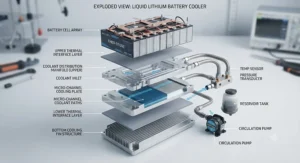
How to Choose a Lithium Battery Cooler
- Start with your realistic trip length, not your dream trip length. A weekend camper genuinely doesn’t need the 1057Wh capacity that makes the ICECO + PB1000 Power Station combination worthwhile for a week-long overland route.
- Decide if single-zone or dual-zone actually matches your food storage habits. Dual-zone units like the Anker SOLIX EverFrost 2 only earn their premium if you regularly need a real freezer and a real fridge running at once.
- Check whether the battery is removable, plug-in, or a fixed internal cell. A removable pack like the one on the ACOPOWER LiONCooler X30A lets you carry a spare; a fixed internal battery means downtime is baked in once it’s depleted.
- Compare charge time against your actual power sources. If you’ll mostly be recharging off a small generator or a short drive, the roughly 2-hour charge times on the EcoFlow GLACIER Classic matter more than a slightly bigger battery that takes twice as long.
- Factor in whether you want features beyond cooling. The built-in ice maker on the EcoFlow GLACIER Classic is genuinely rare, and it’s worth asking honestly whether you’ll use it enough to justify the added cost and battery drain.
- Weigh ecosystem lock-in as a real decision factor. The BLUETTI MultiCooler‘s swappable battery is a strong selling point only if you’re open to buying into BLUETTI’s wider SwapSolar lineup down the line.
- Don’t ignore total weight and bulk. A high-capacity setup like the Dometic CFX3 45 + PLB40 or the ICECO + PB1000 Power Station pairing delivers serious runtime, but both are noticeably heavier and bulkier than a captive-battery unit of similar fridge capacity.
Lithium Battery Cooler vs Traditional Ice Cooler
The honest case for a lithium battery cooler over a traditional ice chest comes down to one simple fact: ice is a consumable that eventually melts, while a charged lithium battery keeps a compressor fridge running at a stable, thermostat-controlled temperature for hours or days depending on capacity. A traditional cooler wins decisively on upfront cost and needs zero charging or electrical planning, which genuinely matters for a single afternoon at the beach. But every ice run costs money and time, and ice-cooled food sits in a slowly warming environment as the ice melts, unlike a lithium battery fridge holding a genuinely steady internal temperature until the battery itself runs low.
| Factor | Lithium Battery Cooler | Traditional Ice Cooler |
|---|---|---|
| Ongoing cost | Electricity to recharge | Recurring ice purchases |
| Temperature consistency | Stable, thermostat-controlled | Drifts as ice melts |
| Upfront cost | C$350-C$2,250 | C$50-C$300 |
| Runtime limit | Hours to days, battery-dependent | Days, ice-dependent |
| Best for | Repeated use, off-grid trips | Occasional short trips |
Looking at this comparison, the honest takeaway is that these two tools solve genuinely different problems rather than competing head-to-head. A lithium battery cooler is an infrastructure purchase that pays off the moment your trips involve more than an afternoon away from power, while a basic ice chest remains the smarter, simpler choice for the occasional day trip where charging a battery beforehand would be more hassle than it’s worth. Plenty of experienced campers end up owning both, using the battery-powered unit as daily infrastructure and the ice chest as backup overflow capacity.
Types of Lithium Battery Coolers: Built-In vs Add-On, Fridge vs Cooler
A built-in battery cooler, like the EcoFlow GLACIER Classic or Anker SOLIX EverFrost 2, ships as one cohesive product where the fridge and its plug-in battery are designed together from the start, generally with tighter integration between the app, the charge controller, and the compressor’s power draw. An add-on setup, like the Alpicool P18 paired with its detachable battery or the Dometic CFX3 45 paired with a separate PLB40, treats the fridge and the battery as two purchases that happen to work together, which trades some of that integration for real flexibility — you can size the battery to the trip, buy a spare, or upgrade the battery alone later without replacing the whole fridge. Neither approach is objectively better; a built-in system is simpler for a buyer who wants one box and one manual, while an add-on system rewards buyers who expect their power needs to change over time.
Lithium Battery Fridge or Lithium Battery Cooler? Same Machine, Different Name
If you’ve noticed some of these products marketed as a lithium battery fridge and others as a cooler, that’s mostly branding rather than a meaningful technical distinction — nearly every product in this guide uses the same core compressor refrigeration technology, just packaged with different capacities, zone counts, and battery configurations. “Fridge” tends to get used for units emphasizing everyday food storage and freezer performance, like the Dometic CFX3 45, while “cooler” often signals a more casual, grab-and-go framing aimed at weekend trips, like the Alpicool P18. When you’re comparing products on Amazon.ca, it’s worth reading the actual specification sheet rather than trusting the product name alone, since a “cooler” with a genuine compressor and a solid lithium battery can outperform a “fridge” running an older, less efficient design.
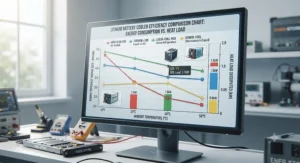
Battery Basics: Capacity, Charge Time, and Off-Grid Runtime Explained
Battery capacity gets listed two different ways across this category, and mixing them up is one of the easiest ways to misjudge a purchase. Amp-hours (Ah) measure how much current a battery can supply over time at its rated voltage, while watt-hours (Wh) measure total stored energy — multiply Ah by voltage to get Wh, which is why the Dometic PLB40‘s 40Ah rating at roughly 12.8V works out to about 500Wh. The reason this matters in practice is usable capacity, not just the number printed on the label: lithium iron phosphate chemistry, which Canada’s federal battery-innovation programs have specifically prioritized for its stability and longevity, delivers close to its full rated capacity, while an equivalently rated lead-acid battery only safely offers about half before risking damage. That’s the real-world reason a 500Wh LiFePO4 pack like the PLB40 can outlast a lead-acid battery with a similar sticker rating by nearly double.
Charge Time Compared: AC, DC, and Solar
Charge time varies enormously across this category, and the gap matters more than most buyers expect until they’re standing at a campsite watching a percentage bar crawl upward. The EcoFlow GLACIER Classic recharges in a brisk 2.1-2.2 hours via solar or AC power, and the ICECO + PB1000 Power Station claims roughly 1.6 hours despite carrying more than three times the capacity — both genuinely fast for their size. The ACOPOWER LiONCooler X30A sits in a more typical 4-6 hour window, which comfortably fits an overnight plug-in but won’t work for a quick midday top-up. Several manufacturers, including Alpicool, BLUETTI, and Anker on some models, don’t publish precise charge-time figures for every configuration, so if fast turnaround genuinely matters to how you travel, it’s worth confirming the exact number for your specific model and charging method before buying rather than assuming similar-looking products all charge at the same rate.
Off-Grid Battery Runtime: What Really Determines How Long It Lasts
Off-grid battery runtime is where manufacturer claims and real-world results diverge the most, and it’s worth understanding why before you plan a trip around a single advertised number. Ambient temperature is the biggest factor — a compressor works harder and drains a battery faster in 30°C heat than in a shaded 15°C campsite, which is exactly why the BLUETTI MultiCooler‘s advertised three-day runtime compresses closer to two days in hot summer conditions according to its own reviewers. How often the lid opens matters almost as much, since every open door lets warm air in and forces the compressor to work harder to recover, and running extra features — like the EcoFlow GLACIER Classic‘s ice maker — pulls meaningfully more power than fridge-only operation. The honest way to plan is to treat published runtime figures as a best-case number achieved under mild conditions with minimal lid-opening, then build in a genuine safety margin, especially for a multi-day trip where a battery running out a day early isn’t a minor inconvenience.
Long-Term Cost & Maintenance: Is a Lithium Battery Cooler Worth It
The upfront price of a lithium battery cooler is only part of the real cost story. Compared to a traditional ice cooler, you’re trading a recurring expense — bags of ice, which add up fast over a full camping season — for a one-time hardware cost and, eventually, a battery that will need replacing after enough charge cycles, typically several years down the line for the LiFePO4 chemistry used across every product in this guide. That trade generally favours the battery-powered option for anyone camping, fishing, or overlanding regularly, since the cost-per-use drops sharply the more often the unit gets used, while an occasional day-tripper may never recoup the higher initial investment. When a battery does eventually reach the end of its useful life, it shouldn’t go in household trash; Call2Recycle Canada operates a nationwide collection network specifically for batteries like these, and using it keeps the lithium and other materials out of landfills while meeting your responsibility as the owner of a rechargeable battery product.
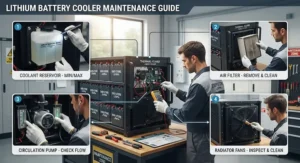
Maintenance costs themselves are modest but real. Door gaskets, if damaged, are typically replaceable parts rather than reasons to buy a whole new unit, and most manufacturers in this guide back their compressors with warranties ranging from one to several years, which is worth weighing as part of the total cost of ownership rather than focusing purely on the sticker price. Buyers who skip this step and choose purely on upfront cost sometimes end up spending more over three or four years than if they’d bought a slightly pricier unit with a longer warranty and a more efficient compressor from the start.
Common Mistakes When Buying a Lithium Battery Cooler
The single most common mistake is buying based on fridge capacity alone and only checking battery capacity as an afterthought, which is how buyers end up with a roomy fridge that goes warm halfway through a trip. A second frequent mistake is assuming every “lithium battery cooler” includes the battery in the box; several products in this guide, including the Alpicool P18 and the Dometic CFX3 45, sell the fridge and the battery pack separately, and skipping that detail leads to sticker shock at checkout. Buyers also commonly overlook charge time until it’s too late, discovering on a short weekend trip that a battery advertised as long-lasting also takes most of a day to refill from empty.
Finally, a lot of first-time buyers underestimate how much hotter ambient temperature and frequent lid-opening cut into real-world runtime compared to a manufacturer’s best-case rating, leading to disappointment when a three-day claim turns into two days in practice. That’s exactly why understanding off-grid battery runtime as a range influenced by conditions, rather than a fixed guarantee, matters more than chasing the single highest number on a spec sheet.
Safety, Transport & Recycling: What Canadian Buyers Should Know
Lithium batteries are safe and well-regulated products, but they do come with handling rules worth knowing, especially if you plan to fly with one, ship one, or carry a spare pack across the border. Transport Canada’s guidance on lithium batteries covers exactly this kind of situation, including watt-hour limits for batteries carried on aircraft and safe handling practices that apply just as much to a spare pack for your ACOPOWER LiONCooler X30A as they do to a laptop battery — it’s worth a quick read before any trip that involves air travel with a spare battery in your luggage. At home, always charge lithium battery coolers on a stable, heat-tolerant surface away from flammable materials, and stop using any pack that shows swelling, unusual heat, or a damaged casing rather than trying to squeeze out one more trip from it.
Look for recognized safety certification marks on the battery pack and any charging cables you use, particularly with lesser-known brands, since a genuinely certified lithium iron phosphate cell behaves far more predictably under stress than an uncertified equivalent. And when a battery does eventually wear out, resist the temptation to toss it in regular trash or curbside recycling — dedicated battery recycling programs like Call2Recycle Canada exist specifically because lithium batteries need separate handling at end of life, both for safety and for genuinely recovering the materials inside.
Frequently Asked Questions
❓ How long does a lithium battery cooler actually run on one charge?
❓ Can I charge a lithium battery cooler with solar panels?
❓ What's the difference between a lithium battery fridge and a regular 12V cooler?
❓ Is a bigger battery capacity always better for off-grid trips?
❓ How do I know if a cooler's battery is included in the price?
Conclusion
Choosing the right lithium battery cooler really comes down to three honest questions: how long do your trips actually run without access to power, do you need single-zone or dual-zone cooling, and how much are you willing to pay for extras like a swappable battery ecosystem or a built-in ice maker. Budget-conscious first-time buyers and weekend campers should look closely at the Alpicool P18 or ACOPOWER LiONCooler X30A; families needing real dual-zone capacity should weigh the Anker SOLIX EverFrost 2; and anyone planning genuinely remote, multi-day off-grid trips should prioritize the extended runtime of the ICECO + PB1000 Power Station or the modular flexibility of the Dometic CFX3 45 + PLB40.
None of these picks exist in isolation from how you’ll actually use them. Battery capacity, charge time, and realistic off-grid runtime will narrow this list far faster than chasing the biggest fridge or the flashiest app.
🔍 Ready to compare current prices and availability? Check every pick above on Amazon.ca before your next trip.
Recommended for You
- Portable Freezer For Off-Grid RV: 7 Top Picks for 2026
- 12V Cooler for Off-Grid Living: 7 Best Picks for 2026
- 7 Best Fish Bag Coolers in Canada for 2026 (Compared; Ranked)
Disclaimer: This article contains affiliate links. As an Amazon Associate, I earn from qualifying purchases. If you purchase products through these links, we may earn a small commission at no additional cost to you.
✨ Found this helpful? Share it with your friends! 💬🤗
