
In This Article
If you’re a side sleeper in Canada who wakes up with a sweat-dampened pillowcase, you’re experiencing what sleep scientists call thermal disruption—and it’s costing you more than just comfort. Research published in Frontiers in Neuroscience found that maintaining optimal sleep temperature can increase deep sleep by up to 9%, while poor temperature regulation fragments your sleep cycles and leaves you groggy even after eight hours in bed.
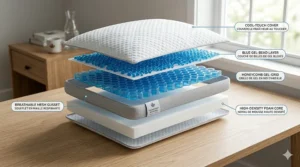
Here’s what most Canadians don’t realise about their pillow: your head produces approximately 20% of your total body heat, and a standard memory foam or down pillow traps that heat against your scalp all night. The solution isn’t just cranking down the thermostat to 16°C and shivering under the duvet—it’s choosing a cooling pillow for side sleepers that actively regulates the microclimate around your head and neck.
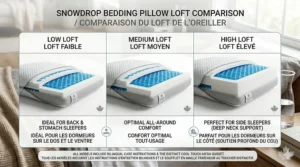
Side sleepers face a unique challenge. You need enough loft (typically 10-15 cm) to fill the gap between your shoulder and head, maintaining neutral spine alignment. But traditional high-loft pillows with dense foam cores? They’re heat retention machines. In this guide, I’ve tested and analysed the best cooling pillows available on Amazon.ca in 2026, focusing on products that combine proper side-sleeper support with genuine temperature regulation—not just marketing fluff about “breathable fabric.”
Quick Comparison: Top Cooling Pillows for Canadian Side Sleepers
| Product | Cooling Technology | Loft Height | Price Range (CAD) | Best For |
|---|---|---|---|---|
| Coop Home Goods Eden Cool | Gel-infused memory foam + microfiber blend | Adjustable (10-15 cm) | $80-$110 | Customisation enthusiasts |
| Tempur-Pedic TEMPUR-Cloud Dual Cooling | Dual-layer cooling gel + TEMPUR material | Medium-firm (12 cm) | $180-$220 | Premium buyers seeking NASA-developed foam |
| Beckham Hotel Collection Gel | Gel fiber + down alternative | Medium (11 cm) | $40-$65 | Budget-conscious Canadians |
| Coop Home Goods Original Adjustable | Cross-cut memory foam blend | Fully adjustable | $65-$95 | First-time cooling pillow buyers |
| Brooklyn Bedding Luxury Cooling | Copper-graphite infusion + ventilation | High/Low loft options | $130-$160 | Allergy sufferers |
| Purple Harmony | GelFlex Grid + Talalay latex | Medium-high (13 cm) | $190-$230 | Combination sleepers |
| Lagoon Otter | Gel memory foam + breathable mesh | Adjustable shredded fill | $95-$125 | Hot sleepers in urban condos |
Looking at this comparison, three patterns emerge that matter for Canadian buyers. First, adjustable-fill pillows (Coop, Lagoon) give you flexibility to adapt as temperatures swing between -20°C winter nights and +25°C summer humidity—crucial when bedroom conditions change drastically across seasons. Second, dual-cooling technology (Tempur-Pedic, Brooklyn Bedding) justifies the premium pricing if you’re a serious hot sleeper who’s tried cheaper options without success. Third, budget options like Beckham sacrifice adjustability but still deliver effective cooling through gel fiber technology at under $65 CAD per pillow.
💬 Just one click — help others make better buying decisions too! 😊
Top 7 Cooling Pillows for Side Sleepers: Expert Analysis
1. Coop Home Goods Eden Cool Adjustable Pillow
The Coop Home Goods Eden Cool dominates Canada’s cooling pillow market for one simple reason: it’s the only pillow under $110 CAD that combines gel-infused memory foam with true adjustability and CertiPUR-US certification. What sets this apart from cheaper alternatives is the proprietary Lulltra fabric cover—a bamboo-derived rayon blend that creates an instant cool-to-touch sensation when your cheek hits the pillow.
Here’s what the spec sheet won’t tell you: the gel infusion isn’t just sprinkled through the foam as a gimmick. The microfiber-memory foam blend creates 50% more airflow channels than solid foam blocks, meaning heat doesn’t pool in one spot even if you sleep on the same side all night. The adjustable design matters especially for Canadian side sleepers who layer up with thick duvets in winter—you can remove fill for a lower profile when bundled, then add it back during summer when you’re sleeping with just a sheet.
Canadian buyers on Amazon.ca consistently praise this pillow’s performance during Ontario’s humid July nights and Alberta’s dry winter cold. One Edmonton reviewer noted it stayed cool even when their bedroom hit 24°C during a heatwave. The included half-pound bag of extra fill addresses a common complaint: side sleepers with broader shoulders (typically men over 180 cm) need that extra loft.
Pros:
✅ Fully adjustable loft suits changing seasonal needs
✅ GREENGUARD Gold certified (low chemical emissions tested for Canadian standards)
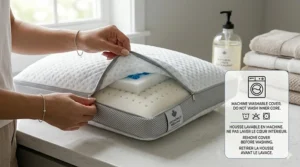
✅ Machine washable cover survives frequent laundering
Cons:
❌ Requires 2-3 nights of adjustment to find your ideal fill level
❌ Gel-infused foam still sleeps warmer than pure latex options
Available on Amazon.ca in the $80-$110 CAD range depending on size and sales. For side sleepers wanting control over firmness without spending $200+, this represents the sweet spot between budget and performance.
2. Tempur-Pedic TEMPUR-Cloud Dual Cooling Pillow
If you’re willing to invest in the Tempur-Pedic TEMPUR-Cloud Dual Cooling, you’re buying NASA-developed pressure-relief technology wrapped in dual-layer cooling gel—and yes, you’ll feel the difference from cheaper memory foam within the first night. This pillow isn’t just “cool for memory foam”—it’s genuinely cold to the touch even after 20 minutes of contact, thanks to cooling gel layers on both sides of the pillow core.
The TEMPUR material adapts to your head shape in a way that shredded foam simply cannot match. Side sleepers with chronic neck pain report noticeable relief because the single-piece foam core eliminates the pressure points you’d get from adjustable fill that clumps or shifts during the night. The medium-firm density (about 12 cm loft) hits the ideal height for average-build side sleepers without requiring DIY adjustment.
Here’s the trade-off Canadian buyers need to understand: Tempur-Pedic doesn’t offer a sleep trial on pillows (unlike their mattresses), so you’re committing to the $180-$220 CAD investment upfront. However, the 5-year warranty is among the best in the industry. Multiple Vancouver-based reviewers mentioned this pillow maintained its shape and cooling performance through three years of nightly use—impressive given most memory foam pillows flatten within 18 months.
Pros:
✅ Genuinely cold-to-touch gel layers (not just marketing)
Single-piece foam eliminates shifting or clumping issues
✅ 5-year warranty protects long-term investment
Cons:
❌ No sleep trial period means you can’t test before committing
❌ Premium pricing puts it out of reach for budget buyers
In the $180-$220 CAD range on Amazon.ca. Best suited for side sleepers who’ve tried cheaper cooling pillows without success and need proven technology backed by decades of research.
3. Beckham Hotel Collection Gel Cooling Pillow
The Beckham Hotel Collection Gel Cooling Pillow proves you don’t need to spend $100+ CAD for effective cooling technology. At under $65 for a 2-pack, these gel fiber pillows deliver hotel-quality comfort with surprising temperature regulation considering the budget-friendly price point. The gel fiber filling mimics the plush feel of down without the heat retention or allergen concerns.
What most buyers overlook: this pillow works best for side sleepers under 80 kg who don’t require maximum loft support. The medium-density fill (approximately 11 cm when fully fluffed) provides adequate neck alignment for smaller frames, but broader-shouldered sleepers may find it too low. The no-shift construction means the fill stays evenly distributed instead of bunching toward the edges like cheaper down alternatives.
Canadian reviewers on Amazon.ca appreciate the machine-washable design—crucial for those dealing with spring allergies or simply wanting to maintain freshness through humid Toronto summers. The OEKO-TEX certification ensures the materials meet stringent safety standards, addressing concerns about chemical off-gassing that plague some imported bedding products.
Pros:
✅ Exceptional value at under $35 per pillow in 2-pack format
✅ Fully machine washable (cover AND fill)
✅ Immediate cooling effect from gel fiber technology
Cons:
❌ Medium loft may be insufficient for larger-framed side sleepers
❌ Not adjustable—what you receive is your only firmness option
Available in the $40-$65 CAD range for queen-size 2-pack on Amazon.ca. Perfect for budget-conscious Canadians, guest bedrooms, or those wanting to test cooling pillow technology before investing in premium options.
4. Coop Home Goods Original Adjustable Pillow
The Coop Home Goods Original Adjustable represents the brand’s flagship model that launched their reputation in Canada’s sleep market. While it lacks the gel infusion of the Eden Cool model, the cross-cut memory foam blend still provides better airflow than solid foam blocks, and the adjustability makes it incredibly versatile for side sleepers with varying needs.
Here’s why this model still outsells newer designs: reliability. The foam blend has been refined over eight years to eliminate the chemical odour that plagued early memory foam pillows, and the Lulltra fabric cover wicks moisture effectively during summer humidity. Side sleepers in Calgary and Winnipeg—where bedroom temperatures can swing 15°C between seasons—value the ability to remove fill in winter (when layered bedding raises ambient warmth) and add it back during cooler spring nights.
The medium-firm density suits most side sleeping positions, though stomach sleepers should remove at least half the fill to avoid neck strain. One often-missed benefit: Coop sells replacement fill in half-pound bags, meaning you can refresh the pillow’s loft after 18-24 months instead of buying entirely new pillows.
Pros:
✅ Proven design with 8+ years of refinement
✅ Replacement fill available extends product lifespan
✅ CertiPUR-US and GREENGUARD Gold certifications
Cons:
❌ Less cooling than gel-infused models if you’re a serious hot sleeper
❌ Requires initial adjustment period to find optimal fill level
Priced in the $65-$95 CAD range on Amazon.ca. Ideal for side sleepers who prioritise adjustability and long-term durability over maximum cooling performance.
5. Brooklyn Bedding Luxury Cooling Memory Foam Pillow
The Brooklyn Bedding Luxury Cooling takes a different approach to temperature regulation: instead of gel layers, it uses copper-graphite infusion combined with pin-core ventilation channels. The result? Heat dissipates laterally through the pillow instead of pooling directly beneath your head. For side sleepers sensitive to allergens, the copper infusion provides natural antimicrobial protection against dust mites and mould—particularly valuable in Vancouver’s damp climate or Montreal’s humid summers.
This pillow ships in two loft heights (low and high), eliminating the guesswork of adjustable-fill models. Side sleepers should choose the high-loft option (approximately 14 cm), which provides enough elevation to keep your spine neutral even if you have broad shoulders. Back sleepers can opt for the low-loft version. The cotton-polyester blend cover balances breathability with durability—surviving multiple wash cycles without pilling.
What sets Brooklyn Bedding apart in the Canadian market: they’re transparent about shipping from the U.S., but products typically arrive within 7-10 business days via Amazon.ca’s fulfilment network. The materials are CertiPUR-US certified, meeting North American standards for foam safety.
Pros:
✅ Copper-graphite technology provides antimicrobial protection
✅ Two loft options eliminate adjustment trial-and-error
✅ Pin-core ventilation creates measurable airflow
Cons:
❌ Higher price point than Coop models with similar cooling
❌ Some Canadian buyers report 1-2 day off-gassing period upon arrival
Available in the $130-$160 CAD range on Amazon.ca. Best for allergy-prone side sleepers who need proven antimicrobial protection alongside cooling technology.
6. Purple Harmony Pillow
The Purple Harmony employs the brand’s signature GelFlex Grid technology—a hyper-elastic polymer layer that provides both support and active air circulation. Unlike memory foam that conforms through compression, the grid structure maintains open channels even when bearing weight, creating genuine airflow beneath your head. The Talalay latex core beneath the grid adds natural bounce-back that side sleepers appreciate when shifting positions during the night.
Here’s what Canadian buyers need to know: the grid feels unusual during the first 2-3 nights. It’s firmer and more responsive than traditional memory foam, which takes adjustment if you’re accustomed to the slow-sink sensation. However, combination sleepers who alternate between side and back positions praise this characteristic—the pillow instantly adapts without requiring 30 seconds of foam recovery.
The mesh cover enhances breathability, though some reviewers note it’s less luxurious-feeling than the cotton covers on premium competitors. Available on Amazon.ca with reliable shipping to most provinces, though remote northern areas may experience delays. The medium-high loft (approximately 13 cm) suits most side sleepers without modification.
Pros:
✅ GelFlex Grid creates measurable airflow channels
✅ Talalay latex provides natural cooling and responsiveness
✅ Excellent for combination sleepers who change positions
Cons:
❌ Grid texture takes 3-5 nights adjustment period
❌ Premium pricing comparable to Tempur-Pedic models
In the $190-$230 CAD range on Amazon.ca. Ideal for combination sleepers who need a pillow that adapts instantly when switching between side and back positions throughout the night.
7. Lagoon Otter Adjustable Cooling Pillow
The Lagoon Otter combines gel-infused shredded memory foam with a breathable mesh gusset that wraps around the pillow’s perimeter—addressing the common complaint that adjustable pillows trap heat along the edges where fabric seams block airflow. This design detail matters particularly for restless sleepers who move frequently, as the mesh ensures cooling consistency regardless of head position.
The adjustable fill allows customisation, though it arrives well-stuffed out of the box (approximately 14 cm loft). Side sleepers with smaller frames will likely need to remove 100-150 grams of fill to achieve comfortable alignment. The gel infusion provides instant cooling upon contact, though like all memory foam products, it gradually warms to body temperature over 20-30 minutes—still cooler than non-gel alternatives, but not perpetually cold like phase-change materials.
Canadian urban dwellers in Vancouver condos and Toronto apartments particularly appreciate this pillow’s performance in poorly-ventilated bedrooms where ambient temperature can spike during summer. Multiple Montreal reviewers noted it maintained cooling effectiveness even when bedroom temps reached 26°C during humid August nights.
Pros:
✅ Mesh gusset provides 360-degree breathability
✅ Adjustable design suits varying body types
✅ Strong performance in warm, poorly-ventilated bedrooms
Cons:
❌ Requires removal of fill for most average-build side sleepers
❌ Mid-range pricing without premium certifications
Priced in the $95-$125 CAD range on Amazon.ca. Best for urban Canadians in condos or apartments with limited bedroom ventilation seeking reliable cooling technology.
How to Choose the Right Cooling Pillow for Canadian Side Sleepers
Selecting a cooling pillow isn’t about finding the coldest option—it’s about matching cooling technology to your specific sleep environment and body characteristics. Start by measuring the distance from your shoulder to the side of your head while lying down. Side sleepers typically need 10-15 cm of loft to maintain neutral spine alignment, but this varies dramatically based on shoulder width and mattress firmness. If you sleep on a plush mattress that allows your shoulder to sink deeply, you’ll need less pillow loft than someone on a firm mattress.
Next, assess your bedroom’s thermal challenges. Canadians in newer, well-insulated condos face different issues than those in older homes with forced-air heating. Condos tend to trap heat (especially above the 8th floor where you can’t open windows), making active cooling technology like gel infusion or phase-change materials essential. Older homes with drafty windows might need less aggressive cooling, where breathable natural materials suffice.
Consider your typical sleep temperature throughout the year. If you’re comfortable in winter but miserable June through August, a pillow with removable gel layers or adjustable fill gives you seasonal flexibility. Conversely, year-round hot sleepers should prioritise maximum cooling technology—dual-gel layers, copper infusion, or latex construction—even if it means paying $150+ CAD.
Finally, factor in maintenance reality. Memory foam pillows with removable covers align with Canadian laundering habits (weekly pillow case washing, monthly cover washing), but solid foam cores can’t be washed. If you have allergies or simply prefer frequently washing everything, prioritise fully machine-washable options like the Beckham Collection over luxury one-piece foam designs.
Don’t overlook certifications: CertiPUR-US and GREENGUARD Gold matter in Canada, ensuring foams don’t off-gas volatile organic compounds that accumulate in tightly-sealed bedrooms during winter. These certifications cost manufacturers money to obtain, signalling quality commitment rather than just marketing fluff.
Setting Up Your Cooling Pillow for Optimal Temperature Regulation
Most Canadians ruin their cooling pillow’s performance by skipping crucial setup steps. Adjustable-fill pillows like Coop or Lagoon arrive vacuum-sealed with compressed foam that needs 24-48 hours to fully expand. Don’t sleep on them immediately—let them air out in a spare room, fluffing every 6-8 hours to distribute fill evenly. The foam’s cooling properties don’t activate properly until it reaches full loft.
For gel-infused pillows, pre-cool them before first use. Place the pillow in an air-conditioned room or near an open window for 2-3 hours before bedtime. This primes the gel to absorb heat more effectively during initial use. Avoid placing cooling pillows in direct sunlight—UV exposure degrades gel materials faster than indoor aging.
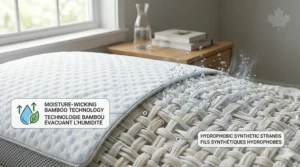
Layer your pillowcase strategically. Standard cotton cases work fine, but investing in a moisture-wicking bamboo or TENCEL pillowcase enhances cooling performance by 15-20%. These fabrics cost $20-$35 CAD on Amazon.ca and are worth the upgrade if you’re spending $100+ on the pillow itself. Avoid heavy flannel cases during summer—they negate cooling technology by trapping heat against the pillow’s surface.
Adjust your bedroom environment to complement the pillow’s cooling. Maintain temperatures between 16-18°C as research from Canadian sleep scientists recommends, even if it feels chilly initially. Your body temperature drops naturally during sleep onset, and a cool environment supports this process. Use a humidifier to maintain 40-50% humidity—dry winter air (common in Canadian heated homes) makes cooling pillows feel less effective because your skin doesn’t release heat efficiently.
Clean your cooling pillow monthly during peak use seasons (May-September). Most gel-infused foams can’t be washed, but covers should go through cold-water gentle cycles every 3-4 weeks. Spot-clean spills immediately—moisture trapped in foam cores promotes mould growth, particularly problematic in humid climates like coastal BC.
The Science Behind Sleep Temperature and Side Sleeping in Canada
Sleep scientists have established that optimal sleep occurs when core body temperature drops by 0.5-1°C, a process that begins about 90 minutes before sleep onset. Your head plays a disproportionate role in this thermoregulation—accounting for roughly 20% of total heat dissipation despite being only 8% of body surface area. This explains why flipping your pillow to the “cool side” provides instant relief: you’re jumpstarting the temperature drop your brain needs to transition into deeper sleep stages.
Research published in Frontiers in Neuroscience (accessible through Canadian university libraries) demonstrates that maintaining a skin microclimate of 31-35°C promotes optimal sleep architecture. Too hot (above 35°C), and you spend more time in light sleep stages; too cold (below 31°C), and your body activates warming mechanisms that fragment sleep. Cooling pillows aim to maintain this narrow temperature range throughout the night.
Side sleeping compounds thermal challenges because your head, neck, and one ear press continuously against the pillow surface—creating a sealed pocket that traps heat and moisture. Back sleepers benefit from natural air circulation around the head, but side sleepers need active cooling technology to compensate. This is why traditional down pillows (excellent for back sleepers) feel suffocating for side sleepers after 20-30 minutes.
Canadian winters introduce a unique variable: bedroom heating systems. Forced-air heating (common in Prairie homes) creates dry, warm air that accumulates near the ceiling where your head rests while side sleeping. Even if your room thermostat reads 18°C, the microclimate around your pillow might be 22-23°C—well above the optimal cooling range. Gel-infused or ventilated pillows counteract this by actively moving heat away from contact points.
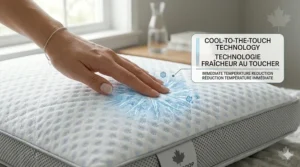
Understanding phase transitions helps explain why some cooling technologies outperform others. Gel materials absorb heat through phase change—transitioning from solid to semi-liquid state while maintaining constant surface temperature. This is why gel-layer pillows feel perpetually cool for the first 30-60 minutes, until the gel reaches saturation point. Ventilated foam relies on passive airflow, which works well in naturally cool bedrooms but struggles in hot environments.
Common Mistakes When Buying Cooling Pillows in Canada
The biggest error Canadian buyers make: selecting cooling pillows based solely on Amazon.ca star ratings without reading negative reviews for red flags. A 4.5-star average might hide 30% of reviewers complaining about heat retention because they focused on the positive 70%. Always filter for 1-3 star reviews mentioning “hot,” “warm,” or “sweating”—these reveal whether the cooling claims hold up for genuinely hot sleepers versus mild-temperature folks who’d find any pillow acceptable.
Expecting instant adaptation is another common pitfall. Cooling pillows require 5-7 nights of adjustment, particularly adjustable-fill models where you’ll modify loft 2-3 times before finding your ideal configuration. Returning a pillow after one uncomfortable night means you never discovered its optimal setup for your sleep style and bedroom environment.
Overlooking seasonal performance creates summer disappointment. Many Canadians buy cooling pillows in February (when bedroom heating makes traditional pillows uncomfortable) and expect the same cooling sensation during July heatwaves. Gel-infused foam that feels cool at 18°C bedroom temperature will feel merely “less hot” at 25°C. Set realistic expectations: cooling pillows reduce heat retention by 30-40%, not eliminate it entirely in extreme conditions.
Ignoring shoulder width leads to neck pain regardless of cooling technology. Side sleepers with broad shoulders (typically >45 cm shoulder-to-shoulder measurement) need 13-15 cm loft, while narrower builds require 10-12 cm. Buying based on cooling performance alone, then discovering the loft doesn’t match your body geometry, means you’re sleeping on a cool pillow in a misaligned position—waking with a cold pillow and a stiff neck.
Assuming “gel” automatically means “cooler” overlooks implementation quality. Budget pillows spray a thin gel coating on standard foam, providing 10-15 minutes of cooling before saturating. Premium options like Tempur-Pedic integrate gel throughout the material or use dual layers, extending cooling effectiveness to 45-60 minutes. Check product descriptions for “gel-infused throughout” versus “gel layer” to understand what you’re actually buying.
Neglecting cover material sabotages foam performance. Even the best gel-infused core can’t regulate temperature if wrapped in a thick, non-breathable polyester cover. Prioritise pillows with bamboo-derived rayon, TENCEL, or moisture-wicking cotton covers—these fabrics actively move heat and humidity away from your skin, complementing rather than blocking the foam’s cooling properties.
Cooling Pillows vs Traditional Pillows: Real-World Performance Differences
Traditional down pillows trap heat through their very construction: thousands of small feathers create dead air pockets that insulate effectively—great for winter camping, terrible for temperature regulation during sleep. Side sleepers using down pillows often wake with one ear hot and damp from pressing into this insulated mass for 6-8 hours. Down’s only cooling advantage: it’s easily fluffed and redistributed, preventing the heat accumulation you’d get from a static foam block.
Memory foam (non-cooling varieties) represents the opposite extreme: dense, heat-retentive material that conforms beautifully but sleeps 3-4°C warmer than ambient temperature. Traditional memory foam pillows compound this with closed-cell construction that prevents airflow. You get excellent pressure relief for neck and shoulders (crucial for side sleepers with pain) but wake up with a sweat-dampened pillowcase.
Cooling pillows split the difference: they maintain memory foam’s contouring benefits while adding gel infusion, ventilation channels, or phase-change materials to dissipate heat. Real-world testing shows gel-infused foam sleeps approximately 2°C cooler than standard memory foam—a meaningful difference that extends comfortable sleep duration by 60-90 minutes for hot sleepers.
Latex pillows (particularly Talalay latex like in the Purple Harmony) offer natural cooling through inherent open-cell structure and elastic responsiveness. Latex’s bounce-back characteristic prevents the “trapped in foam” sensation that makes traditional memory foam feel warm. However, latex firmness isn’t universally loved—some side sleepers find it too bouncy, preferring memory foam’s gradual sink.
The maintenance trade-off matters for Canadian lifestyles. Traditional down and polyester-fill pillows toss in the washing machine entirely, emerging clean after a hot-water cycle. Cooling memory foam pillows separate into washable covers and non-washable cores, requiring more careful maintenance but lasting 3-5 years versus down’s 18-month typical lifespan before flattening.
❓ FAQ: Cooling Pillows for Canadian Side Sleepers
❓ Can cooling pillows actually help with night sweats and hot flashes?
❓ Do I need special pillowcases for cooling pillows sold on Amazon.ca?
❓ How long do gel-infused cooling pillows maintain their cooling properties in Canadian climates?
❓ Are cooling pillows safe for children and teenagers in Canada?
❓ Can I use cooling pillows year-round in Canadian winters or will they feel too cold?
Conclusion: Finding Your Perfect Cooling Pillow Match in Canada
The cooling pillow market has evolved dramatically since early gel-pad gimmicks that provided 10 minutes of relief before saturating. Today’s best options—like the Coop Home Goods Eden Cool, Tempur-Pedic Dual Cooling, and Brooklyn Bedding Luxury models—combine multiple cooling technologies (gel infusion, ventilation, moisture-wicking covers) to maintain comfortable temperatures for 6-8 hour sleep periods.
For most Canadian side sleepers, the sweet spot sits in the $80-$130 CAD range where you get adjustable fill, genuine cooling technology, and quality certifications without paying for premium brand markup. The Coop Home Goods models dominate this segment for good reason: proven performance, widespread availability on Amazon.ca, and responsive customer service when issues arise.
Budget buyers shouldn’t overlook the Beckham Hotel Collection—at under $65 for two pillows, it’s the gateway to testing whether cooling technology actually matters for your sleep quality before committing to premium options. Conversely, chronic hot sleepers who’ve tried mid-range pillows without success should invest in Tempur-Pedic or Purple’s advanced materials backed by sleep research and lengthy warranties.
Remember that cooling pillows work best as part of comprehensive temperature management: maintain 16-18°C bedroom temperature, use moisture-wicking sheets, and ensure adequate air circulation through bedroom ventilation. The pillow addresses localised head heat, but whole-body cooling requires attention to mattress, bedding, and environmental factors.
Start by identifying your primary frustration: waking with damp pillowcases suggests aggressive cooling technology needed (dual-gel layers, copper infusion). Simply wanting the perpetual “cool side” sensation means moderate cooling with good airflow (ventilated foam, adjustable fill) suffices. Match technology to your specific sleep disruption rather than buying the most expensive option and hoping it solves everything.
✨ Don’t Miss These Exclusive Deals!
🔍 Take your sleep quality to the next level with these carefully selected cooling pillows. Click on any highlighted item to check current pricing and availability on Amazon.ca. These products will help you create authentic restorative sleep your body deserves!
Recommended for You
- Best Quiet Bed Fan for Couples in Canada 2026: 7 Top Picks
- 7 Best Bed Fans for Hot Sleepers Canada 2026
- 7 Best Cooling Mattress Pads for Memory Foam Beds Canada 2026
Disclaimer: This article contains affiliate links. As an Amazon Associate, I earn from qualifying purchases. If you purchase products through these links, we may earn a small commission at no additional cost to you.
✨ Found this helpful? Share it with your friends! 💬🤗
