

In This Article
Picture the Friday-night drive north. Traffic crawls, the kids are arguing about snacks, and somewhere around Parry Sound you remember that the cottage has been shut for five days in a July heat wave. Walk in and it’s a sauna with a lake view. Now picture the alternative: you tap your phone at the last gas station, and by the time you haul the cooler through the door, the place is already a crisp 22°C.
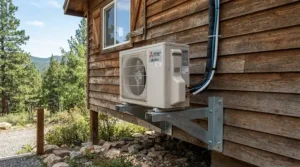
That’s the pitch behind a smart WiFi ductless AC for cottage use, and it’s why these systems have quietly taken over Canadian cottage country. They heat and cool without ducts, sip power compared with baseboards, and let you pre-condition a space from the highway. According to Natural Resources Canada, ENERGY STAR certified ductless heat pumps can use about 60% less energy than conventional electric resistance heating and cut cooling costs by roughly 30% versus room air conditioners.
But a cottage isn’t a suburban bungalow. You’ve got seasonal use, patchy internet, power that flickers, and rules about who may touch the refrigerant. This guide covers seven real systems, plus the three details most buyers trip over: the pre-charged line set, the licensed HVAC installer requirements in Canada, and the outdoor condenser mounting bracket.
Quick Comparison Table: 7 Smart Mini Splits at a Glance
| Product | Capacity | Line Set | Smart Features | Best For |
|---|---|---|---|---|
| MRCOOL DIY 5th Gen 12K | 12,000 BTU | 25 ft pre-charged quick-connect | App, Alexa, Google | Best For: premium DIY-style cottage install |
| MRCOOL EasyPro 12K | 12,000 BTU | 16 ft pre-charged quick-connect | App, Alexa, Google | Best For: mid-range value |
| DELLA Motto 9K | 9,000 BTU | 13 ft pre-charged | WiFi, Alexa | Best For: bunkies and small cabins |
| Senville LETO 12K | 12,000 BTU | 16 ft (conventional) | App, Alexa | Best For: cold shoulder seasons |
| Senville AURA 12K | 12,000 BTU | Check listing | Alexa, remote | Best For: larger open-plan rooms |
| Pioneer Hyperformance 12K | 12,000 BTU | Check listing | WiFi, voice | Best For: efficiency-minded owners |
| Pioneer Diamante Pro 18K | 18,000 BTU | 16 ft | WiFi | Best For: big main-floor spaces |
Look at the pattern: only the MRCOOL DIY 5th Gen 12K, MRCOOL EasyPro 12K, and DELLA Motto 9K are marketed with pre-charged line sets, which matters for installation, though not as much as you’d hope in Canada (more on that shortly). The two Senville models lean on cold-weather credentials, while the Pioneer Diamante Pro 18K is the only one here that really suits a big, open cottage great room.
💬 Just one click — help others make better buying decisions too!😊
Top 7 Smart WiFi Ductless AC for Cottage: Expert Analysis
Prices below are approximate Canadian ranges based on retail listings at the time of research. They shift constantly, so check current price and availability on Amazon.ca, since some of these brands also sell through Home Depot Canada, Best Buy Canada, or marketplace sellers.
1. MRCOOL DIY 5th Gen 12K — easiest setup, strongest efficiency numbers
Start with the standout: a 25 ft factory pre-charged QuickConnect line set filled with R-454B, which means no vacuum pump and no refrigerant charging in the installation instructions. The model, DIY-12-HP-WM-115D25-O, runs on 115V and lists a SEER2 of 23.5, which is high for a 12,000 BTU unit.
In practice, a 12K system suits roughly 350 to 550 sq ft (about 32 to 50 m²) depending on the retailer’s figures, so think main bedroom suite or a compact open-plan cabin. The included DIYPRO cable skips electrical conduit, and the listing says it resists weather and wildlife, a real consideration when chipmunks treat wiring like a snack bar. Wi-Fi via the SmartHVAC app, plus Alexa and Google Assistant, covers the remote-start dream.
Here’s the catch buyers overlook: one retailer notes the long compressor warranty requires annual enrolment in a care programme. Read that fine print.
Review sentiment: a retailer’s review summary says customers overwhelmingly praise straightforward installation, strong performance, and quiet operation. I couldn’t verify a Canada-specific review pool.
Pros:
- ✅ Very high SEER2 for its size
- ✅ Pre-charged 25 ft line set included
- ✅ App, Alexa, and Google control
Cons:
- ❌ Warranty conditions need annual enrolment
- ❌ Pricey versus conventional 12K units
Price range: roughly C$2,800 to C$3,500. Premium, but justified if the longer line set solves your layout.
2. MRCOOL EasyPro 12K — the sweet spot between price and smarts
If the first model is the tailored suit, the EasyPro (EZPRO-12-HP-11516D-O) is the sharp off-the-rack one. It trades a shorter 16 ft pre-charged line set for a lower price, with a listed SEER2 of 19.5 and HSPF2 of 9.3, plus 115V power and spaces up to about 550 sq ft (roughly 51 m²).
The shorter line set is the real-world limit. Sixteen feet sounds generous until you measure from your preferred indoor wall, around a corner, and out to a condenser that must sit away from a deck and above the snow line. Measure first, buy second.
Smart control is all here: built-in WiFi, the app, Alexa and Google, plus a remote with a “follow me” feature that adjusts based on where the remote sits. Based on the spec comparison, that’s the best feature set per dollar in the MRCOOL family.
Review sentiment: I couldn’t find a verified, sizeable review pool for this exact model, so treat it as an unproven sibling of the premium unit rather than assuming equal feedback.
Pros:
- ✅ Pre-charged quick-connect line set
- ✅ Solid SEER2 and HSPF2 numbers
- ✅ Built-in WiFi with voice control
Cons:
- ❌ 16 ft line set limits placement
- ❌ Limited verified Canadian review data
Price range: around C$2,200 to C$2,900. Good value if your layout is simple.
3. DELLA Motto 9K — budget pre-charged pick for a bunkie
Meet the compact option: 9,000 BTU, 115V, a 13 ft pre-charged copper line set, a listed 19 SEER2, WiFi, and Alexa support. It’s built for small rooms, so think a sleeping cabin or a single compact living area, not a lodge.
Here’s why 9K matters. An oversized mini split short-cycles, which means it hits temperature fast, shuts off, and leaves humidity behind. In a small, well-insulated bunkie, a 9,000 BTU unit often runs longer, steadier cycles, which feels more comfortable and handles dampness better. That’s an analytical observation based on how inverter units operate, not a test result.
The trade-off is range. With only 13 ft of line set, the condenser must sit close to the indoor head, which can be tricky on a raised cottage deck or a sloped lot.
Review sentiment: I couldn’t verify enough Canadian review volume to summarize reliably, so check the current listing’s recent reviews before buying.
Pros:
- ✅ Compact size suits small cabins
- ✅ Pre-charged line set included
- ✅ WiFi and Alexa support
Cons:
- ❌ Short 13 ft line set
- ❌ Too small for open-plan cottages
Price range: roughly C$900 to C$1,400. A strong budget entry.
4. Senville LETO 12K — heating down to -15°C on a sensible budget
The headline is the cold-weather rating: the listing states heat pump operation to -15°C (5°F), with a SEER2 around 20.8 to 21.2 depending on the listing. It covers about 450 to 750 sq ft on paper, works with Alexa, and combines cooling, heating, dehumidifying, fan, and turbo modes.
Be careful with that top-end square footage. In a drafty cottage with single-pane windows, expect real-world coverage at the lower end of the range. Insulation matters more than the sticker.
Unlike the MRCOOL systems, the listings I found describe a conventional 16 ft line set. That means a conventional installation (including vacuuming the lines), which a licensed installer handles anyway in most Canadian provinces. For many buyers, that’s not a downside at all.
Review sentiment: Home Depot Canada and marketplace listings exist, but I couldn’t verify review patterns here, so read recent buyer comments on app stability, since reviewers of this brand category often discuss app reliability.
Pros:
- ✅ Rated for heating to -15°C
- ✅ Alexa-compatible app control
- ✅ Handles large rooms on paper
Cons:
- ❌ Not a quick-connect pre-charged system
- ❌ Real coverage drops in drafty cottages
Price range: around C$1,000 to C$1,700. Excellent value for shoulder-season use.
5. Senville AURA 12K — quiet outdoor unit for noise-sensitive neighbours
The AURA (SENA-12HF-16) is marketed as an ENERGY STAR cold-climate-capable heat pump, with the Best Buy Canada listing citing coverage up to 750 sq ft and an outdoor noise level of about 56 dB. That’s roughly refrigerator-hum territory, and it matters more than you’d think. As Cottage Life has covered, some communities are introducing heat pump noise bylaws, so a quieter condenser near a property line is smart.
One retail buyer’s guide I consulted argues the AURA outperforms certain rivals in regular sub-zero operation. Treat that as a reviewer opinion rather than a lab result, and ask the manufacturer for a capacity table at -15°C and -25°C before you commit.
Analytically, this is the pick if your cottage gets used in deep winter weekends, because heat output at low temperatures matters more than the headline SEER2.
Review sentiment: I couldn’t verify enough review data to summarize aggregated feedback responsibly.
Pros:
- ✅ Marketed for cold-climate performance
- ✅ Quiet outdoor unit at about 56 dB
- ✅ Alexa support and remote
Cons:
- ❌ Line set details vary by listing
- ❌ Verification of low-temperature data needed
Price range: roughly C$1,400 to C$2,100. Reasonable for winter cottages.

6. Pioneer Hyperformance 12K — high efficiency and a clever auto mode
This one claims a SEER2 of up to 23.5 and a heating rating of 9.5 HSPF, with the maker saying it outputs nearly four watts of heat for every watt consumed. It also offers a SMART-AUTO mode that cycles between heating, cooling, fan, and dehumidification to hold a set temperature.
For a cottage, that auto mode is genuinely useful: shoulder-season days swing from cold mornings to warm afternoons, and a system that switches modes itself means fewer surprises when you return to a cold or stuffy space.
The honest limitation is cold-weather data. A buyer’s guide I read says Pioneer publishes less aggressive low-temperature data than Senville, so confirm capacity at your design temperature before relying on it for deep-winter heat. Variants differ by voltage and kit, so verify the exact model number before you click.
Review sentiment: I couldn’t verify a meaningful Canadian review pool.
Pros:
- ✅ Very high listed SEER2
- ✅ Smart auto mode suits changeable weather
- ✅ WiFi control included
Cons:
- ❌ Less published low-temperature data
- ❌ Variants differ by model number
Price range: around C$1,400 to C$2,000. Strong efficiency for the money.
7. Pioneer Diamante Pro 18K — big-room muscle for open-plan cottages
Step up to 18,000 BTU, 230V, a listed 21 SEER2, 9.5 HSPF, and a 16 ft line set. It’s the answer when a 12K unit simply can’t keep a vaulted great room comfortable.
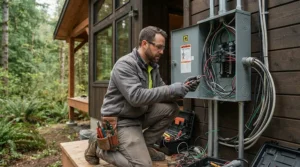
The 230V requirement is the cottage gotcha. Many older cottages run modest panels, so adding a 230V circuit might mean a service upgrade. Have a licensed electrician assess capacity before you shop. Also remember that a big unit in a small, well-sealed room will short-cycle, so only choose 18K if the space truly demands it.
For cottages where one big shared room hosts the whole crowd, this is the sensible pick. The same cold-weather caveat applies as with the other Pioneer model: check published capacity at low temperatures.
Review sentiment: no verified review aggregate was available to me here.
Pros:
- ✅ Handles large open spaces
- ✅ Strong listed SEER2 and HSPF
- ✅ WiFi control for remote use
Cons:
- ❌ Needs a 230V circuit
- ❌ Overkill for small rooms
Price range: roughly C$1,700 to C$2,500. Worth it for big spaces only.
Top 7 Specs and Value Summary
| Product | Voltage | Efficiency Note | Approx. Price Range (CAD) | Best For |
|---|---|---|---|---|
| MRCOOL DIY 5th Gen 12K | 115V | SEER2 23.5 | C$2,800-C$3,500 | Best For: easy premium install |
| MRCOOL EasyPro 12K | 115V | SEER2 19.5, HSPF2 9.3 | C$2,200-C$2,900 | Best For: balanced budget |
| DELLA Motto 9K | 115V | SEER2 19 | C$900-C$1,400 | Best For: small cabins |
| Senville LETO 12K | 115V | SEER2 ~21, heats to -15°C | C$1,000-C$1,700 | Best For: shoulder seasons |
| Senville AURA 12K | Check listing | Cold-climate focus | C$1,400-C$2,100 | Best For: winter weekends |
| Pioneer Hyperformance 12K | Check variant | SEER2 up to 23.5 | C$1,400-C$2,000 | Best For: efficiency fans |
| Pioneer Diamante Pro 18K | 230V | SEER2 21, HSPF 9.5 | C$1,700-C$2,500 | Best For: large rooms |
The DELLA Motto 9K and Senville LETO 12K cost the least, but the MRCOOL pair earns its premium if you value the quick-connect line set and the weather-ready cable. If winter use is non-negotiable, the Senville AURA 12K and Senville LETO 12K deserve the closest look. Treat these ranges as estimates rather than quotes.
What Is a Smart WiFi Ductless AC for Cottage Use?
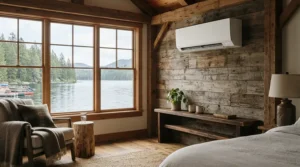
A smart WiFi ductless AC for cottage use is a wall-mounted mini split heat pump or air conditioner that connects to your home network so you can control it from a smartphone app or voice assistant. An outdoor condenser links to an indoor head through refrigerant lines and a small conduit, with no ducts needed. It cools in summer, heats in cooler months, and lets you pre-condition the cottage before you arrive.
Cold-climate models are a different story from the old reputation of heat pumps. As CBC News reports, cold-climate air-source heat pumps can operate down to about -30°C according to at least one manufacturer, and the first commercial units arrived around 2010. In milder spots such as coastal B.C., a conventional model may do just fine.
Why does “smart” matter specifically for a cottage? Because the cottage is the one house you’re usually not in. Remote scheduling, temperature alerts, and the ability to switch the unit on at the lake road beat any dial on the wall.
How to Choose a Smart WiFi Ductless AC for Cottage Use
- Match capacity to the real space. Measure the room and judge insulation. A drafty, single-pane cottage needs more capacity than a modern build of the same size, but oversizing causes short-cycling.
- Check cold-weather capacity, not just SEER2. Ask for output at -15°C and your local design temperature. Efficiency ratings don’t tell the whole story.
- Confirm the voltage your panel can support. 115V units are friendlier to older cottage panels; 230V models may need an electrician.
- Measure the line set run. Add vertical rise, corners, and the distance to a safe condenser spot. Short line sets limit placement.
- Verify WiFi reality. Does the cottage have internet? If not, plan a cellular hotspot or satellite link, or the smart features go dark.
- Look for Canadian certification marks. Check for CSA, cUL, or cETL labelling and ask about warranty terms in Canada.
- Plan the installer first. Confirm who will install it and whether your province requires a licensed professional.
Pre-Charged Line Set: What It Is and Why Cottage Owners Care
A pre-charged line set is a factory-sealed pair of copper refrigerant lines that arrives already filled with the correct refrigerant, with quick-connect fittings that snap between the indoor and outdoor units. It eliminates the vacuum pump, gauges, and manual charging that traditional installs need. The MRCOOL DIY 5th Gen 12K, MRCOOL EasyPro 12K, and DELLA Motto 9K are the pre-charged options in this guide.
The advantages are real. Quick-connect lines reduce leak risk during installation and shorten the job, which matters when your cottage visit window is a single long weekend. A pre-charged line set also makes fall and spring changes easier to reason about, since the system is sealed from the factory.
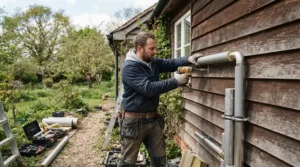
Here’s the nuance, though. Pre-charged doesn’t automatically mean “legal for anyone to install.” Industry guidance I found says that in most Canadian provinces, refrigerant work is regulated and handled by licensed contractors, and an unlicensed install may need inspection or even redoing. Treat the pre-charged feature as a way to make a licensed installer’s job faster and cheaper, not as a loophole.
Another practical limit is length. Pre-charged kits come in fixed lengths such as 13, 16, or 25 ft. If your preferred condenser spot is farther away, you’ll need a different system or a custom install. Keep the run short, tidy, and protected from rodents with a line set cover.
Licensed HVAC Installer Requirements in Canada: What Cottage Owners Need to Know
Licensed HVAC installer requirements in Canada aren’t set federally in one neat rule. Refrigerant work is regulated province by province, and the trade names and licences differ. Skip the guesswork and ask your province’s authority directly before you buy.
In Ontario, for example, the Refrigeration and Air Conditioning Systems Mechanic (313A) and Residential Air Conditioning Systems Mechanic (313D) trades are the typical credentials. Skilled Trades Ontario publishes exam resources for these certifications, which shows how structured the training is. Ontario job postings for heat pump installers commonly ask for 313A or 313D, a G2 gas licence at minimum, and a TSSA-registered contractor with insurance. In B.C., postings reference Technical Safety BC requirements, municipal permits, and a refrigeration mechanic qualification.
What should you do with that? Ask any installer for their licence number, proof of liability insurance, and whether they pull permits. Ask whether the electrical work will be done by a licensed electrician, since a new 115V or 230V circuit falls under electrical rules.
Why bother? Warranties often hinge on proper installation, insurers may ask who did the work, and a botched refrigerant job at a seasonal property can go unnoticed until the first hot weekend. Think of the licence as cheap insurance for a system you’ll rely on for a decade.
Outdoor Condenser Mounting Bracket: The Small Part That Decides Everything
An outdoor condenser mounting bracket is the steel frame that holds the outdoor unit off the ground or against a wall. It sounds boring. At a cottage, it’s anything but, because snow, wind, soft ground, and frost heave all want to ruin your afternoon.
First, height. A condenser sitting at ground level will bury itself in a heavy snowfall, and a heat pump needs open airflow plus a clear path for defrost water. Raise it above your typical snow depth and keep it clear. Second, load rating. A 12K outdoor unit commonly weighs in the 30 to 45 kg range (roughly 66 to 100 lb), so check the actual weight on the spec sheet and buy a bracket rated comfortably above it.
Third, mounting surface. Wall brackets need to bite into solid framing, not just siding or a thin cottage wall. A ground pad or stand works better on stable footing, though soft lakeside soil can shift over winters. Fourth, vibration and noise. Rubber isolators reduce transmitted hum, which helps with neighbours and bylaws.
Fifth, corrosion. Galvanized or coated steel resists the damp, and stainless hardware beats plain zinc screws. Have the installer confirm clearances to the unit’s manual, including space around the condenser and away from decks, dryer vents, and propane regulators. The bracket isn’t a place to economize.
Practical Guide: Opening and Closing Your Cottage With a Smart Mini Split
Think of this as the checklist Amazon listings skip. Use it as general guidance and defer to your owner’s manual and installer.
Spring opening:
- Clear leaves, nests, and debris from around the condenser.
- Check the line set cover and insulation for rodent damage.
- Clean or rinse the indoor filters.
- Reconnect to WiFi and test the app before you leave, not after.
Fall closing:
- Decide whether the unit stays powered for frost protection or gets shut down.
- If you shut it down, inspect the condensate drain. Seasonal-home owners in online forums commonly flag draining or clearing a condensate pump or trap before freezing weather.
- Don’t wrap or cover an operating heat pump, since it needs airflow and defrost drainage, per general winter-prep guidance.
- Flip the dedicated breaker only if your manual and installer agree.
Optimization tricks:
- Schedule a modest “away” setpoint so the cottage never gets damp or truly freezing.
- Use the app to pre-heat or pre-cool two to three hours before arrival.
- Add a cellular hotspot or satellite link if the cottage has no internet, because no connection means no smart features.
Common first-month mistakes: oversizing, ignoring drain slope, mounting the condenser where roof snow slides, and skipping a surge protector. For more on cottage-focused heat pumps, Cottage Life’s heat pump coverage is a useful Canadian starting point.
Real-World Scenarios: Matching a Pick to Your Cottage
Scenario 1: The summer-only bunkie. A 12 m² sleeping cabin used from May to September, no winter visits, modest budget. The DELLA Motto 9K fits best: small capacity, pre-charged line set, WiFi. Keep the condenser close to the wall and use a simple bracket.
Scenario 2: The shoulder-season family cottage. Three-bedroom cottage, 115V panel, weekends from April to November. The Senville LETO 12K or MRCOOL EasyPro 12K balances price, smart control, and manageable electrical demand. Pick the MRCOOL EasyPro 12K if you want the quick-connect line set to speed up a licensed installer’s day.
Scenario 3: The winterized lodge. A well-insulated four-season build with a large great room, used through January. The Pioneer Diamante Pro 18K handles big space, but verify low-temperature capacity and budget for a 230V circuit. If deep cold is the priority, compare against the Senville AURA 12K for a second, smaller zone.
Notice the pattern: budget, panel capacity, and winter use decide the winner, not the longest feature list.
Smart Ductless AC vs Traditional Cottage Alternatives
| Option | Upfront Cost | Running Cost | Smart Control | Best For |
|---|---|---|---|---|
| Smart ductless mini split | Medium-high | Low | Yes | Best For: year-round comfort |
| Window AC unit | Low | Medium | Limited | Best For: occasional summer use |
| Electric baseboards | Low | High | Rare | Best For: backup heat only |
| Portable propane heater | Low | Variable | No | Best For: emergency warmth |
Compared with window units and baseboards, a smart mini split costs more at purchase but can dramatically reduce running costs, in line with NRCan’s savings figures. Window units are noisy, block a window, and offer no real heating. Baseboards are simple but thirsty on electricity, so use them as backup. The mini split wins when you use the cottage more than a few weekends a year, which is why the Senville LETO 12K and MRCOOL EasyPro 12K are sensible mid-range anchors.
Features That Actually Matter (And Those That Don’t)
Matter: cold-weather heating capacity, line set length, voltage, outdoor noise level, a genuine WiFi app, and warranty terms valid in Canada.
Doesn’t matter much: fancy “follow me” gimmicks, turbo buttons you’ll rarely use, and headline SEER2 numbers if your cottage runs mainly in cooling season for a few weeks. A 23.5 SEER2 is lovely, but the 6 weeks of July and August may not repay a big premium.
Honestly, the feature that matters most is the one you can’t see on a box: reliable WiFi. If your cottage connection is shaky, the Pioneer Hyperformance 12K and every other smart unit falls back to a basic remote. Plan connectivity like you plan plumbing.
Common Mistakes When Buying a Smart WiFi Ductless AC for Cottage Use
- Buying on square footage alone. Insulation, windows, and ceiling height change everything.
- Ignoring the installer. A great unit installed poorly is a bad unit.
- Forgetting snow. A low condenser buried in January is a classic.
- Skipping electrical review. The Pioneer Diamante Pro 18K is a 230V buy, and older panels can complain.
- Assuming smart features work without internet. They don’t.
- Treating “pre-charged” as permission to DIY. Check your province first.
- Chasing the cheapest unit. Warranty and support in Canada matter more than C$200 saved.
Long-Term Cost and Maintenance: What a Cottage Mini Split Really Costs
Total cost of ownership has three layers: equipment, installation, and upkeep. Equipment ranges are above. Installation varies widely by province, distance, and electrical work, so get at least two written quotes.
| Cost Layer | Typical Consideration | What Lowers It |
|---|---|---|
| Equipment | C$900-C$3,500 range across these picks | Choosing the right capacity |
| Installation | Varies by distance, wiring, bracket | Pre-charged kit, short run |
| Annual upkeep | Filter cleaning, drain check | Spring and fall routine |
The table shows that equipment price is only part of the story. A cheaper unit with a long, awkward install can cost more than a pricier one that goes in cleanly. For example, the MRCOOL DIY 5th Gen 12K costs more up front, but a simple pre-charged install can offset some labour. Meanwhile, routine filter cleaning and drain checks are cheap insurance against breakdowns that always seem to happen on holiday weekends. Over a decade, efficient inverter systems like the Pioneer Hyperformance 12K should help your hydro bill, though exact savings depend on usage and local rates.
FAQ
❓ Can a smart WiFi ductless AC for cottage use work without internet?
❓ Do I need a licensed installer for a pre-charged mini split?
❓ How high should an outdoor condenser mounting bracket be?
❓ What size mini split does a small cottage need?
❓ Will a mini split heat my cottage in winter?
Conclusion
A smart WiFi ductless AC for cottage use turns a stuffy, unpredictable building into a place that’s ready when you are. If you want the easiest setup and strongest efficiency numbers, the MRCOOL DIY 5th Gen 12K leads. For balanced value, the MRCOOL EasyPro 12K is hard to beat. The DELLA Motto 9K serves small cabins, the Senville LETO 12K and Senville AURA 12K lean toward cold weather, and the two Pioneer models cover efficiency and big rooms.
But the unit is half the project. Confirm your province’s licensed HVAC installer requirements in Canada, budget for a proper electrical circuit, and treat the outdoor condenser mounting bracket as structural, not decorative. Do those three things and the lake-road tap on your phone will feel like a small miracle.
🌲 Ready to cool down your cottage season? Compare current pricing and availability on Amazon.ca, then line up your installer before you order. Your future self, stepping into a perfectly comfortable cottage, will thank you!
Recommended for You
- 12000 BTU Ductless AC For Cottage: 7 Proven Picks 2026
- Portable Generator And Cooler Combo For Camping: 7 Proven Picks 2026
- Generator For RV Air Conditioner: 7 Best Picks For 2026
Disclaimer: This article contains affiliate links. As an Amazon Associate, I earn from qualifying purchases. If you purchase products through these links, we may earn a small commission at no additional cost to you.
✨ Found this helpful? Share it with your friends! 💬🤗
