
In This Article
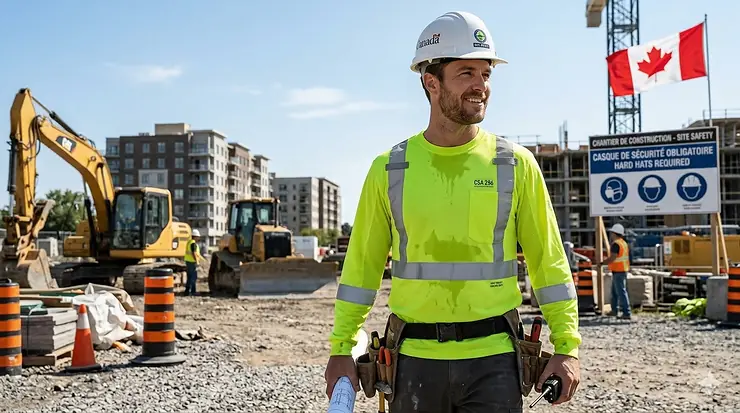
Picture this: you’re working on a highway construction site in downtown Toronto during a sweltering July afternoon. The temperature has climbed to 34°C, the humidity makes it feel like 42°C, and you’re wearing your mandatory safety gear. Your regular hi-vis shirt feels like a personal sauna, sweat is pouring down your back, and you can feel your core temperature rising with every passing minute.
Sound familiar? You’re not alone. According to Employment and Social Development Canada, heat stress injuries cost Canadian employers over $53,000 per incident on average, and these incidents are 100% preventable with proper equipment. This is where high visibility cooling shirts become not just a comfort upgrade, but a critical safety investment.
High visibility cooling shirts represent a breakthrough in workplace safety apparel, combining CSA Z96 or ANSI/ISEA 107 compliant reflective materials with advanced cooling technology that can lower your body temperature by up to 30 degrees below average. For construction workers, road crews, utility workers, and anyone working in high-visibility zones across Canada, these shirts solve two critical problems simultaneously: keeping you visible to prevent struck-by accidents, and keeping you cool to prevent heat-related illnesses.
The Canadian workplace safety landscape demands compliance with either CSA Z96 standards (required in Manitoba and British Columbia, considered best practice nationwide) or ANSI/ISEA 107 standards (widely accepted across provinces). Understanding which classification you need—Class 1, 2, or 3, along with Level 1, 2, or 3 tape performance—can feel overwhelming. That’s exactly what this guide will clarify, along with helping you choose the best cooling technology for your specific work environment.
Whether you’re battling heat stress on Alberta oil fields, directing traffic in humid Ontario summers, or managing crews through British Columbia’s increasingly hot construction seasons, the right high visibility cooling shirt can make the difference between a productive day and a dangerous one.
Quick Comparison Table: Top High Visibility Cooling Shirts Canada
| Product Name | Certification | Cooling Tech | Price (CAD) | Best For |
|---|---|---|---|---|
| Mission Cooling Safety Shirt | ANSI Type R Class 2 | HydroActive™ | $39-$49 | Budget-conscious workers |
| Ergodyne Chill-Its 6688 | ANSI Type R Class 2 | Evaporative | $65-$85 | Long-sleeve UV protection |
| Arctic Cool HydroFreeze X | ANSI Class 2 | Instant cooling | $55-$70 | Heavy-duty construction |
| Magid Cool Powered by Mission | ANSI Type R Class 2 | HydroActive™ | $45-$60 | Professional workwear |
| Portwest Cooling Safety Shirt | CSA Z96 Class 2 | Evaporative | $35-$50 | Canadian compliance |
| Forcefield Athletic Fit Hi-Vis | CSA Z96 Class 1 Level 2 | Moisture-wicking | $30-$45 | Athletic comfort |
| Reflective Apparel 342CTLB | ANSI Class 2 | 3M Scotchlite™ | $50-$65 | Premium visibility |
💬 Just one click – help others make better buying decisions too!😊
Top 7 High Visibility Cooling Shirts: Expert Analysis
1. Mission Cooling Safety Shirt – Best Budget Option
The Mission Cooling Safety Shirt delivers exceptional value for Canadian workers who need reliable safety compliance without breaking the bank. This ANSI/ISEA 107-2020 Type R, Class 2 certified shirt features Mission’s proprietary HydroActive Wet-to-Cool Technology that cools up to 30 degrees below average body temperature in under one minute.
Key Specifications:
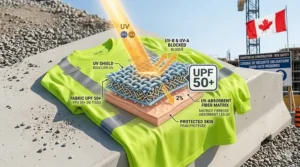
- UPF 50+ sun protection
- 360-degree reflective strips
- Machine washable (cooling never washes out)
- Price: $39-$49 CAD
Canadian buyers consistently praise this shirt’s activation process—simply wet it, wring it out, and snap it to feel instant cooling that lasts up to 2 hours. Construction foreman David from Edmonton notes: “I’ve tried cheaper alternatives, but the Mission shirt actually delivers on the cooling promise. Worth every penny when you’re working 10-hour days in 30+ degree heat.”
✅ Pros:
- Chemical-free cooling technology
- Lightweight mesh-ventilated side panels
- Excellent moisture-wicking properties
❌ Cons:
- Cooling duration limited to 2 hours (needs reactivation)
- No CSA Z96 certification (ANSI only)
2. Ergodyne Chill-Its 6688 – Best for Long-Sleeve UV Protection
The Ergodyne Chill-Its 6688 stands out as the premium choice for workers who need comprehensive sun and cooling protection. This Type R Class 2 compliant shirt combines evaporative cooling technology with UPF 50+ protection, making it ideal for prolonged outdoor exposure across Canadian worksites.
Key Specifications:
- ANSI/ISEA 107-2020 Type R Class 2 compliant
- 2-inch segmented reflective tape
- Stretch fabric with mesh paneling
- Price: $65-$85 CAD
The long-sleeve design with breathable mesh panels in the underarms and back creates a perfect balance between coverage and ventilation. Utility worker Sarah from Vancouver shares: “The segmented tape doesn’t restrict movement like traditional hi-vis shirts. I can actually move my arms freely, and the cooling lasts through my entire shift.”
✅ Pros:
- Superior UPF 50+ sun protection
- Anti-odor treatment
- Performance fit allows unrestricted movement
❌ Cons:
- Higher price point
- Requires water activation for cooling
3. Arctic Cool HydroFreeze X – Best for Heavy-Duty Construction
Arctic Cool’s HydroFreeze X safety shirt employs controlled evaporation process technology that actively cools and dries fast. This ANSI Class 2 reflective safety shirt targets construction, landscaping, HVAC, and steel working environments where workers face both heat stress and visibility requirements.
Key Specifications:
- UPF 50+ sun protection
- 4-way stretch polyester/spandex blend
- Generous cut for range of motion
- Price: $55-$70 CAD
The HydroFreeze X fabric wicks moisture away while dispersing it throughout the garment, acting as a natural radiator when combined with airflow. Landscaper Tom from Calgary reports: “This shirt keeps me cooler than my old cotton hi-vis by a mile. The stretch fabric means I’m not fighting the shirt when I’m bending and lifting all day.”
✅ Pros:
- Instant cooling without water activation
- Excellent for heavy physical work
- Durable 4-way stretch construction
❌ Cons:
- Mid-range pricing
- Limited colour options
4. Magid Cool Powered by Mission – Best Professional Workwear
The Magid Cool Powered by Mission cooling safety shirt brings Mission’s proven HydroActive™ technology into a professional workwear format. With ANSI Type R Class 2 certification and a sleek hi-vis yellow design, this 92% polyester/8% Spandex blend offers flexibility and cooling performance.
Key Specifications:
- HydroActive™ Instant Cooling Technology
- Activates in under 60 seconds
- Cools to 30 degrees below body temperature
- Price: $45-$60 CAD
Available through Tytan Glove & Safety with free shipping on orders over $75 CAD to eligible Canadian locations, this shirt is particularly popular among professional crews. Survey worker Marie from Quebec says: “The professional fit looks sharp while still delivering serious cooling. Perfect when you need to look presentable while staying safe and comfortable.”
✅ Pros:
- Professional appearance
- Quick 60-second activation
- Reusable and machine washable
❌ Cons:
- Limited availability in some regions
- Requires periodic rewetting
5. Portwest Cooling Safety Shirt – Best for CSA Z96 Compliance
For workers in Manitoba and British Columbia where CSA Z96 compliance is mandatory, the Portwest Cooling Safety Shirt delivers authentic Canadian certification. This Class 2 Level 2 shirt meets strict CSA requirements while incorporating cooling mesh fabric and 2-inch silver reflective tape.
Key Specifications:
- CSA Z96 Class 2 Level 2 certified
- Cooling mesh fabric technology
- 50+ UPF rated
- Price: $35-$50 CAD
The Portwest design includes practical features like a two-tiered chest pocket with pen division and moisture-wicking polyester construction. Highway worker Jacques from Manitoba notes: “Finally, a cooling shirt that’s actually CSA-approved for our provincial requirements. No more choosing between compliance and comfort.”
✅ Pros:
- True CSA Z96 certification
- Budget-friendly pricing
- Multiple pockets for functionality
❌ Cons:
- Less advanced cooling technology
- Heavier weight than competitors
6. Forcefield Athletic Fit Hi-Vis – Best for Athletic Comfort
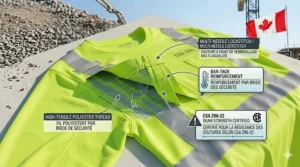
The Forcefield Athletic Fit Hi-Vis safety tee revolutionizes comfort with tubular construction—no side seams means completely chafe-free experience. This CSA Z96 Class 1 Level 2 certified shirt features 100% cotton fabric and segmented heat-transferred reflective tape for flexibility.
Key Specifications:
- CSA Z96 Class 1 Level 2 compliant
- Tubular construction (seamless sides)
- Segmented reflective tape
- Price: $30-$45 CAD
The athletic fit performs like gym wear while meeting Canadian safety standards. Warehouse supervisor Lisa from Ontario shares: “I never thought a hi-vis shirt could feel this comfortable. The seamless design means no irritation even after 12-hour shifts.”
✅ Pros:
- Superior comfort and fit
- Budget-friendly
- Segmented tape allows fabric stretch
❌ Cons:
- Cotton fabric (slower drying)
- Lower visibility class (Class 1)
7. Reflective Apparel 342CTLB – Best Premium Visibility
The Reflective Apparel 342CTLB sets the gold standard for visibility with 3M™ Scotchlite™ Reflective Material – 5510 Comfort Trim. This ANSI Class 2 compliant shirt uses ultra-lightweight 3.7oz Micromesh Polyester that wicks moisture 3x faster than cotton while featuring 75-wash certified reflective material.
Key Specifications:
- 3M Scotchlite Comfort Trim (no buckling or rubbing)
- Micromesh breathability
- 75-wash certified reflective
- Price: $50-$65 CAD
The Comfort Trim technology eliminates the discomfort of traditional sewn-on reflective tape, making this ideal for workers who need maximum visibility without compromising comfort. Traffic controller Mike from Alberta reports: “The 3M reflective is noticeably brighter than cheaper alternatives. Drivers see me from much farther away, which is exactly what I need.”
✅ Pros:
- Industry-leading 3M reflective material
- Exceptional moisture-wicking
- Long-lasting reflective performance
❌ Cons:
- Premium pricing
- Limited cooling technology
Understanding CSA Z96 vs ANSI/ISEA 107 Standards for Canadian Workers
Navigating safety standards in Canada requires understanding two primary certification systems: CSA Z96 (Canadian Standards Association) and ANSI/ISEA 107 (American National Standards Institute). While both standards aim to enhance worker visibility and safety, knowing which applies to your situation is crucial.
CSA Z96: The Canadian Standard
CSA Z96:22 (the fourth edition published in 2022) is designed in technical harmony with ANSI/ISEA 107 but includes specific Canadian requirements. Manitoba and British Columbia legally mandate CSA Z96 compliance, while other provinces consider it best practice. The standard specifies three classes based on body coverage:
Class 1: Lowest recognized coverage, good visibility for workers away from traffic (parking attendants, warehouse workers)
Class 2: Moderate body coverage with superior visibility for roadway work zones
Class 3: Greatest body coverage for high-speed roadways and poor light conditions
Additionally, CSA Z96 defines three levels of retroreflective performance (Level 1, 2, and 3) based on tape width and brightness. The standard requires specific striping patterns: two vertical stripes on the front, a horizontal stripe encircling the waist, and an X pattern on the back.
ANSI/ISEA 107-2020: The Industry Standard
ANSI/ISEA 107-2020 introduced a “Type” structure separating garments by application environment:
- Type O (Off-Road): For workers not exposed to roadway traffic
- Type R (Roadway): For public access roadways with vehicle speeds ≥25 mph
- Type P (Public Safety): For emergency and incident responders
Performance Classes (Class 1, 2, 3) indicate the amount of background and reflective material, similar to CSA designations. Most Canadian construction and road work requires minimum Type R, Class 2 compliance.
Which Standard Should You Choose?
For Canadian workers, the decision depends on provincial location and work environment. Workers in Manitoba and British Columbia must use CSA Z96 certified garments. In other provinces, both CSA Z96 and ANSI/ISEA 107 are generally accepted, though CSA certification demonstrates alignment with Canadian workplace standards.
Many high-quality manufacturers now produce garments meeting both standards, offering versatility for crews working across provincial boundaries. When in doubt, consult your provincial occupational health and safety regulations or your employer’s safety program.
According to the Canadian Centre for Occupational Health and Safety (CCOHS), purchasers should always request proof that materials and design meet the requirements of CSA Z96 or ANSI/ISEA 107 standards—this certification should appear on the garment label.
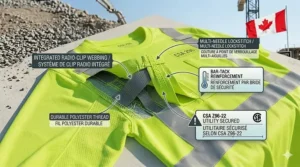
How Cooling Technology Works in Hi-Vis Safety Shirts
Modern high visibility cooling shirts employ several distinct cooling mechanisms, each with unique advantages for Canadian work environments. Understanding these technologies helps you select the right shirt for your specific heat stress challenges.
Evaporative Cooling Technology
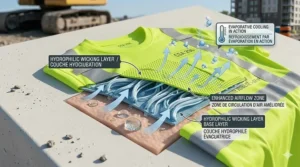
Evaporative cooling shirts use specialized fabrics that enhance the body’s natural cooling process. When you wet the garment with water, the fabric’s construction maximizes surface area for evaporation. As water molecules transition from liquid to vapor, they absorb heat energy from your body, creating a cooling effect.
Products like the Ergodyne Chill-Its 6688 can provide cooling for 2-4 hours after a single activation. The advantage: no batteries, no chemicals, just physics. The limitation: requires water access and periodic reactivation, and cooling effectiveness decreases in extremely humid conditions.
HydroActive™ Technology
Mission’s proprietary HydroActive system takes evaporative cooling further by using advanced fabric engineering that cools up to 30 degrees below average body temperature. The fabric activates with either water or sweat—meaning it begins working automatically as you perspire.
The three-step activation (wet it, wring it, wave/snap it) creates instant cooling in under one minute. This technology works particularly well in dry Canadian climates like Alberta and Saskatchewan, where low humidity maximizes evaporation rates.
HydroFreeze X Technology
Arctic Cool’s HydroFreeze X employs controlled evaporation through a specialized polyester-spandex blend. The fabric actively wicks moisture away from your skin while dispersing it throughout the garment. When combined with airflow, the shirt acts like a radiator, pulling heat away from your body.
Unlike simple evaporative shirts, HydroFreeze X provides instant cooling without requiring pre-wetting—it activates automatically with your body’s natural perspiration. This makes it ideal for jobs where stopping to wet your shirt isn’t practical.
Moisture-Wicking Performance Fabrics
Traditional moisture-wicking hi-vis shirts don’t provide active cooling but significantly enhance comfort by moving sweat away from your skin. Polyester birdseye knit fabrics, like those in the Reflective Apparel 342CTLB, wick moisture 3x faster than cotton.
While not technically “cooling” shirts, these advanced moisture management fabrics prevent the clammy, uncomfortable feeling of sweat-saturated cotton. The rapid drying also helps your body’s natural thermoregulation work more efficiently.
Cooling + UV Protection: The Complete Package
The most effective high visibility cooling shirts combine cooling technology with UPF (Ultraviolet Protection Factor) 50+ sun protection. This dual protection addresses both heat stress and the cumulative skin damage from prolonged sun exposure—a serious concern for outdoor workers across Canada.
According to Health Canada’s guidelines on extreme heat management, combining cooling apparel with adequate hydration, rest breaks, and shade access creates a comprehensive heat stress prevention strategy that significantly reduces workplace injuries and illnesses.
Heat Stress Prevention: Why Cooling Matters for Canadian Workers
Heat stress represents a serious and growing occupational hazard across Canada. With climate change driving more frequent and intense heat events, understanding and preventing heat-related illness has never been more critical for worker safety and productivity.
Employment and Social Development Canada reports that thermal stress (both heat and cold) causes significant injuries and work time loss annually. The federal government’s thermal stress guidelines, aligned with the Canada Labour Code, require employers to implement prevention measures when workers face heat exposure that could affect their core body temperature regulation.
Understanding Heat Stress Progression
Heat stress occurs when your body cannot effectively remove excess heat. The progression from discomfort to medical emergency happens faster than most workers realize:
Heat Rash: Red bumps and severe itching from plugged sweat glands—uncomfortable but not immediately dangerous.
Heat Cramps: Muscle pain in arms, legs, or stomach caused by salt imbalance from heavy sweating—a warning sign that your body is struggling.
Heat Exhaustion: Heavy perspiration, weak pulse, feeling tired and faint, nausea, pale or flushed skin, headaches. This requires immediate attention—move to shade, remove excess clothing, drink cool water with electrolytes.
Heat Stroke: A medical emergency. Strong rapid pulse, shallow fast breathing, hot dry skin (not sweating), dizziness, confusion. Call 911 immediately. Heat stroke can cause permanent organ damage or death.
According to the Canadian Centre for Occupational Health and Safety, workers at highest risk include those performing heavy physical labour in hot environments, wearing impermeable protective clothing (creating additional heat stress), working alone without observation, or having pre-existing medical conditions affecting thermoregulation.
Provincial Heat Stress Regulations
Ontario’s Ministry of Labour requires employers to take every reasonable precaution to protect workers from heat stress under the Occupational Health and Safety Act. This includes engineering controls (shade structures, ventilation, mechanical assists to reduce physical demands), administrative controls (work-rest schedules, buddy systems, acclimatization periods), and personal protective equipment (cooling vests and shirts).
Many Canadian occupational health and safety regulators have adopted the American Conference of Governmental Industrial Hygienists’ Threshold Limit Values (TLV®s) as screening criteria. These values indicate the level of heat stress (measured by Wet-Bulb Globe Temperature) that workers can be exposed to repeatedly without adverse effects.
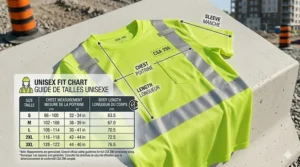
The Role of Cooling Apparel in Heat Stress Prevention
High visibility cooling shirts function as an engineering control, directly reducing the heat burden on workers. By lowering skin temperature and enhancing sweat evaporation, these garments help maintain core body temperature within safe ranges even during heavy physical work.
Research from the Korey Stringer Institute confirms that chemical-free cooling technologies can reduce heat strain during physical labour. Products endorsed by organizations like the Heat and Safety Performance Coalition demonstrate measurable improvements in worker thermal comfort and performance.
For Canadian employers, investing in cooling apparel isn’t just about comfort—it’s about compliance with due diligence requirements, reducing heat-related workers’ compensation claims, maintaining productivity during heat events, and most importantly, preventing the tragedy of heat-related fatalities.
According to Canada’s thermal stress guidelines, employers should implement comprehensive heat stress management programs that include worker education, environmental monitoring, work-rest schedules appropriate to conditions, hydration protocols, and provision of cooling equipment including high-performance cooling shirts.
Choosing the Right High Visibility Cooling Shirt for Canadian Conditions
Selecting the optimal high visibility cooling shirt requires evaluating multiple factors specific to your work environment, provincial requirements, and personal needs. This systematic approach ensures you invest in equipment that actually solves your heat stress and visibility challenges.
Step 1: Determine Your Required Safety Classification
Start by identifying which safety standard and class your work environment demands. Construction and roadway workers in Manitoba and British Columbia must use CSA Z96 certified garments. Workers in other provinces can typically use either CSA Z96 or ANSI/ISEA 107 compliant gear.
For traffic exposure at speeds ≥25 mph, you need minimum Type R Class 2 (ANSI) or Class 2 Level 2 (CSA). Highway construction in high-speed zones may require Class 3 for maximum visibility. Indoor warehouse work with minimal vehicle exposure might allow Class 1.
Check your employer’s safety program or provincial regulations for specific requirements. When in doubt, choosing a higher classification provides greater protection.
Step 2: Evaluate Your Climate and Work Environment
Canada’s diverse climate zones require different cooling strategies. Workers in humid Ontario and Quebec summers benefit most from advanced moisture-wicking fabrics that move sweat away quickly, as humidity limits evaporative cooling effectiveness.
Dry prairie provinces like Alberta, Saskatchewan, and Manitoba are ideal for evaporative cooling technologies. The low humidity maximizes evaporation rates, making shirts like the Mission Cooling Safety Shirt and Ergodyne Chill-Its 6688 exceptionally effective.
British Columbia’s varied climate—from humid coastal regions to dry interior valleys—demands versatility. Consider shirts with multiple cooling mechanisms or invest in different shirts for different project locations.
Step 3: Match Cooling Technology to Your Work Pattern
Your work schedule and access to amenities influence which cooling technology works best. Jobs with regular breaks near water sources make evaporative cooling shirts practical—you can rewet them every 2-3 hours for continuous cooling.
Remote work locations without water access favour instant-cooling fabrics like Arctic Cool’s HydroFreeze X that activate automatically with perspiration. No water needed, no activation required—just put it on and work.
Heavy physical labour generates more body heat and perspiration. Workers doing concrete pouring, roofing, or heavy lifting need the most aggressive cooling technology combined with superior moisture-wicking to prevent sweat saturation.
Step 4: Consider Sleeve Length and Sun Protection
Long-sleeve cooling shirts with UPF 50+ protection address both heat stress and cumulative sun damage. For Canadian workers spending 8-12 hours daily in direct sun, the Ergodyne Chill-Its 6688 long-sleeve design provides comprehensive protection against UV radiation while maintaining cooling effectiveness.
Short-sleeve options work well for jobs with moderate sun exposure or where you wear additional protective gear on your arms. They’re also easier to layer with other safety equipment like fall protection harnesses.
Step 5: Assess Fit and Comfort Features
Modern high visibility cooling shirts range from athletic fits with stretch fabrics to traditional workwear cuts. Workers doing dynamic movements—climbing, bending, reaching—benefit from 4-way stretch fabrics that move with you.
Look for thoughtful features: segmented reflective tape (flexes with body movement vs. traditional rigid tape), mesh panels in high-sweat areas (underarms, back), chest pockets for tools and phones, and anti-odor treatments for multi-day freshness.
The Forcefield Athletic Fit demonstrates how seamless tubular construction eliminates chafing—a game-changer for workers wearing harnesses or tool belts that would otherwise rub against shirt seams.
Step 6: Budget Appropriately for Quality
High visibility cooling shirts range from $30-$85 CAD. While budget matters, consider the total value: a $65 shirt that lasts three seasons and prevents one heat exhaustion incident delivers far more value than three $25 shirts that fail after one summer.
Premium features that justify higher costs include:
- Advanced cooling technologies (HydroActive, HydroFreeze X)
- Superior reflective materials (3M Scotchlite with 75-wash certification)
- UPF 50+ sun protection
- Moisture-wicking that’s 3x faster than cotton
- Anti-odor treatments and stretch fabrics
Entry-level options around $30-$40 CAD like the Forcefield Athletic Fit still meet safety standards and provide basic cooling—perfect for occasional use or budget-conscious crews.
Step 7: Verify Canadian Availability and Shipping
Always confirm products are actually available on Amazon.ca with reasonable shipping times to your location. Some manufacturers list products that ship from US warehouses with extended delivery times and customs fees.
Look for items marked “Ships from and sold by Amazon.ca” or verified Canadian sellers. Free shipping thresholds vary—many retailers offer free delivery on orders over $35-$75 CAD.
Remote locations in Northern Canada, Yukon, Northwest Territories, and Nunavut may face shipping restrictions or surcharges. Contact sellers directly to confirm delivery options before ordering.
Maintaining Your High Visibility Cooling Shirt for Maximum Performance
Proper care and maintenance extends the life of your high visibility cooling shirt while ensuring it continues providing optimal safety and cooling performance. Follow these evidence-based practices to maximize your investment.
Washing Guidelines
Most high visibility cooling shirts are machine washable, but specific care requirements vary by manufacturer. Mission and Arctic Cool products maintain their cooling technology through unlimited wash cycles—the chemical-free fabric construction doesn’t wash out.
Use cold water on gentle cycles with mild detergent. Avoid bleach and fabric softener, which can damage both cooling fabrics and reflective materials. Fabric softener specifically coats fibers, reducing moisture-wicking effectiveness.
Wash cooling shirts separately or with similar colors to prevent colour transfer onto the fluorescent background material. Turn shirts inside-out before washing to protect reflective tape from excessive abrasion.
Drying Recommendations
Tumble dry on low heat, removing shirts immediately when dry to prevent wrinkles and minimize heat exposure to reflective materials. High heat can degrade adhesive bonding in reflective tape.
Air drying extends garment life but takes longer. If choosing this method, hang in shade rather than direct sunlight—prolonged UV exposure can fade fluorescent colours faster.
Never iron high visibility cooling shirts or dry clean them. Heat from ironing can damage cooling fabric structures and melt or debond reflective materials. Dry cleaning chemicals may compromise cooling technology.
Inspecting for Safety Compliance
Regularly inspect your high visibility cooling shirt for signs of wear that could affect safety certification:
Fading: Fluorescent background material must maintain specified colour brightness to meet CSA Z96 or ANSI/ISEA 107 standards. If the neon yellow-green or orange-red appears significantly faded or washed out, replace the shirt—it no longer provides adequate daytime visibility.
Reflective Tape Damage: Check for peeling, cracking, missing sections, or reduced reflectivity in the tape. Hold the shirt under light and observe whether the tape reflects brightly. Damaged tape means the shirt fails nighttime visibility requirements.
Contamination: Dirt, grease, paint, or other contaminants reduce both reflectivity and visibility. Heavily soiled shirts must be cleaned before use. If contamination cannot be fully removed through washing, replace the shirt.
Structural Damage: Tears, holes, or separated seams compromise both safety and functionality. Even small damage can expand rapidly during work, creating safety compliance issues.
Reflective Material Longevity
Quality reflective materials are rated for specific wash cycles. The Reflective Apparel 342CTLB features 75-wash certified 3M Scotchlite tape—meaning it maintains performance standards through 75 launderings when washed according to instructions.
Budget options may use reflective tape rated for only 25-50 washes. Track approximate wash cycles and plan for replacement before tape performance degrades below safety thresholds.
According to CSA Z96 and ANSI/ISEA 107 standards, manufacturers must ensure reflective materials meet photometric performance requirements after testing to specified wash cycle limits. Check product specifications for these ratings.
Storage Best Practices
Store high visibility cooling shirts in cool, dry locations away from direct sunlight when not in use. Prolonged UV exposure during storage accelerates fluorescent colour fading.
Avoid storing in extremely hot locations like vehicle trunks during summer—heat exposure can degrade cooling fabric performance and adhesive bonding in reflective tape.
Hang shirts on hangers rather than folding to prevent creases in reflective tape. Repeated folding and unfolding at the same locations can cause tape to crack or separate.
Replacement Timing
Replace high visibility cooling shirts when:
- Fluorescent colour appears faded or significantly different from new garments
- Reflective tape shows visible damage, peeling, or reduced brightness
- Fabric develops holes, tears, or separated seams
- Cooling performance noticeably decreases
- Wash cycle count approaches rated limits for reflective tape
According to the Canadian Centre for Occupational Health and Safety, contaminated or dirty retroreflective materials provide lower visibility, and garments showing wear, tear, soiling, or contamination can no longer provide acceptable visibility levels.
For professional crews, establishing a regular replacement schedule (annually or biannually depending on use intensity) ensures consistent safety compliance and optimal cooling performance. The cost of regular replacement is negligible compared to heat stress medical expenses or struck-by accident consequences.
❓ Frequently Asked Questions About High Visibility Cooling Shirts
❓ What's the difference between CSA Z96 and ANSI/ISEA 107 certifications for Canadian workers?
❓ How long does the cooling effect last in high visibility cooling shirts?
❓ Are high visibility cooling shirts worth the investment for Canadian construction workers?
❓ Can I wear high visibility cooling shirts in winter or cold weather conditions?
❓ What's the best way to activate cooling technology in hi-vis shirts during a work shift?
Conclusion: Staying Safe and Cool on Canadian Jobsites
High visibility cooling shirts represent a critical evolution in workplace safety equipment for Canadian workers. By combining CSA Z96 or ANSI/ISEA 107 compliance with advanced cooling technologies, these garments address two of the most pressing hazards on modern worksites: struck-by accidents and heat-related illness.
Whether you choose the budget-friendly Mission Cooling Safety Shirt at $39-$49 CAD, the premium long-sleeve Ergodyne Chill-Its 6688 at $65-$85 CAD, or any option in between, you’re making an investment that pays dividends through enhanced safety, improved comfort, and increased productivity. Canadian workers face unique challenges—from the humid heat of Ontario summers to the dry intensity of Alberta’s oil fields—and the right cooling shirt helps you perform safely and effectively across all conditions.
Remember that high visibility cooling shirts work best as part of a comprehensive heat stress prevention program. Combine your cooling shirt with adequate hydration (drink water regularly, not just when thirsty), scheduled rest breaks in shaded areas, acclimatization periods for new workers or seasonal heat, and monitoring for heat stress symptoms in yourself and coworkers. According to Health Canada and provincial occupational health authorities, this multi-layered approach provides the most effective protection against heat-related illness.
Provincial requirements vary—workers in Manitoba and British Columbia must use CSA Z96 certified garments, while other provinces generally accept both CSA and ANSI standards. When in doubt, choose products meeting both certifications to ensure compliance regardless of project location. Always verify that products are available on Amazon.ca with reasonable shipping to your Canadian location, and check for free shipping thresholds to maximize value.
As climate change drives more frequent and intense heat events across Canada, investing in high-quality cooling safety apparel becomes increasingly essential. The $40-$85 CAD you spend on a premium cooling shirt costs less than a single heat exhaustion incident and delivers protection for multiple seasons with proper care. Your safety, comfort, and productivity are worth it.
Stay visible. Stay cool. Stay safe on every Canadian jobsite.
Recommended for You
- 7 Best Cooling T-Shirts for Summer 2026 Canada | Beat the Heat
- 7 Best Cooling Long Sleeve Shirt Men Canada 2026 | UPF 50+
- 7 Best Evaporative Cooling Vests Canada 2026
Disclaimer: This article contains affiliate links to Amazon.ca. If you purchase products through these links, we may earn a small commission at no additional cost to you.
✨ Found this helpful? Share it with your friends! 💬🤗
