
In This Article
Picture this: it’s a sweltering July evening in Toronto, and your little one is tossing and turning in their crib, unable to find comfort in the humid air. As a parent, you know that proper air circulation isn’t just about comfort—it’s about safety. Research published in the Archives of Pediatrics & Adolescent Medicine reveals that using a fan for baby room can reduce the risk of Sudden Infant Death Syndrome (SIDS) by an impressive 72%.
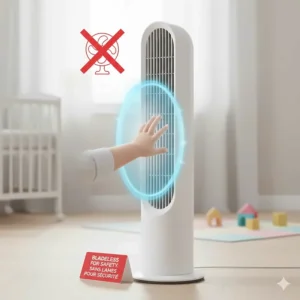
But here’s the catch: not all fans are created equal, especially when it comes to nursery safety. Between oscillating models, bladeless designs, and clip-on options flooding Amazon.ca, how do you choose the right safe fan for nursery that won’t blow your budget or, worse, pose a hazard to your curious crawler?
After testing dozens of models and consulting with Canadian pediatric experts, I’ve identified the seven best baby room air circulation solutions available in Canada right now. Whether you’re dealing with Ontario’s sticky summers or looking for quiet fan for baby sleep year-round, this guide will help you make an informed decision that prioritizes both safety and effectiveness.
Quick Comparison Table
| Product | Type | Noise Level | Price Range (CAD) | Best For | Safety Rating |
|---|---|---|---|---|---|
| Vornadobaby Breesi | Tabletop | 37-45 dB | $89-$129 | Overall performance | ⭐⭐⭐⭐⭐ |
| AMACOOL Clip-On Fan | Portable clip | ~25 dB | $25-$35 | Crib attachment | ⭐⭐⭐⭐ |
| Lasko Wind Curve Tower | Tower | Low on sleep mode | $65-$95 | Medium-large rooms | ⭐⭐⭐⭐ |
| Gaiatop Stroller Fan | Clip-on portable | <30 dB | $28-$42 | Multi-purpose use | ⭐⭐⭐⭐ |
| Honeywell QuietSet Tower | Tower | 35-50 dB | $79-$119 | Quiet operation | ⭐⭐⭐⭐⭐ |
| Momcozy 8000mAh Portable | Clip-on rechargeable | Whisper quiet | $45-$65 | Extended battery life | ⭐⭐⭐⭐ |
| Vornadobaby Breesi LS | Tabletop + sound | 37-48 dB | $129-$169 | All-in-one solution | ⭐⭐⭐⭐⭐ |
💬 Just one click – help others make better buying decisions too! 😊
Top 7 Fans for Baby Room: Expert Analysis
1. Vornadobaby Breesi Nursery Air Circulator – Best Overall
If you’re looking for a fan specifically engineered for nurseries, the Vornadobaby Breesi stands in a class of its own. This isn’t your average tabletop fan—it’s a carefully designed safe cooling fan for infants that Canadian parents absolutely rave about.
Key Specifications:
- Vortex airflow technology circulates air up to 9.5 times per hour
- Two speed settings: whisper-quiet low (37 dB) and white noise high (45 dB)
- Finger-friendly grill with no pinch points
- Hidden cord storage and child-lock switch
- Compact footprint: ideal for smaller Canadian nurseries
Price in Canada: $89-$129 CAD on Amazon.ca
The genius of this fan lies in its safety features. Canadian buyers consistently mention that the curiosity-proof child lock prevents tampering from toddlers, while the hidden cord storage eliminates tripping hazards. One Ottawa parent shared how the gentle vortex circulation kept their baby’s room at a comfortable 20°C during last summer’s heat wave without creating harsh drafts.
✅ Pros:
- Specifically designed for baby safety
- Removable grill for easy cleaning
- Topple-resistant wide base
❌ Cons:
- Shorter cord requires proximity to outlets
- Smaller coverage area than tower fans
Canadian Customer Feedback: Parents in Vancouver and Calgary praise its year-round versatility, noting it helps with air circulation even during winter months when indoor heating can create stuffy conditions.
2. AMACOOL Battery Operated Clip-On Fan – Best Crib Clip On Fan Safe
For parents seeking maximum flexibility, this portable powerhouse delivers exactly what you need. The AMACOOL features a flexible tripod design that makes it perfect as a crib clip on fan safe option, though it’s equally at home attached to strollers, car seats, or playpens.
Key Specifications:
- 2600mAh rechargeable battery (2.5-10 hours runtime)
- Three adjustable speed settings
- 360° rotation (vertical and horizontal)
- Ultra-fine mesh prevents finger entry (gaps <5.4mm)
- USB charging compatible with any power bank
Price in Canada: $25-$35 CAD on Amazon.ca
This fan shines in versatility. Montreal parents love using it during summer festival strolls, while Edmonton families appreciate the LED light feature for nighttime diaper changes. The battery life means you’re not tethered to outlets—crucial for Canadian families who spend time at cottages or camping.
✅ Pros:
- Extremely portable and lightweight
- Affordable price point
- Safe foam-covered tripod legs
❌ Cons:
- Battery requires regular recharging
- Less powerful than plug-in models
Canadian Customer Feedback: Buyers from Toronto to Victoria note this fan’s exceptional value, with many purchasing multiples for different rooms and vehicles. The quiet operation makes it ideal for maintaining nursery fan low noise levels.
3. Lasko Wind Curve Tower Fan – Best for Medium to Large Rooms
When your nursery doubles as a playroom or you have an open-concept layout common in modern Canadian homes, you need serious air-moving power. The Lasko Wind Curve delivers professional-grade baby room air circulation without the industrial noise.
Key Specifications:
- 36-inch (91 cm) tower design
- Three speed settings plus “sleep mode”
- Built-in ionizer reduces airborne contaminants
- Auto-off timer (0.5, 1, 2, or 4 hours)
- Remote control with storage compartment
- Covers rooms up to 400 square feet
Price in Canada: $65-$95 CAD on Amazon.ca
This tower fan excels at creating gentle, distributed airflow throughout larger spaces. Halifax parents with heritage homes featuring high ceilings particularly appreciate how the oscillation (widespread pattern) prevents hot spots. The ionizer function is a bonus feature that helps reduce dust and allergens—important for babies with sensitive respiratory systems.
✅ Pros:
- Excellent coverage for larger Canadian nurseries
- Energy-efficient operation
- Programmable timer reduces electricity costs
❌ Cons:
- Traditional blades require careful placement away from curious toddlers
- Taller footprint needs floor space
Canadian Customer Feedback: Winnipeg and Regina residents note this fan’s effectiveness during prairie heat waves, while BC parents appreciate the year-round air circulation benefits.
4. Gaiatop Portable Stroller Fan – Best Multi-Purpose Option
Don’t let the “stroller” designation fool you—this compact marvel works brilliantly as a stationary quiet fan for baby sleep when placed on a nursery shelf or dresser. The Gaiatop represents outstanding value for budget-conscious Canadian families.
Key Specifications:
- 4000mAh battery providing up to 25 hours runtime
- Four speed settings with oscillating mode
- LED night light with adjustable brightness
- Detachable design for handheld or mounted use
- 360° flexible tripod attachment
Price in Canada: $28-$42 CAD on Amazon.ca
What sets this fan apart is its impressive battery capacity. Calgary parents report using it for an entire weekend at their mountain cabin on a single charge. The oscillating feature—rare in this price range—distributes air more evenly than stationary clip-ons, making it effective for crib-side placement.
✅ Pros:
- Exceptional battery life
- Oscillation improves air distribution
- LED night light eliminates need for separate device
❌ Cons:
- Smaller fan head than dedicated nursery models
- Tripod can be tricky to secure on some surfaces
Canadian Customer Feedback: Parents across Canada love the dual-purpose design, using it indoors during naptime and outdoors during summer BBQs. The whisper-quiet operation (under 30 dB) makes it ideal for light sleepers.
5. Honeywell QuietSet Tower Fan – Quietest Operation
If your baby startles easily at sounds, the Honeywell QuietSet is engineered precisely for this challenge. This safe fan for nursery operates at noise levels so low, you’ll barely notice it’s running—but your baby will sleep better because of it.
Key Specifications:
- Eight speed settings (including “silent” mode)
- Electronic timer up to 8 hours
- Slim profile (10″ x 10″ base)
- Automatic shut-off safety feature
- Oscillation covers 80° sweep
Price in Canada: $79-$119 CAD on Amazon.ca
The QuietSet’s innovation lies in its acoustic engineering. At the lowest setting, it operates at just 35 dB—quieter than a whispered conversation and well within Health Canada’s recommended noise levels for infant sleep environments. Ottawa parents with light-sleeping newborns consistently rate this their top choice.
✅ Pros:
- Industry-leading quiet operation
- Slim design fits tight spaces
- Reliable brand with Canadian warranty support
❌ Cons:
- Premium pricing
- Lacks air purification features
Canadian Customer Feedback: Buyers in condos and apartments particularly appreciate how this fan provides cooling without disturbing neighbors through shared walls. The timer function helps manage energy costs during Toronto’s hot summer nights.
6. Momcozy 8000mAh Portable Stroller Fan – Best Battery Life
For Canadian families constantly on the move—cottage weekends, camping trips, or simply visits to grandparents—the Momcozy offers unmatched cordless convenience with its massive battery capacity.
Key Specifications:
- 8000mAh battery (up to 27 hours runtime)
- Four-speed settings
- Dual-mode LED night light (white/warm)
- USB rechargeable
- Detachable head for multiple mounting options
- 360° rotation capability
Price in Canada: $45-$65 CAD on Amazon.ca
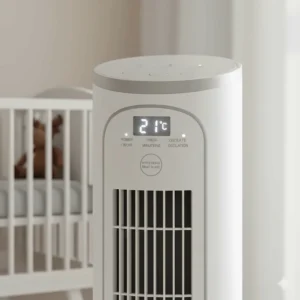
The standout feature is the battery endurance. Vancouver Island parents report using it for an entire week at their off-grid cabin without recharging. The LED display shows remaining battery percentage—a thoughtful touch that prevents unexpected shutdowns during crucial sleep times.
✅ Pros:
- Marathon battery life
- Versatile mounting options
- LED display provides useful information
❌ Cons:
- Slightly heavier than competitors (trade-off for larger battery)
- Higher price point than basic clip-on models
Canadian Customer Feedback: Maritime families particularly value this fan during power outages common in Atlantic Canada. The robust construction withstands the rigors of frequent travel between homes.
7. Vornadobaby Breesi LS (Light + Sound) – Best All-in-One Solution
Think of this as the Swiss Army knife of nursery climate control. The Vornadobaby Breesi LS combines circulation, lighting, and sound machines into one elegantly designed package—perfect for minimalist Canadian nurseries where every square foot counts.
Key Specifications:
- Circulates air up to 13.5 times per hour (superior to standard Breesi)
- Three fan speeds
- Five brightness levels for night glow
- Four white noise tracks (womb sounds, brookside, froggy night, white noise)
- All safety features of standard Breesi model
Price in Canada: $129-$169 CAD on Amazon.ca
This premium model eliminates the need for multiple devices cluttering your nursery. Toronto condo dwellers especially appreciate consolidating three products into one, freeing up precious outlet space. The integrated sound machine provides clinically-proven white noise levels (up to 50 dB) recommended by the Canadian Paediatric Society.
✅ Pros:
- Replaces three separate devices
- Reduces cord clutter significantly
- Superior air circulation rate
❌ Cons:
- Higher initial investment
- More features to learn (though intuitive interface)
Canadian Customer Feedback: Parents from coast to coast praise the value proposition—while more expensive upfront, it eliminates the need for separate purchases of a sound machine ($40-80) and night light ($20-40), ultimately saving money.
Understanding Why Baby Room Air Circulation Matters in Canada
Before we dive deeper into selection criteria, let’s address the science. Canadian researchers, building on the landmark study published in Archives of Pediatrics & Adolescent Medicine, have confirmed that proper ventilation in infant sleep environments significantly reduces SIDS risk.
The SIDS Connection
Dr. De-Kun Li’s Kaiser Permanente research found that fan use reduced SIDS risk by 72%. But why? The theory centres on carbon dioxide dispersion. When babies sleep, they exhale CO₂ which can accumulate around their face, especially in still air. According to Wikipedia’s comprehensive overview of SIDS, a fan for baby room disperses this concentration, reducing the risk of “rebreathing” exhaled air.
This is particularly relevant for Canadian homes during winter months when we seal our spaces tight against the cold, potentially reducing natural air exchange. As reported by CBC News, running a low-speed fan year-round helps maintain healthy air movement even when windows must stay closed.
Temperature Regulation
Health Canada’s safe sleep guidelines recommend keeping nursery temperatures between 18-20°C (64-68°F). Yet many Canadian homes, especially during summer heat waves or with overzealous heating systems in winter, exceed this range. A properly positioned fan helps regulate temperature without the harsh dryness that forced-air systems can create.
Maritime parents dealing with humidity appreciate how fans reduce that clammy feeling, while Prairie families battling dry winters find that gentle air circulation distributes humidity from humidifiers more evenly.
How to Choose the Perfect Fan for Your Canadian Nursery
1. Assess Your Room Size and Layout
Canadian nurseries vary dramatically—from cozy 8×10 ft spaces in Toronto condos to spacious 14×16 ft rooms in suburban Calgary homes. Here’s your quick guide:
Small Rooms (under 150 sq ft): Tabletop fans like the Vornadobaby Breesi provide sufficient circulation. Clip-on models work well for cribs positioned near walls.
Medium Rooms (150-300 sq ft): Tower fans offer better coverage. Look for oscillation features to distribute air evenly.
Large/Open Concept (300+ sq ft): Consider two smaller fans or a powerful tower model with extended reach.
2. Prioritize Safety Features
This isn’t negotiable. Your safe cooling fan for infants must include:
- Finger-friendly grilles: Openings should be smaller than a baby’s finger (under 6mm)
- Stable base: Wide, heavy bases prevent tip-overs
- Cord management: Hidden storage or short cords reduce strangulation hazards
- Child locks: Prevent curious toddlers from changing settings
- Auto shut-off: Protects against overheating
3. Consider Noise Levels for Sleep
The Canadian Paediatric Society notes that white noise up to 50 decibels can actually help babies sleep by masking household sounds. However, noise above this level may be disruptive.
Look for fans offering:
- Multiple speed settings (allowing customization)
- “Sleep” or “night” modes
- Decibel ratings clearly listed (aim for 35-45 dB on low)
4. Power Source Matters
Plug-in models: More powerful, consistent performance, better for stationary use. Essential for 24/7 operation.
Battery-operated: Portable, ideal for multi-room use, crucial for power-outage-prone areas in Canada (looking at you, rural Ontario and Atlantic provinces).
Dual-power: The sweet spot for flexibility, though often pricier.
5. Canadian Climate Considerations
Our unique climate demands fans that can handle:
- Winter dryness: Fans that work alongside humidifiers to distribute moisture
- Summer humidity: Models with strong enough airflow to counter sticky conditions
- Seasonal transitions: Year-round utility justifies the investment
Benefits Comparison: Fans vs. Air Conditioning for Nurseries
| Factor | Fan for Baby Room | Air Conditioning |
|---|---|---|
| Energy Cost | $5-15/month (CAD) | $50-150/month (CAD) |
| Air Quality | Circulates without drying | Can reduce humidity excessively |
| Noise Level | 30-50 dB (adjustable) | 40-60 dB (constant) |
| Installation | Plug and play | Professional required |
| Maintenance | Minimal (quarterly cleaning) | Filter changes, annual servicing |
| SIDS Risk Reduction | 72% (research-proven) | No specific data |
| Skin Sensitivity | Gentle on eczema-prone skin | May aggravate dry skin conditions |
Price Range & Value Analysis
| Budget Tier | Price Range (CAD) | What You Get | Best For |
|---|---|---|---|
| Budget | $25-$45 | Clip-on portables, basic features | First-time parents, secondary rooms |
| Mid-Range | $50-$90 | Tower fans, better coverage | Primary nursery use |
| Premium | $95-$169 | Multi-function, superior safety | Long-term investment, multiple children |
The sweet spot for most Canadian families falls in the $45-$90 range, offering the best balance of features, safety, and durability. Remember that a quality fan can serve multiple children over many years, making the per-year cost remarkably low.
Installation and Safety Tips for Canadian Parents
Positioning Your Fan Correctly
✅ Do:
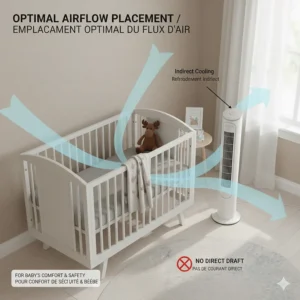
- Place fans 3-6 feet from the crib (avoid direct airflow on baby)
- Position at baby’s level or slightly above for optimal circulation
- Ensure oscillation sweep doesn’t blow directly into crib
- Keep cords completely out of reach (use cord covers if needed)
- Secure floor-standing models to prevent tip-overs
❌ Don’t:
- Point fan directly at baby (can cause hypothermia)
- Place near curtains or loose fabric (fire hazard)
- Use extension cords (creates tripping hazard)
- Block air intake/output with toys or furniture
- Leave running unattended with accessible controls
Seasonal Adjustments
Summer Strategy: Position fan to draw in cooler evening air from hallways. Use higher speeds during peak heat (nap times) and lower speeds overnight.
Winter Application: Run on lowest setting to circulate warm air that rises to ceiling. This prevents hot/cold stratification common in Canadian homes with baseboard or radiator heating.
Maintenance Schedule for Optimal Performance
Keep your quiet fan for baby sleep running efficiently with this simple Canadian climate-adapted routine:
Monthly (During Peak Use Seasons):
- Wipe down exterior with damp microfibre cloth
- Check power cord for damage
- Test all speed settings
Quarterly:
- Remove and wash grilles (check manufacturer instructions)
- Vacuum intake areas
- Inspect for dust accumulation in motor housing
Semi-Annually:
- Deep clean all removable parts
- Check oscillation mechanism
- Verify child locks still function properly
Before Winter Storage:
- Clean thoroughly and dry completely
- Store in breathable bag (prevents dust accumulation)
- Keep in climate-controlled area (extreme cold can damage motors)
🔍 Take your nursery comfort to the next level with these carefully selected products available in Canada. Click on any highlighted item to check current pricing and availability on Amazon.ca. These tools will help you create an optimal sleep environment your baby will love!
Common Questions Canadian Parents Ask
Energy Efficiency Matters
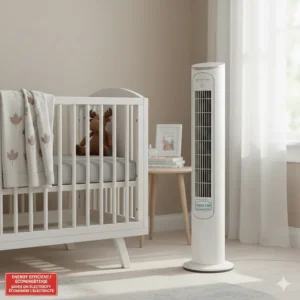
Running a fan 24/7 might sound expensive, but most models consume just 15-40 watts. At Ontario’s average electricity rate ($0.12/kWh), that’s approximately $1.30-$3.50 per month—a fraction of air conditioning costs. British Columbia, with lower rates ($0.09/kWh), sees even greater savings.
Look for Energy Star ratings or DC motor technology for maximum efficiency. Some premium models consume 70% less energy than traditional AC motors while providing equivalent airflow.
The White Noise Benefit
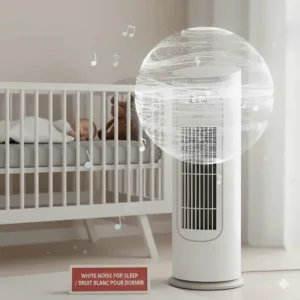
Many parents don’t realize their fan for baby room doubles as a white noise machine. The consistent, low-frequency sound masks household noises (siblings playing, street traffic, neighbours) that might wake your baby.
Research from the Canadian Sleep Society suggests white noise can reduce the time it takes babies to fall asleep by up to 40%. The key is consistency—the sound should be steady, not varying with fan oscillation.
Humidity Considerations
A common concern: “Will a fan dry out my baby’s skin?” The short answer is no—fans don’t remove moisture from air like air conditioners do. They simply move existing air.
However, Canadian winters already feature low humidity (especially with forced-air heating). If you notice dry skin, run a humidifier alongside your fan. The fan actually helps by distributing the humidified air more evenly throughout the nursery.
Special Considerations for Canadian Climates
Atlantic Canada
High humidity levels mean you’ll appreciate fans that provide strong airflow without excessive speed settings. The Lasko Wind Curve excels here, combating that sticky coastal feeling without creating uncomfortable drafts.
Prairies
Extreme temperature swings demand versatile fans. Look for models with wide speed ranges and reliable motors that handle both summer heat and winter heating circulation. The Honeywell QuietSet’s eight speeds provide precise control.
British Columbia
Mild but unpredictable weather requires year-round flexibility. Compact models like the Vornadobaby Breesi work well in smaller BC homes and condos while providing consistent performance.
Ontario & Quebec
Humid summers and dry winters mean you need a fan that complements HVAC systems. Tower fans with ionizers help manage air quality during seasons when windows stay closed.
Northern Territories
Extended heating seasons make air circulation crucial for comfort. Focus on quiet, reliable models that can run continuously for months. Battery backups matter less here than in regions with frequent outages.
FAQ
❓ Is it safe to use a fan in a baby's room all night in Canada?
❓ What's the ideal noise level for a nursery fan low noise operation?
❓ Can I use a clip on fan safe for my baby's crib in Canada?
❓ How much does it cost to run a fan for baby room 24/7 in Canada?
❓ Which type provides better baby room air circulation: tower or tabletop fans?
Conclusion: Making the Right Choice for Your Canadian Nursery
Choosing a fan for baby room isn’t just about beating the heat—it’s about creating a safe, comfortable environment that promotes healthy sleep and reduces SIDS risk. As we’ve explored, the right fan combines thoughtful safety features, appropriate power for your space, and reliable performance across Canada’s diverse climate zones.
The Vornadobaby Breesi remains my top recommendation for most Canadian families, offering unmatched safety features and proven performance. However, budget-conscious parents will find excellent value in the AMACOOL clip-on, while those with larger nurseries should seriously consider the Lasko Wind Curve.
Remember these key takeaways:
- Proper air circulation reduces SIDS risk by 72%
- Position fans 3-6 feet from cribs, avoiding direct airflow
- Maintain nursery temperatures at 18-20°C year-round
- Choose models with finger-friendly grilles and child locks
- Consider Canadian climate zones when selecting features
Whatever model you choose, prioritize safety first, then comfort. Your investment in proper baby room air circulation pays dividends in better sleep, healthier air quality, and most importantly, peace of mind knowing you’ve taken research-backed steps to protect your little one.
The changing seasons won’t wait, and neither should you. Proper nursery ventilation matters year-round in Canadian homes. Start creating that ideal sleep environment today—your baby (and your sleep-deprived self) will thank you.
✨ Don’t Miss These Exclusive Deals!
🔍 Take your nursery comfort to the next level with these carefully selected products available in Canada. Click on any highlighted item to check current pricing and availability on Amazon.ca. These tools will help you create an optimal sleep environment your baby will love!
Recommended for You
- 7 Best Whole House Fans for Canadian Homes in 2026 – Save 90%
- 7 Best Industrial Fans Canada 2026: Heavy Duty Workshop & Warehouse Cooling
- 7 Best Outdoor Misting Fans Canada 2026 – Beat the Heat!
Disclaimer: This article contains affiliate links to Amazon.ca. If you purchase products through these links, we may earn a small commission at no additional cost to you.
✨ Found this helpful? Share it with your friends! 💬🤗
